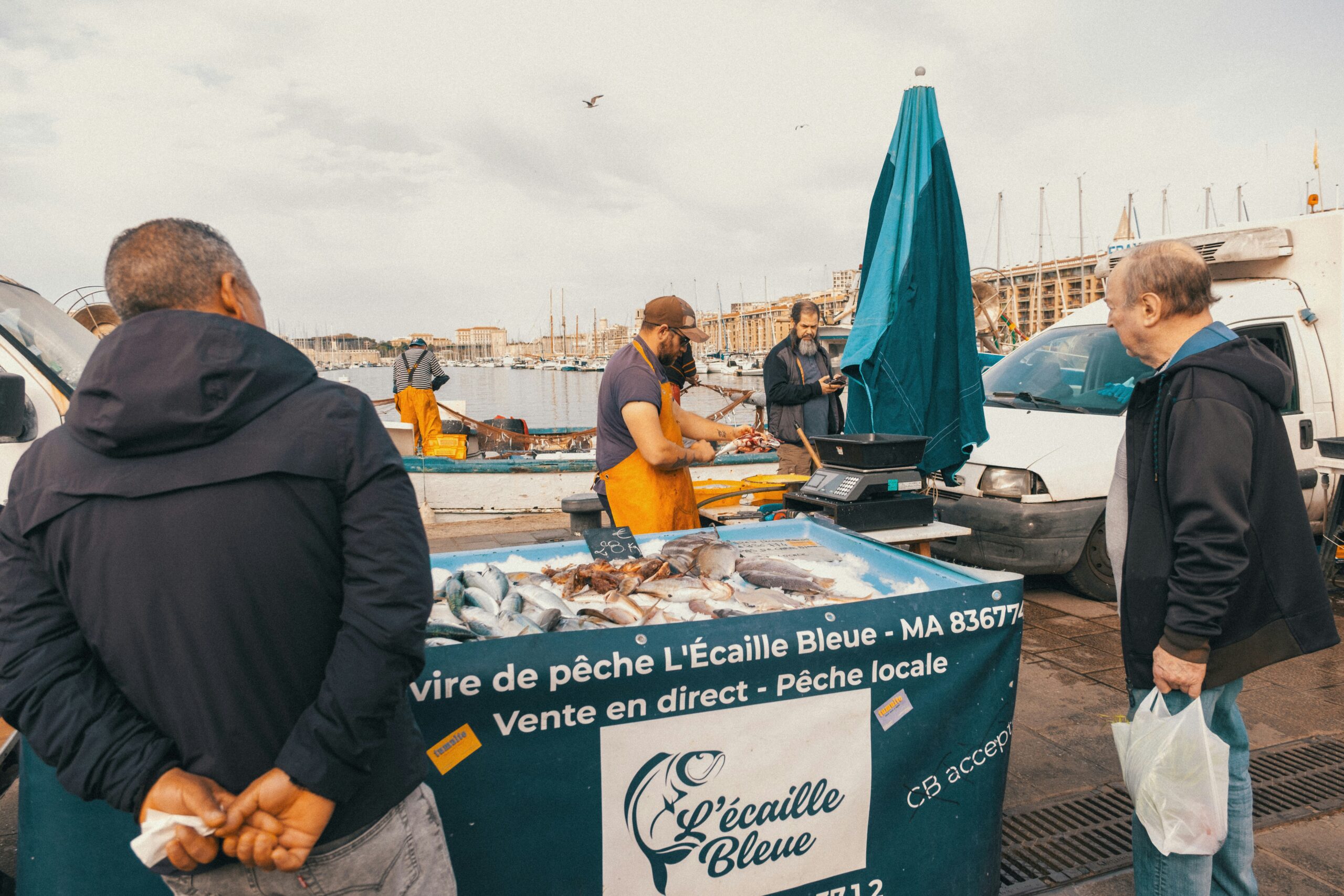
The bouillabaisse began as the meal that the fishermen of Marseille made from the fish they could not sell. This is important to understand before anything else about it, because it changes what the dish is: not a composed creation developed by a chef with access to the finest ingredients, but the specific intelligence of people who had access to the worst ingredients and who made something extraordinary from them because there was nothing else to make.
The fish that no one bought at the morning market in the Old Port of Marseille were the ugly ones, the bony ones, the ones that required too much work for too little meat: the rascasse, the grondin, the saint-pierre, the vive. These fish have more flavour per gram of flesh than the commercial species that filled the adjacent market stalls, but they require knowledge and time to extract that flavour, and the Marseille fishermen’s wives had both.
The broth produced from these fish, enriched with saffron and fennel and the specific herbs of the Provençal hillside above the city, is the foundation of the dish: a liquid so rich and so specific to this combination of ingredients and this place that no version made elsewhere with different fish and different herbs produces the same result.
The Charter of Marseille
In 1980, eleven Marseille restaurants produced a document called the Charte de la Bouillabaisse Marseillaise: a formal specification of what a bouillabaisse must contain to be called a bouillabaisse. The charter specifies the minimum number of fish species (at least four, from a specified list that includes rascasse, grondin, saint-pierre, and vive), the requirement that the fish be added to the broth in a specific order determined by their cooking time, the mandatory inclusion of saffron and fennel and orange peel and tomato, and the service method: the broth served separately from the fish, the rouille and croûtons alongside, the assembly done at the table.
The charter is not law. It is the collective judgement of people who had been making the dish for generations about what constitutes the real thing as opposed to the imitation, and it is the most precise written definition available of a dish that exists in a thousand inferior versions across the French Mediterranean coast. The restaurants that signed it still serve it. The restaurants that did not serve something else that they call by the same name.
The Rouille
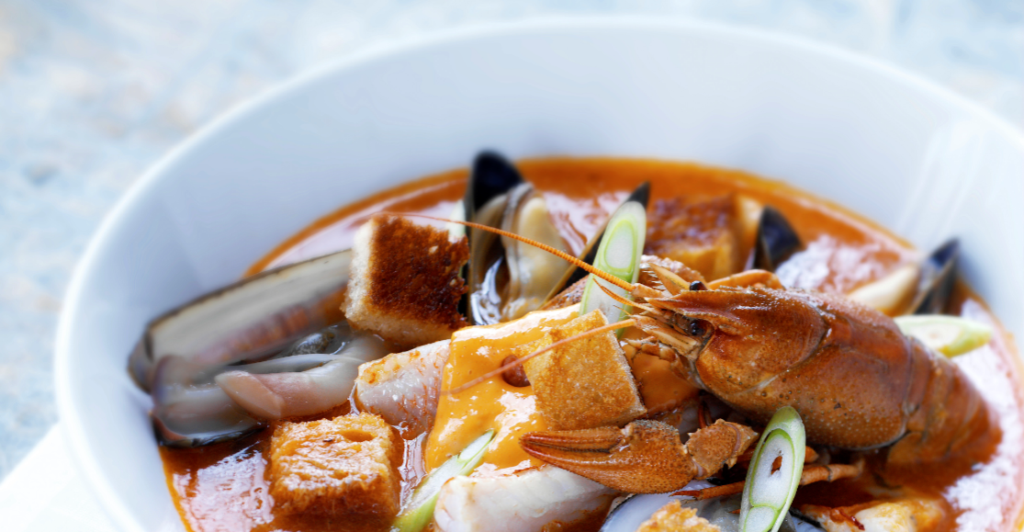
The rouille is the condiment that makes the bouillabaisse. It is an emulsion of olive oil, garlic, saffron, and hot pepper, with a texture between mayonnaise and aioli, served on top of the croûtons that go into the broth. When the rouille dissolves into the hot broth it transforms the liquid: the garlic enriches it, the saffron deepens the colour further, and the hot pepper adds a warmth that the broth itself does not contain and that makes the combination of broth and rouille and bread something fundamentally different and better than any of its components separately.
Making the rouille requires the same skill as making any emulsion: the oil must be added slowly enough that the garlic and saffron base absorbs it without breaking. The best versions use a mortar and pestle rather than a blender, because the mortar produces a texture with more character than the uniformly smooth blender version. Our chef makes it with a mortar in the specific situation where we have the time and the right ingredients from a Provençal or Languedoc market, and the version that results is the evidence that the technique matters as much as the recipe.
Why You Will Find It Aboard
The Naora route spends three to four weeks on the French Mediterranean coast in the late summer and early autumn, passing through the Côte d’Azur, the Camargue coast, and the Languedoc before rounding the Cap de Creus into Spanish waters. This is the chapter of the route where the market fish are the Provençal species specified in the charter and where the saffron from the inland markets is the specific product that the recipe requires. Our chef makes bouillabaisse when the fish from the morning market justifies it: not as a restaurant production of a famous dish but as the meal that the available ingredients specifically demand.
The version served on the Eighty2 will not be identical to what the charter restaurants of Marseille produce. It will be made from fish caught or bought in the specific port we are in, with the herbs from the deck garden and the saffron from the last Provençal market. It will be the honest version: what necessity and good ingredients and a skilled chef produce when the broth is right and the rouille is made in the mortar and the croûtons come out of the oven at exactly the right moment.