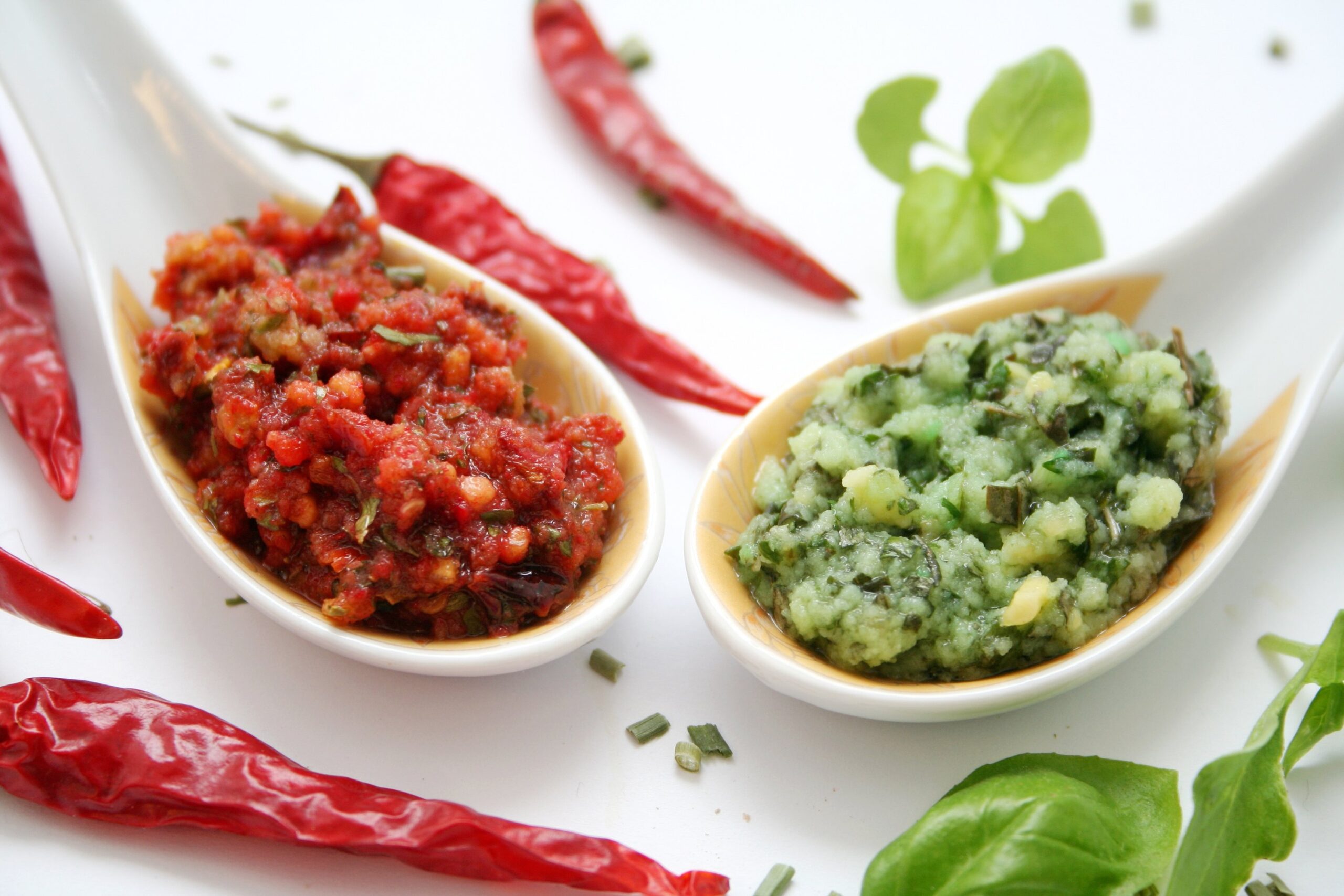
Most meals have a structure that implies a direction: the beginning, the middle, the end. Meze has no such implication. The small plates arrive without sequence and without hierarchy, each one complete in itself, the table organised around a multiplicity rather than a progression. You reach for what interests you. The conversation determines the pace. The meal ends when you decide it ends, not when the plates have been cleared in the correct order.
This is not an accident of the Turkish dining tradition. It is a design: the specific arrangement of food that allows eating to be the background to conversation rather than the foreground, that keeps the table active and variable throughout the duration of the meal rather than moving through a fixed sequence of events, and that produces the specific quality of a long evening where the food keeps arriving and the conversation keeps going and neither one is primary.
The History
The word meze derives from the Persian mazze, meaning taste or relish. The tradition of small dishes served alongside drinks travels from Persia through the Ottoman Empire and into the Anatolian and Levantine culinary traditions that have produced the meze as it exists today. The Ottoman court cuisine of Istanbul, which drew on the culinary traditions of every part of the empire from the Balkans to the Arabian Peninsula, systematised the meze into its current form: a range of cold and hot preparations, each one representing a different regional tradition or seasonal ingredient, served together to produce the breadth of flavour and texture that a single elaborate dish cannot provide.
The specific dishes that constitute a meze vary by region and by season. The meze of the Aegean coast, which is the meze most relevant to the Naora Mediterranean chapter, draws on the specific ingredients of the Turkish coastal tradition: the fresh herbs, the seafood, the dairy products of the coastal farming communities, the wild greens gathered from the hillsides above the anchorages, and the olive oil that the Aegean region produces in a quality that rivals any in the Mediterranean world.
The Dishes
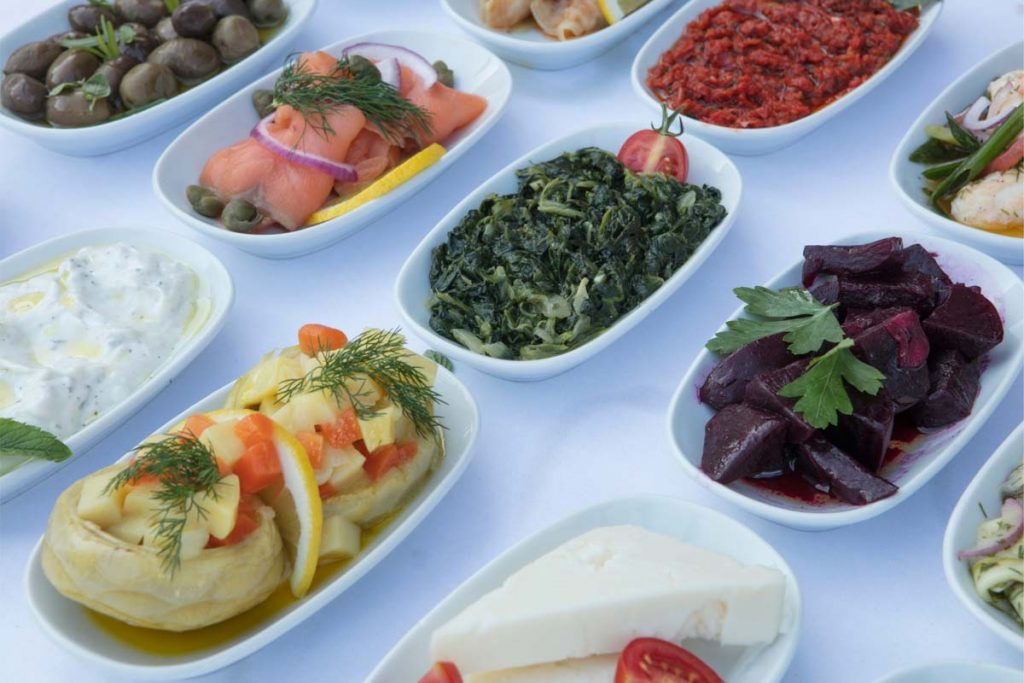
Cacik is the Turkish version of tzatziki: yoghurt with cucumber and garlic and dried mint, the mint distinguishing it from the Greek version that uses fresh dill. The yoghurt used in coastal Turkey is thicker and more sour than the commercial versions available elsewhere, and the quality of the cacik at a good Turkish table is determined primarily by the quality of the yoghurt that the cook used. We source the yoghurt at the market in the morning. It tastes nothing like what is labelled yoghurt in a supermarket.
Dolma are stuffed vine leaves, one of the most ancient preparations in the Eastern Mediterranean, found in variation across the entire arc from Greece through Turkey through Lebanon through Syria. The Turkish coastal version uses fresh vine leaves rather than preserved ones when they are in season, filled with a rice mixture that includes pine nuts, currants, allspice and cinnamon in a combination that is recognisably Ottoman in its layering of savoury and sweet. Served cold with lemon.
Patlıcan salatası is the roasted aubergine salad that the Turkish kitchen produces in a form that bears no resemblance to the versions available in Northern European restaurants. The aubergine is placed directly over the flame until the skin is completely charred and the interior has collapsed into smoke-flavoured softness. Peeled, chopped, and combined with garlic and lemon and olive oil: the resulting dish carries the flavour of the fire in a way that no other cooking method produces.
Midye dolma are stuffed mussels, sold by street vendors throughout the Turkish coastal cities and produced in the best versions at home by people who have been making them since childhood. The mussel shell is filled with a spiced rice stuffing, the mussel replaced on top, and the whole thing steamed. Eaten cold with lemon. The mussels for the Naora version come from the market in Bodrum or whichever coastal town we are closest to, selected at the quay from the fisherman who brought them in that morning.
Why It Is Perfect for the Afterdeck
The meze is the ideal format for a boat’s afterdeck table, and this is not a coincidence. The meze was developed in a culture where the meal is an occasion for gathering rather than a transaction for nutrition, where the conversation is the purpose and the food is the infrastructure of the conversation, and where the specific quality of a long evening with people you want to be with is the thing the meal is designed to produce rather than a pleasant side effect of eating well.
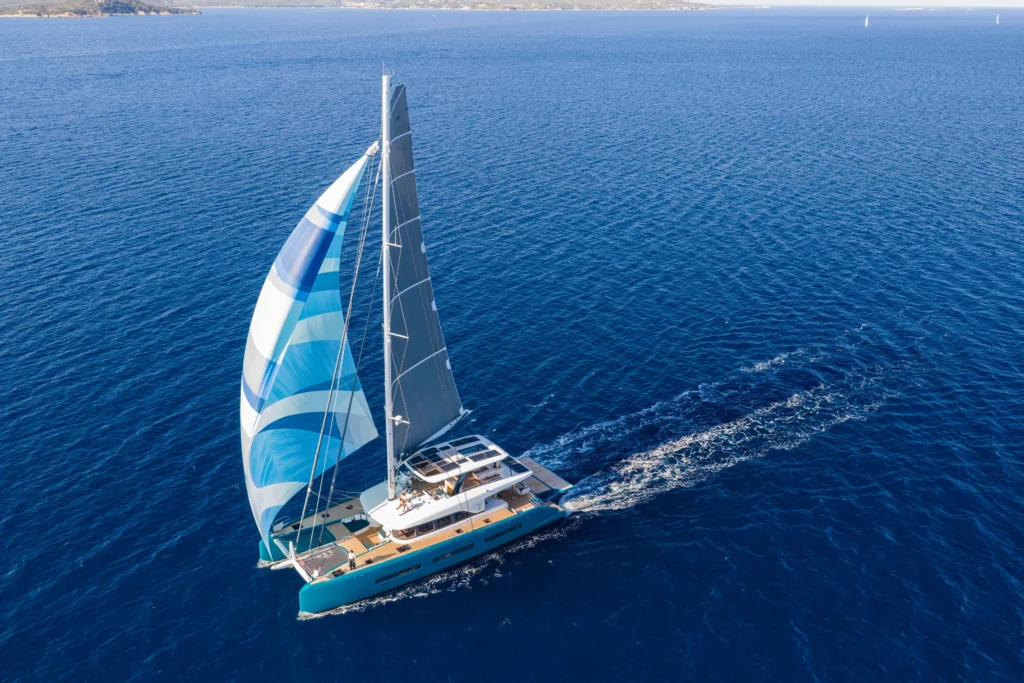
This is exactly the quality that the Naora afterdeck table produces when the boat is at anchor in the Gokova Gulf or the Bozburun Peninsula and the evening is warm and the raki is cold and the small plates keep arriving from the galley at the pace that the conversation determines. The meze does not impose a structure on the evening. It offers one that is infinitely adaptable to what the evening actually becomes.