I want to be precise about the word afraid, because I have used it loosely before and it did not mean what I mean here. Nervous before a difficult berthing: that is not afraid. Uncertain in deteriorating conditions: that is not afraid. Uncomfortable in a confused sea state with an inexperienced crew: that is not afraid either. What happened in the Bay of Biscay on a delivery passage from the Belgian coast to the northwest of France was afraid. The specific, full-body, entirely honest version of it: the kind that arrives when the situation is genuinely beyond the comfortable boundary of what you have prepared for, and that no amount of experience or knowledge can prevent from arriving, only from overwhelming you when it does.
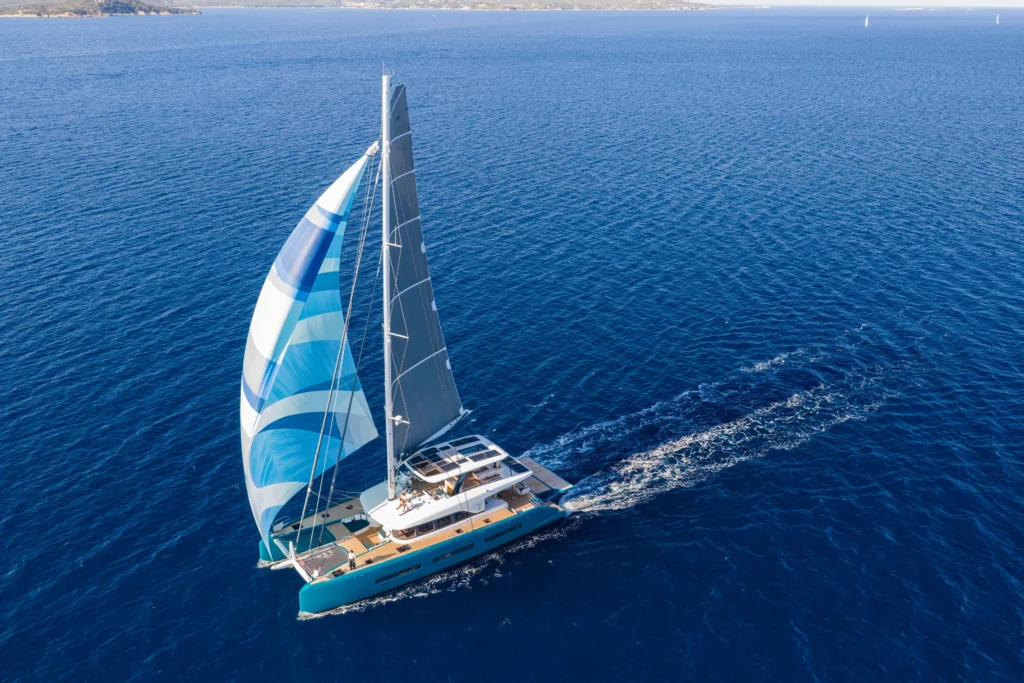
I was young. I had enough hours offshore to have developed the specific confidence that comes before real knowledge: the confidence of someone who has not yet been shown the full range of what the sea can produce. The delivery was a racing yacht, a fast and lightly built boat designed for speed rather than comfort in a seaway, and the crew were racing sailors rather than offshore passage makers, which is a distinction that matters considerably in the Bay of Biscay in the conditions we encountered.
The Biscay
The Bay of Biscay has a specific and deserved reputation among European offshore sailors. It is not the most dangerous body of water in the world. It is arguably the most unpleasant: the combination of Atlantic fetch, shallow continental shelf, and the specific atmospheric dynamics that amplify and steepen whatever the Atlantic sends in produce a sea state that is categorically different to anything the North Sea or the Channel or the Mediterranean prepares you for. The waves are not simply large. They are steep and close together and they arrive from multiple directions simultaneously when the storm is fully established, creating a confused sea that the hull cannot find a rhythm in and that the crew, if they have not experienced it before, finds genuinely alarming.
We encountered the storm on the second day of the passage. The forecast had shown a weather window that I now understand, from the perspective of twenty-five more years of offshore experience, was a forecast I was not yet skilled enough to read correctly. The window existed in the model. The model was wrong about the timing. The front that was supposed to pass the area before our departure was twelve hours slower than predicted, which meant that we were in the Biscay when it arrived rather than safely south of it.
The conditions built over four hours from uncomfortable to serious. By the time they were serious, the waves were six to seven metres and the period between them was short enough that the boat was climbing one face before the previous wave had fully passed under the stern. The motion was violent in a way that a lighter, faster boat in steep seas produces and that a heavier offshore passage maker does not: quick, unpredictable, occasionally stopping the boat almost dead as a wave face presented itself at the wrong angle and the bow buried rather than climbed.
The Ski Goggles
The spray in conditions like that is not spray in the way the word usually implies. It is horizontal water, driven by wind that was well above forty knots at the height of the storm, and it finds every gap in the foul weather gear with a specificity that regular rain does not achieve. On deck, the problem is the eyes: in the Biscay at forty-five knots of wind with six-metre seas, there is no direction to turn your face that does not involve driving salt water into your eyes at significant velocity.
Someone on the racing crew had ski goggles. I do not remember who or why they were in the kit, but they were passed around the cockpit like an object of considerable value, which in those conditions they were: the person wearing the goggles could look directly into the wind and see the oncoming waves and the compass and the horizon, however briefly the horizon was visible, without the blinding that the unprotected eye suffered. We rotated the goggles. When it was your turn with them, you could do your job. When it was not, you managed as best you could.
The detail of the ski goggles is the detail I remember most specifically from that day. The ski goggles were the specific absurdity that the fear sat inside: genuinely frightening conditions being managed with racing crew improvisation, a long way from anywhere, in a sea that had no interest in our plans for it.
The Moment
The moment the fear arrived was a breaking crest that hit the boat from slightly abeam when the helmsman was watching the instrument panel rather than the water, and that laid the boat on her side far enough and fast enough that the mast was briefly below the horizon and the leeward cockpit rail was in the water and the crew who had been sitting to windward were suddenly hanging from the safety lines rather than sitting on the boat.
The boat came back. That is what boats do if they are still sealed and the mast is still up: they come back, because the stability is a physical property that the capsize has temporarily exceeded rather than permanently destroyed. The boat came back and we were all there and the mast was still standing.
The fear that arrived was not the fear of dying, though the thought was present. It was the fear of not being good enough: the specific, honest recognition that the situation was beyond the comfortable range of my current capability and that the gap between what I knew how to do and what the sea was asking me to do was real and significant. I was competent. I was not experienced enough. And the sea knew the difference even if I had not, quite, until that moment.
What It Taught
We got through. I spent the winter after that Biscay passage studying. Not general study but the specific study of someone who has been shown the gap between their current knowledge and the knowledge the sea requires and who has decided to close it as completely as possible before going back. The meteorology I did not understand well enough to read the forecast correctly. The heavy weather sailing techniques that the racing boat had not been prepared to execute. The management of a broach, which is what the knockdown was.
I have been in heavy weather since that passage. More than once, in conditions that were in some respects more severe. The fear has not returned in the same form, not because the conditions did not deserve it but because th gap it was pointing at has been substantially closed. Knowledge is not the absence of fear. It is the specific preparation that makes fear manageable when it arrives rather than overwhelming. The Biscay taught me this, specifically and permanently, in the way that only a genuine encounter with your own limits can teach it. I am grateful for it. I would not choose it again. Both things are true.