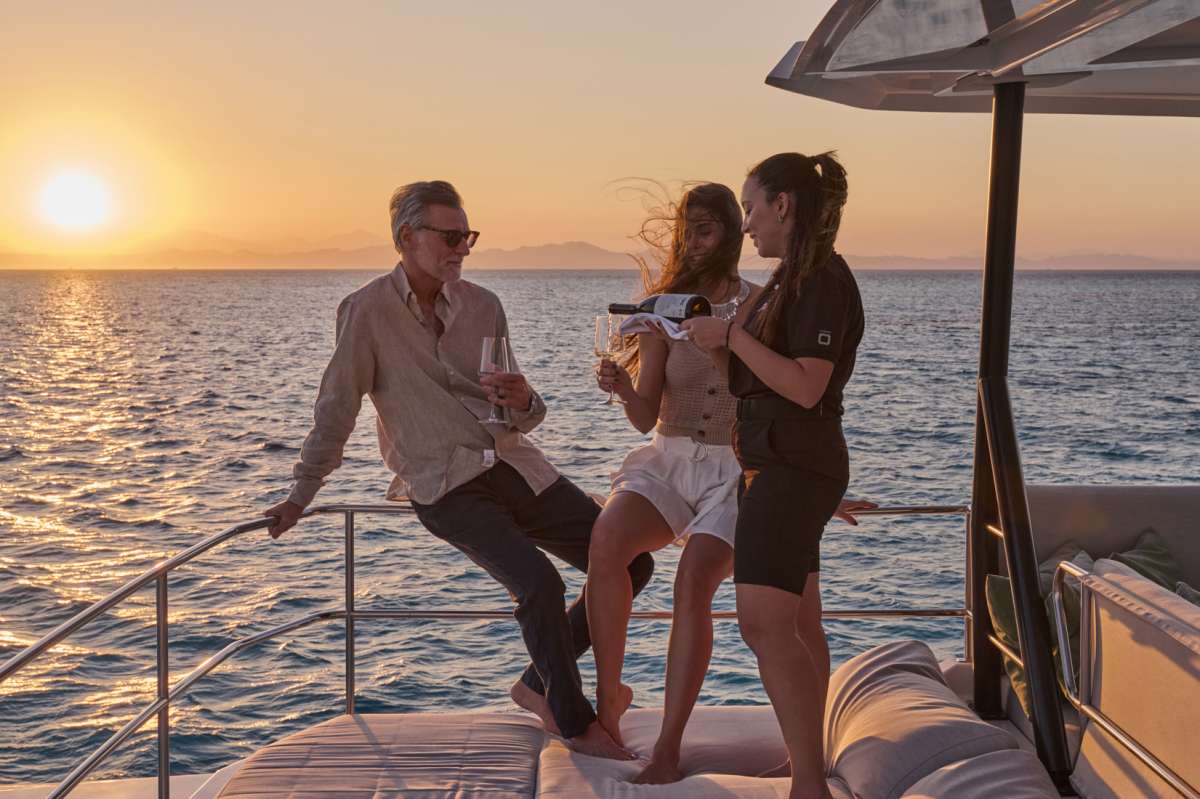
The end of a leg is a specific kind of transition that most forms of travel do not produce. The flight home from a holiday is a logistics exercise: the taxi, the airport, the seat, the arrival. What you are leaving is a location. The person you were in the location departs with you and continues being that person in the new one, changed if the holiday was good, unchanged at the fundamental level.
The end of a Naora leg is a different transition. What you are leaving is not a location but a context: a specific community of people who shared a specific set of days in a specific set of places, and the specific version of yourself that that community and those days produced. The taxi to the airport exists and the seat on the plane exists and the arrival at the destination exists. But the departure from the boat has a different quality to the departure from a hotel, and most members notice it and find it difficult to account for.
The Last Morning
The last morning of a leg tends to be the morning when the boat is most fully itself. Not because anything is different about it, but because the person experiencing it knows it is the last one of this specific stay, and that knowledge produces an attention to the ordinary details of the morning that the previous mornings did not quite have. The coffee is the same coffee. The porthole shows the same anchorage or the same marina. The sound of the water against the hull is the same sound. But this is the last version of those things for this particular stay, and the awareness of that makes the ordinary specific in a way that ordinary things rarely are.
The last meal is often the best conversation of the leg. Not the most profound, necessarily, but the most honest: the things that have been accumulating across the days that were too large or too tentative for the earlier meals arrive at the last table with the specific permission of ending. The person you talked to on the watch at three in the morning two nights ago says something now that finishes what started then. The observation from the dive on day four that was interrupted by lunch gets completed. The last meal holds the leg’s accumulated threads and the conversation at it tends to be the most complete version of what the community actually was.
The Departure
The bag comes off the boat. The crew takes it to the dock. The goodbyes happen in the specific compressed way of goodbyes on boats: brief, warm, the physical awkwardness of a narrow gangway or a short climb up from the tender, the handshake or the embrace that is genuine rather than ceremonial. Sven is always there for the departure. It matters to him that the leaving is acknowledged the same way the arrival was.
The walk from the boat to the taxi is the strangest part. The marina, which was the last connection to the world of land when you arrived, is now the last connection to the world of the boat as you leave. The ground is not moving. The air smells differently. The sounds are different. The body is already registering the transition that the mind has not yet processed, and the specific strangeness of that gap, between what the body knows and what the mind has caught up with, is the feeling that most members describe when they try to explain what the end of a Naora leg is like.
What Members Say They Take
The things members say they take from a Naora leg are not primarily the photographs or the souvenirs or even the specific places they visited, though all of those are present in the memory. What they describe most often, and most specifically, is a quality of having been somewhere rather than visited it. The distinction between visiting and being somewhere is one that most people understand intuitively and that the offshore sailing life produces more reliably than almost any other form of travel.
They take the conversations. Specifically: the conversation at the three o’clock watch, the one at the Long Table that went somewhere unexpected, the one at the afterdeck table on the last morning that finished something that had been starting for a week. The conversations that the offshore context produces and that the social contexts of land almost never allow in the same form.
And they take the specific quality that was there at the beginning of the stay and that is leaving with them now: the lighter version, the less performed version, the version of themselves that the boat produced by removing the conditions that prevent it. This is the thing that is most difficult to describe and most specifically missed in the first days back on land. And it is the reason that most members, when asked what they most want from the next Naora leg, say some version of: that. Again. More of that.