
The first day aboard is its own specific experience, distinct from everything that follows it. Not better or worse than the days that come after: different, in the way that beginnings are always different from continuations. The boat is new, the community is new, the rhythms are not yet familiar, and the combination of arriving somewhere significant and not yet knowing how to inhabit it is a specific and temporary state that most members describe afterwards as having passed faster than they expected.
Here is what the first day actually looks like, concretely, so that you arrive knowing what to expect rather than navigating it entirely by improvisation.
The Arrival
The crew knows you are coming and the boat is ready for you. The cabin has been prepared: the bed made, the towels folded, the storage space cleared for your things. The stewardess is aboard and will show you the cabin and the en-suite and where everything is in the space that will be yours for the duration of your stay. This takes perhaps five minutes and answers the immediate practical questions without ceremony.
After the cabin, the boat tour. Sven or the mate walks you through the Eighty2: where the safety equipment is and how it works, where the life jackets are and which one fits you, where the flares are, where the first aid kit is, the procedures for the specific situations that the safety briefing covers. This is not a formality. It is the information that makes you a safe person aboard this specific vessel, and it is delivered with the directness of someone who knows it matters rather than the boredom of someone delivering a hotel safety video.
The safety briefing covers: man overboard procedure, flare operation, life raft deployment, emergency position-indicating radio beacon activation, and the specific layout of the boat’s safety equipment. It takes perhaps twenty minutes and it is the most important twenty minutes of the first day. After it, you are a member of a vessel that has a safety culture rather than a passenger on a boat that doesn’t think about these things until it needs to.
The First Meal
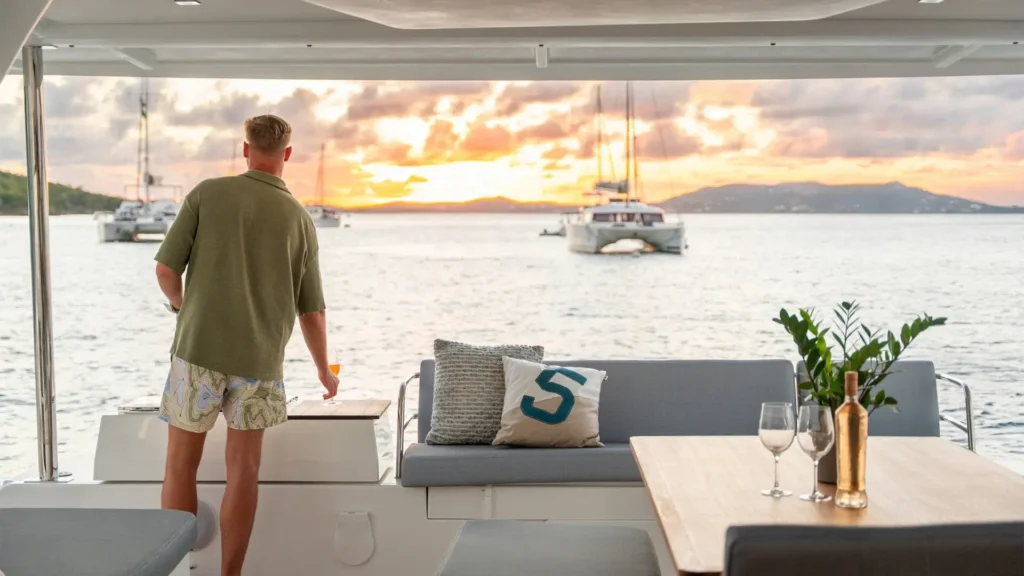
The first meal is where the community introduces itself without a formal introduction. The table gathers, the food arrives, and the conversation finds its way without anyone organising it. This is the specific social magic of the Naora table: the shared meal does the introduction work that no social format handles as naturally, and by the end of the first meal you know more about the people around you than an equivalent duration of conference networking would produce.
The meal itself is the standard of the Naora kitchen: whatever the chef has prepared from the day’s ingredients, properly done, at the afterdeck table with the bay or the harbour or the passage behind it. The first meal is not a special welcome meal. It is the regular meal, which is the most honest introduction to what the food aboard is: consistent, good, specific to the place and the day, without ceremony.
The First Afternoon
The first afternoon is yours. No schedule, no activities, no programme. The boat is at anchor or in port, the swim ladder is down if the water is appropriate, the tender is available for the shore if it is interesting, the flybridge has cushions and shade, the cabin has the book you brought. The first afternoon is the afternoon in which the boat stops being a new and unfamiliar place and starts being where you are, which is the transition that the first day is for and that most members complete by the evening of it.
Wander. Explore the boat at your own pace. Find the corners of it: the bow with its view forward, the flybridge with its view in all directions, the salon with its chart table and the books on the shelf, the afterdeck with the fishing line that can go out the moment the boat moves. The boat rewards familiarity and the first afternoon is the right time to begin acquiring it.
The First Night
The first night at anchor is usually the best sleep of the stay, or the second best: the motion of the boat, the sound of the water, the absence of the urban ambient that the cabin at home is saturated with. Some people take a night to adjust to the motion and the sound. Most people find that the offshore sleep environment produces deep rest from the first night. By the second morning, the boat feels familiar in the way that places feel familiar when you have slept in them: not just intellectually known but bodily inhabited.
By the end of the first day, the unfamiliarity of the beginning has largely resolved. You know the boat, you know the people at the table, you know the smell of the cabin and the sound of the water against the hull and the position of the switch for the cabin light. The community has received you. The boat has accepted you. The voyage is underway, for you specifically, from this first day forward.