
I want to try to describe something that resists description. Not the sailing itself, which can be described technically and practically and I have done both in other articles. Something underneath the sailing: the quality of connection to the sea that accumulates across years of being on it, the specific feeling that arrives when the boat leaves the harbour and the land recedes and the water opens in every direction, and the specific richness of a life that has been built around the pursuit of that feeling.
It is not always comfortable. That is the most important thing to say first, because the version of the sailing life that exists in the imagination of people who have not lived it tends to be the beautiful version: the sunset passages, the perfect anchorages, the fish from the line and the stars overhead and the specific ease of a boat moving well in good conditions.
All of that is real. It is also the smaller part of what the sailing life actually is. The larger part is the maintenance, the frustration, the passages that go wrong, the equipment that fails at the worst possible time, the months of preparation for a departure that gets delayed, and the specific misery of a boat in a boatyard in the rain when the hull is out of the water and the antifouling needs to be done and the osmosis blisters have to be ground out one by one and the project that was supposed to take a week has taken three.
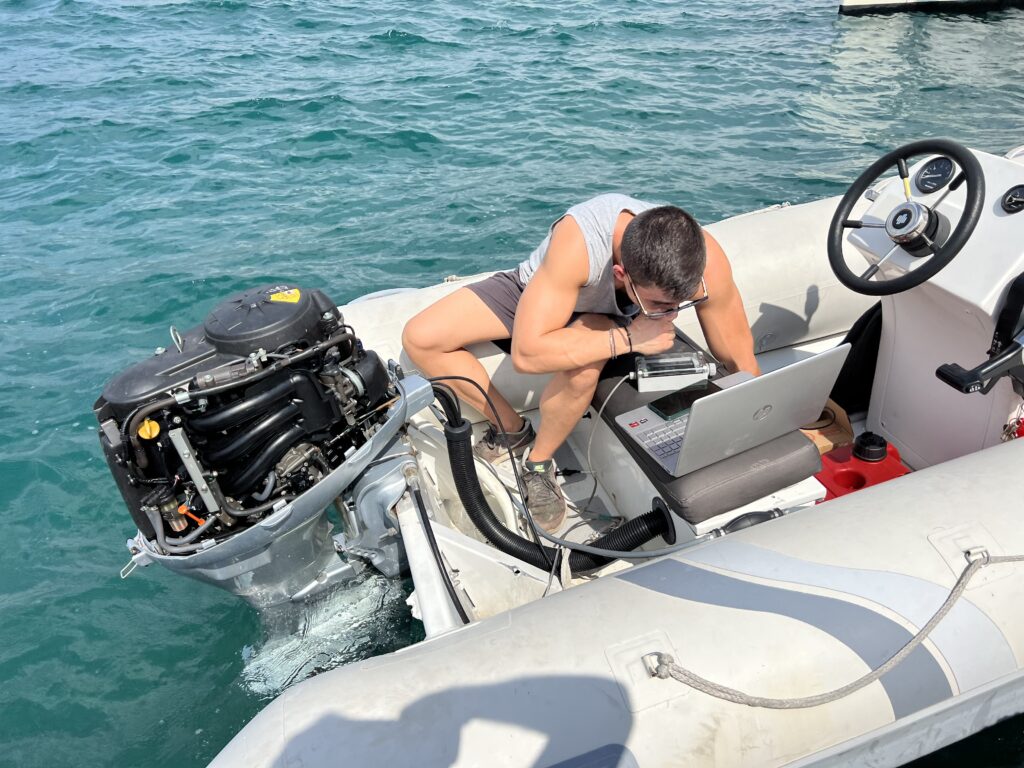
I have spent more time in boatyards than most people spend in offices. I have made more passage decisions in the dark at four in the morning than I have made in conference rooms. I have fixed more pumps and replaced more impellers and chased more electrical faults through more bilge wiring than I could accurately count. And I would not trade a single hour of any of it, not because the difficulty was pleasant, but because of what it paid for.
Let me be honest about the misery because the sailing life does not deserve to be presented without it.
The Misery
The antifouling in November. The boat is out of the water on stands in the boatyard and the temperature is eight degrees and the antifouling paint comes off in sheets that stick to everything and the ground underneath the hull is a specific combination of old paint dust and mud that gets on your clothes and in your eyes and cannot be washed out completely.
You are under the hull on your back with a scraper and the osmosis blisters need to be opened and ground out and dried before the epoxy barrier coat can go on, and the drying takes three days if the weather cooperates and six if it does not. This is not glamorous. This is the work that the next season’s sailing is built on, and it is done by the person who understands that the boat’s health is the skipper’s responsibility and that no one else is going to do it with the care it requires.
The passage that goes wrong. Not catastrophically wrong, the boat is still floating and everyone is safe, but wrong in the way that means the forecast was incorrect and the conditions are harder than planned and the sleep is broken and the meals are eaten standing in the galley because sitting at the table is not currently practical and the destination that was twenty-four hours away is now thirty-six because the wind backed and the tacking angles are not what they were supposed to be.
Everything works. The boat is doing what it is supposed to do. The people aboard are managing. But it is not the passage that was imagined and the specific gap between the imagined and the actual is a particular variety of discomfort that the sailing life produces reliably and that requires a specific quality of acceptance to live with without resentment.
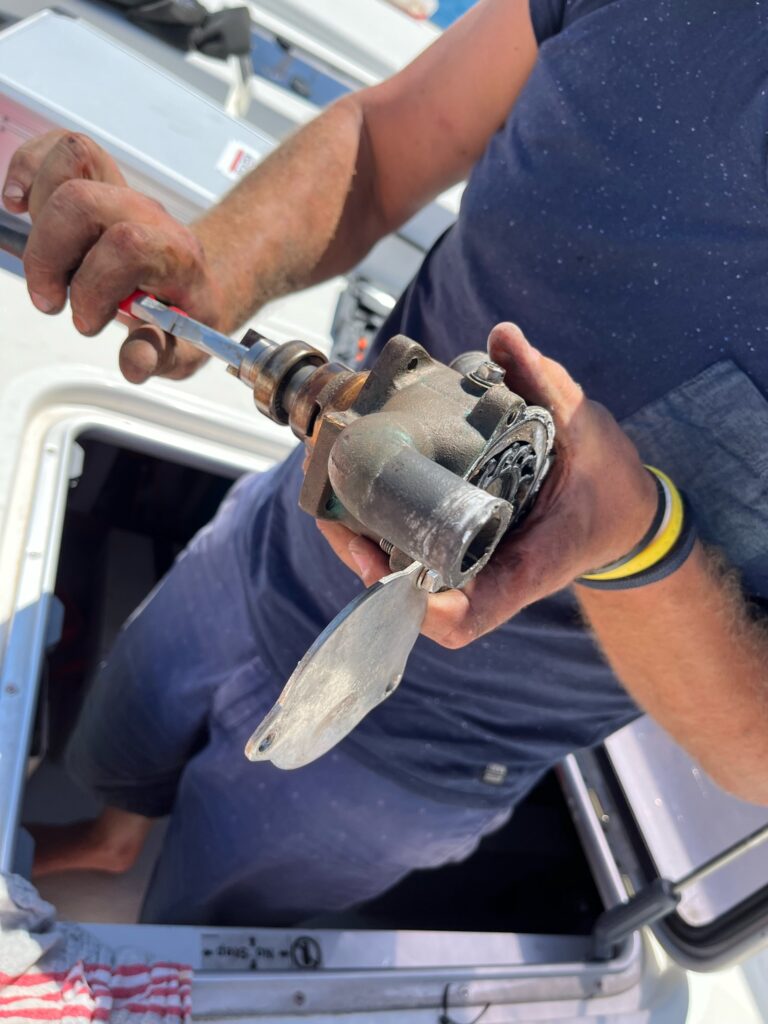
The breakdown at sea. Every offshore sailor has a version of this story, and I have more versions than most because I have been at sea long enough to have collected them comprehensively. The generator that stops producing power two days into an Atlantic crossing, which means the watermaker stops, which means the water budget has to be managed from what is in the tanks until the fault is found and fixed.
I have been on my back in the engine compartment in a seaway with a torch between my teeth and tools sliding across the floor, tracing the fault through the wiring diagram that I know from memory because I have read it enough times that it is part of what I know about this boat. The generator gets fixed. It always gets fixed. But it gets fixed by someone who knows what they are looking at, and that someone is me, because at sea there is no one else.
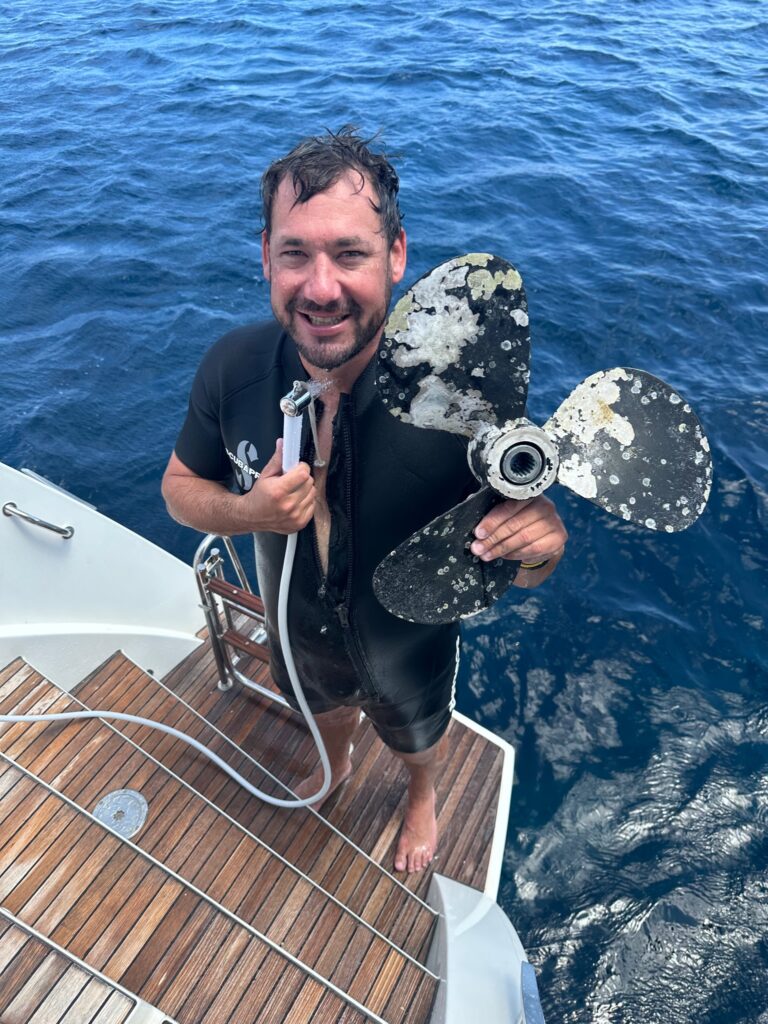
The propeller replaced at anchor. This is a specific and unpleasant job that most sailors never do because most sailors never need to, and that I have done several times because the offshore sailing life produces the contacts between the propeller and the things that should not be near it: the crab pot line wrapped around the shaft off the Portuguese coast, the floating debris in a Southeast Asian shipping lane, the specific bad luck of a piece of submerged timber at the entrance to a Croatian anchorage at dusk.
The replacement happens in the water, on a breath hold or with a mask and snorkel, working by feel in water that is sometimes clear and sometimes not, with the tools in a dive bag and the spare propeller on a line from the stern. The job takes what it takes. On one occasion it took four hours in the dark with a head torch and a cold sea and a crew member holding a light from the dinghy. The propeller was replaced. The boat left the next morning.
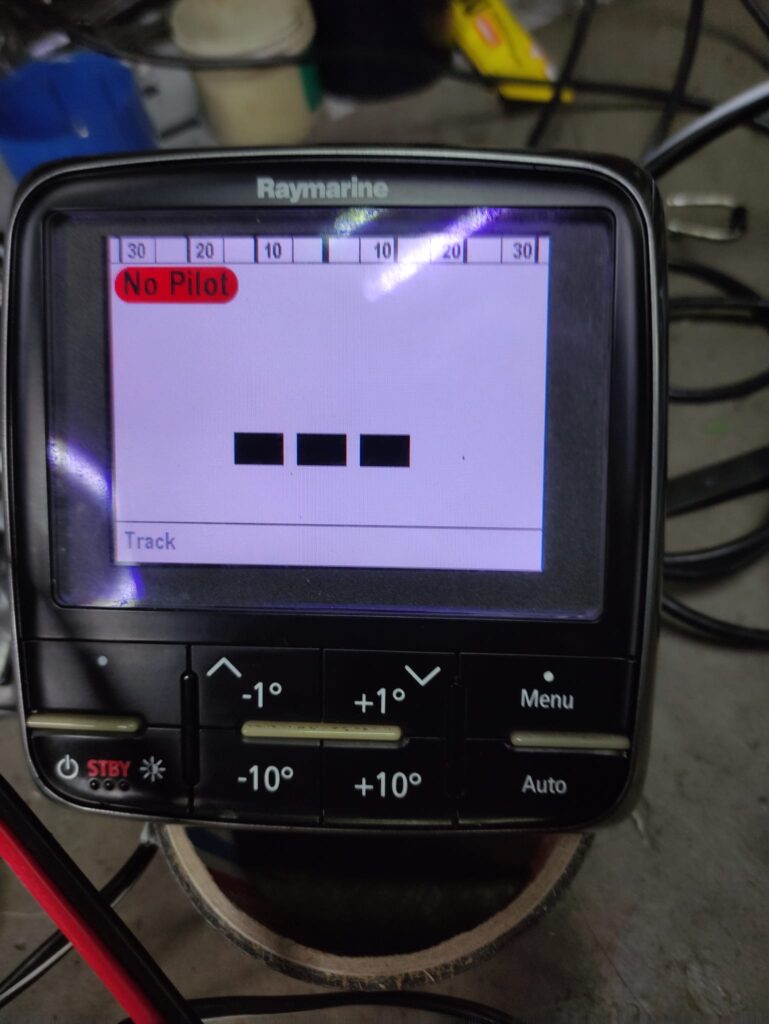
The autopilot. The autopilot is the crew member who never sleeps, who steers the boat for the thousands of miles of ocean crossing that the human watch crew does not need to actively helm, and who when it fails creates an immediate and sustained demand on everyone aboard: someone must steer, continuously, until the fault is found or the destination is reached. I have chased autopilot faults through drive units and control heads and heading sensors and hydraulic pumps on passages where the fault was intermittent, which is the most frustrating category because the system works when you are looking at it and fails when you are not.
The resolution, always, comes from the systematic elimination of possibilities rather than from inspiration: check this, test that, isolate the variable, find the fault, fix it, confirm the fix, put the boat back on the autopilot and watch it for an hour before trusting it. This is not exciting diagnostic work. It is the specific kind of methodical problem-solving that the sea requires and that the sea eventually teaches to the people who stay on it long enough.
The watermaker membrane that gives up in the middle of a Pacific crossing when the next resupply is a week away. The furling gear that jams on the approach to an anchorage in building conditions. The bilge pump that runs more than it should at three in the morning and needs to be traced before the watch is over. These moments are not exciting.
They are the moments when the preparation is tested and the capability is tested and the specific calm of someone who has been in enough of these situations to know that they are solvable is the only thing that matters. They pass. Every one of them has passed. But they are real while they are happening and they are part of the sailing life in a way that the brochure photographs do not convey.
What the Misery Is For
The misery is not incidental to the sailing life. It is structural. The boat that has been through three weeks of November maintenance is a boat you trust, and the trust is specific: you know what you found and what you fixed and what state the boat was in when you launched it and you know that knowledge is current rather than assumed.
The passage that went wrong is a passage that taught you something about weather routing or boat handling or your own response under pressure that the easy passage could not have taught. The breakdown at sea, resolved at sea, is the specific credential of offshore competence that no qualification programme provides: you were out there with a problem and you fixed it and the boat is still going.
The difficulty is the price of the knowledge. Not a price you pay once and then know: a price you pay continuously, across every season, in the ongoing relationship with a boat and an ocean that do not become easier with familiarity so much as they become more legible. You learn to read the conditions that produce the difficulty before they arrive.
You learn to maintain the systems that fail when neglected before they fail. You learn the specific quality of the sea’s indifference to your plans and the specific equanimity that is the only useful response to it. This learning is not available in any form except the direct one: being there, in the difficulty, managing it, and going back for more.
The Connection
And then there is the other thing. The thing that is not the misery and not the skill and not the competence and not even the beauty of the specific places the sailing life takes you to, though it is related to all of these. The thing I am trying to describe when I say connection to the sea.
It arrives most clearly after time away from the water. After a winter of work on land that kept me from the boat for longer than usual, or after a period of harbour work that was necessary but that left little time for actual sailing. When the boat finally leaves and the harbour entrance is behind and the open water is ahead, something in the body that has been compressed since the last time I was here releases.
Not tension in the psychological sense, though that too. Something more physical: a specific alignment between the body and the environment that the land cannot produce, as though the water is the correct medium and the land is the accommodation made for a life that is mostly spent on it.
I have thought about this feeling for twenty-five years and I still cannot explain it with any precision. The closest I have come is this: on the sea, I am in the right place. Not the right place in the geographical sense, though sometimes the anchorage or the passage is that too.
The right place in the sense of a body that is using all its faculties simultaneously and finding the use sufficient: the eye reading the water colour, the ear reading the rigging, the hands on the helm, the barometric sense that is not quite a sense but that has developed across enough passages to register changes in pressure as a physical awareness rather than an instrument reading.
The whole person, engaged by the whole environment, in a relationship that has been building since the first time I was on the water and that deepens every season without ever arriving at a point where there is nothing more to learn.
The Moments of Glory
The moments of glory are not the dramatic ones. Not the storm survived or the difficult berthing achieved without contact or the complex atoll navigation completed without incident. These are the moments of competence, which produce satisfaction rather than glory. Glory is something different.
The moment of glory I think about most often is a dawn on an Atlantic crossing. Three days out from the Canaries, in the trade wind belt, the boat running before a steady fifteen knots from the northeast with the sails full and the autopilot holding a perfect course and the sun arriving over the stern in the specific gold of tropical dawn that is different from every other gold I know. The deck was wet with the night’s dew. The coffee was in my hand. There was nobody else awake.
The boat was doing exactly what it was designed to do, in exactly the conditions it was designed for, and the result was a specific beauty that had nothing excessive about it: not a dramatic sunset or a remarkable landfall or an extreme condition that demanded to be noticed. Just the boat and the wind and the ocean and the dawn, in perfect alignment, for the duration of the watch.
I have had many versions of this moment. Not all of them were dawns. Some were the specific peace of a remote anchorage in the early morning before anyone else was awake. Some were in the water, hovering at fifteen metres on the outer wall of a Tuamotu atoll, watching a grey reef shark move along the coral with the unhurried authority of something that belongs completely to its environment.
Some were at the chart table, the pencil line of a noon sight position on the paper chart, the knowledge that I knew where I was by measuring the angle of the sun rather than by reading a satellite display. Small moments of complete alignment between the person and the place and the skill that brought them together.
These moments are what the misery is for. Not as a transaction, not as a reward for the suffering, but as the natural product of a life built seriously around something real. The antifouling in November is part of the same life as the Atlantic dawn. The pump replaced in the bilge at two in the morning is part of the same competence as the atoll navigation completed without incident.
The difficult passage is part of the same relationship with the sea as the perfect passage that followed it. You cannot have one without the other and you cannot fully appreciate one without having experienced the other, which is the specific education that the sailing life provides and that I would not trade for any version of the easier alternative.
The Deep Happiness
There is a happiness that the sea produces that is different in quality from the happiness available on land. Not more intense, not longer lasting, not better in any comparative sense that could be defended in an argument. Different: a specific, located, whole-body quality of being well that arrives when the conditions are right and the boat is in the right place and the years of work and difficulty and learning have produced the person who is capable of receiving it.
It does not arrive on every passage. It does not arrive on every anchor day. It arrives when it arrives, in the specific moments that the sailing life, and only the sailing life, makes available: the night watch with the stars and the sea and the moving boat, the morning dive in water that nobody dived yesterday, the meal at the table in the bay where the octopus came from the same water and the herbs came from the same deck and the wine is cold and the light is exactly right and the people around the table are exactly who they should be.
It is a happiness that is earned in the fullest sense of the word: by the work, by the learning, by the years of building the capability that makes the moment possible, and by the willingness to go back after every difficult passage and every failed system and every November boatyard with the specific conviction that the next season will contain something worth all of it. It always does. In twenty-five years, it always has.
Not all treasure is silver and gold. Some of it is a dawn watch on the Atlantic, three days from land, in the trade wind, with the coffee and the stars and the boat doing exactly what it was always going to do. Some of it is the antifouling in November and the knowledge that the boat is ready. Some of it is the people you meet on the water and the friendships that the sea builds in ways that land never quite manages.
Some of it is the atoll you only reached because you had been preparing for it for twenty years, and the lagoon inside it that is the colour that has no name, and the anchor going down in the sand at the end of a passage that was everything it was supposed to be.
I have been looking for this treasure for twenty-five years. I have found a great deal of it. I am not finished looking.