
I have run marathons. Multiple. I know what a structured training programme looks like, what periodisation means in practice, what the difference feels like between a body that is recovered and one that is not. I have thought about running performance for years from the specific angle of someone who both trains and coaches, which means I have a reasonably sophisticated framework for understanding what a training stimulus is and what it produces.
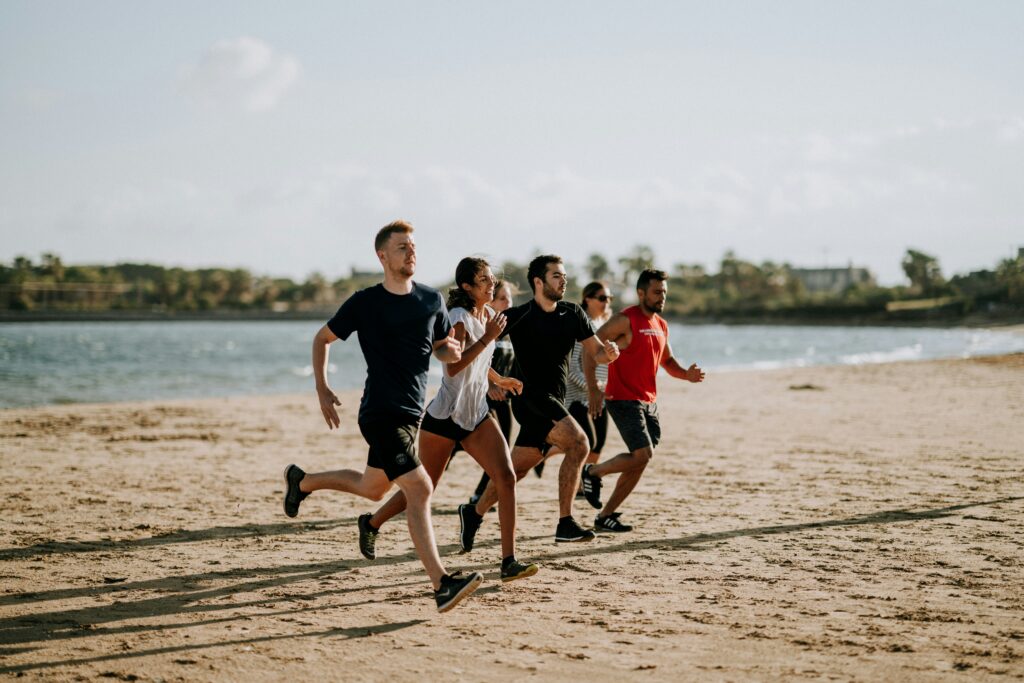
The runs I do from Naora anchorages are not structured training. They are the opposite of structured training in almost every technical sense. The terrain is whatever the hillside above the bay provides. The surface changes every fifty metres. The gradient is determined by the path rather than by a target heart rate zone. The distance is however far the path goes before it runs out or the time runs out or the view from the top is sufficient reason to stop and simply be there for a while.
These runs are, consistently, the best runs I do. Not the fastest, not the most technically productive by the metrics of structured training. The best, in the sense that matters most: the most present, the most alive, the most fully connected to the body and the place and the specific quality of moving through a landscape that has never been optimised for running and that therefore requires everything the body actually has.
The Terrain
A treadmill is a controlled environment. The surface is consistent, the gradient is programmable, the speed is externally set. What this produces is a specific and genuinely valuable training stimulus, but it is a stimulus that the body adapts to quickly because the consistency removes the variability that forces the deeper adaptations. The body learns the treadmill. It does not fully learn the hillside above a Gokova Gulf bay in May, because every step of that hillside is different from the previous one and the attention required to navigate it safely is the attention that connects the running to the place rather than to a screen.
The path above the Gokova bay: loose limestone, then packed earth, then a section of roots over exposed rock, then the pine forest where the needles make the footing soft and the light comes through at an angle that is specific to nine in the morning on this particular hillside. The gradient is not linear. It surges and relents in ways that the body must manage in real time rather than in anticipation. The footing requires focus that the treadmill does not: a specific quality of ground contact awareness that the variable surface demands and that, over the distance of the run, builds the proprioceptive capability that structured training talks about in theory and that real terrain produces in practice.
The Recovery Question
The recovery from offshore running is also different from the recovery from training on land, in ways that are worth naming specifically for the members who run with me on Naora passages.
The swim from the stern after the run is one of the finest recovery tools available anywhere. Cold water immersion after aerobic exercise reduces inflammation, accelerates the removal of metabolic waste from the working muscles, and produces the specific physiological reset that allows another quality session within twenty-four hours rather than forty-eight. Most recreational runners do not have access to this tool in their daily training environment. Everyone on Naora has it available at the end of every run that starts from a bay anchorage. The swim is ten metres from the transom. The temperature is whatever the Mediterranean or the Pacific provides. It requires nothing but the willingness to get in.
The sleep quality on offshore passages also affects recovery in ways that most runners have not experienced. The absence of urban ambient noise, the physical work of sailing days, the specific quality of air on the water: these combine to produce a depth of sleep that most athletes would recognise as unusual and that translates directly into faster adaptation and better performance on the next training stimulus. The offshore environment is, from a recovery physiology perspective, close to optimal. Not because it was designed for it. Because it happens to provide everything that recovery needs and remove most of what prevents it.
What I Tell Members Who Run
When members who run come aboard Naora, I tell them to leave the training plan behind. Not permanently, not as a philosophical position about structured training, which I respect and practise myself. For the duration of the voyage. The offshore running environment provides a stimulus that the training plan cannot account for and a recovery environment that makes the plan unnecessary. Run when the terrain is available and interesting. Stop when the view is worth stopping for. Swim when you get back. Sleep as deeply as the passage allows. Eat what the chef produces from the fresh ingredients of wherever we are. The body will respond to this with the kind of adaptation that the gym and the programme and the periodisation cycle have been trying to produce, because the conditions that produce it are all present and the conditions that prevent it are all absent.
The marathon runner who comes back from a Naora passage will not have run marathon-specific workouts. They will have run hills in Turkey and paths in Croatia and beach sections in the Marquesas and island circuits in Fiji, and they will have recovered in water and slept in clean air and eaten food that was alive yesterday. The adaptation this produces is not predictable from any standard training model. It is the adaptation of a body that has been fully used in an environment it was designed for. Which is, in the end, the only adaptation that matters.