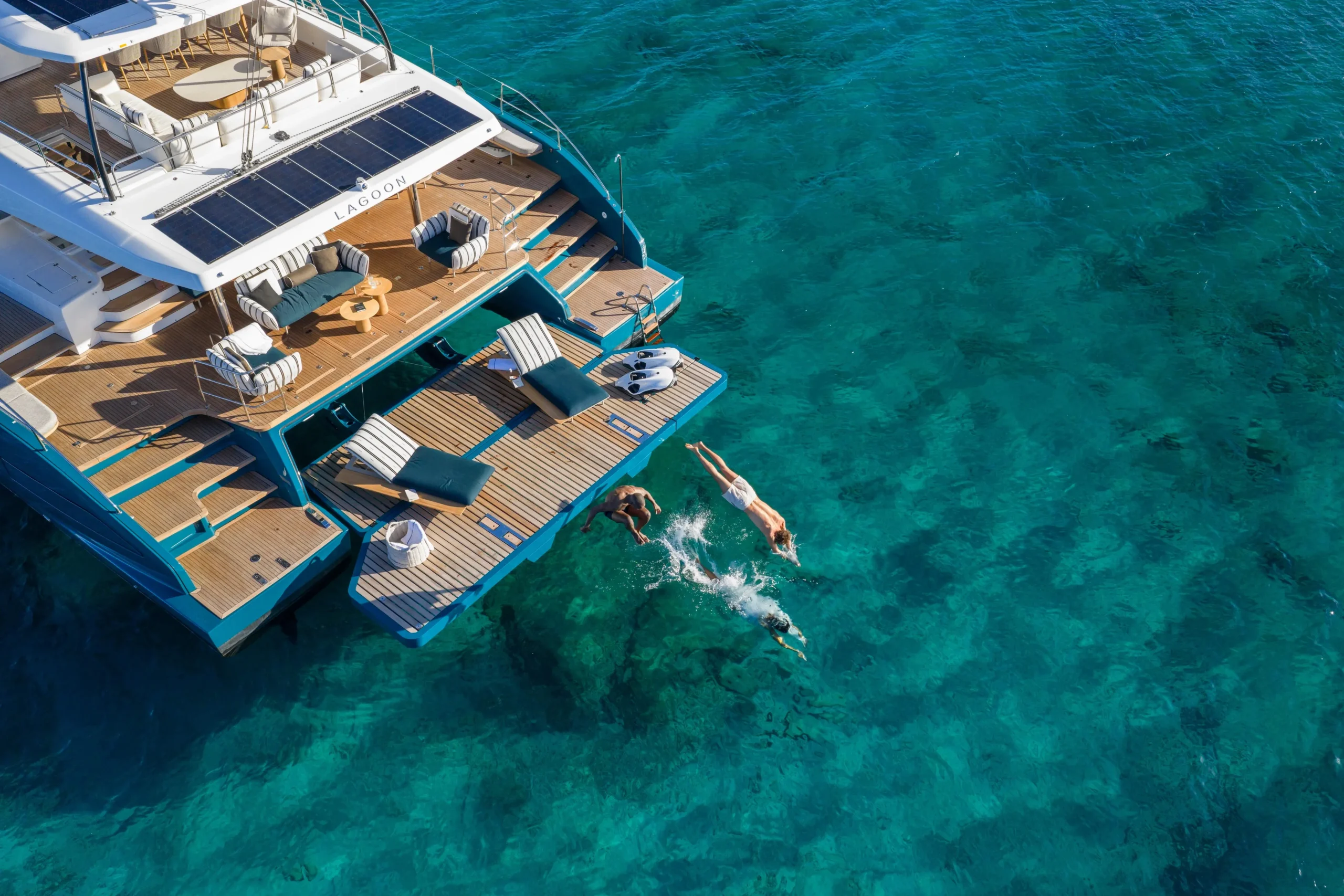
The tender is the inflatable dinghy with an outboard engine that the Eighty2 carries on the stern. It is not the most glamorous piece of equipment on the boat. It does not have sails or a navigation station or a 300-bar compressor. What it has is the ability to get people from the anchored boat to the shore and back, which is the capability that all the other equipment on the boat depends on when the boat is anchored somewhere without a marina berth, which is most of the time.
The tender is the interface between the Naora life and the places the Naora life is lived in. Everything that happens ashore begins and ends with the tender. This makes it worth understanding.
What the Tender Does
The morning dive starts with the tender: gear, people, and the specific anticipation of a small boat heading toward a reef or a wreck or an atoll pass in the early light. The dive team returns to the tender after the dive, and the tender brings the catch back to the boat if there is a catch, or brings the debriefing conversation and the morning’s observations back if there is not.
The market visit starts with the tender. The chef and whoever is interested loads into the dinghy after breakfast and runs to the nearest landing spot to find the morning’s provisions. In Turkish and Greek anchorages this is often a small quay or a beach with a track leading to the village above. In Pacific anchorages it is often a beach with no quay, which means a slightly athletic dry landing that the crew manages with the specific skill of people who have pulled a tender up a tropical beach many hundreds of times.
The shore excursion starts with the tender. The village visit, the walk up the hill, the restaurant that the harbour master’s wife recommended: all of these begin with the fifteen-second ride from the swim ladder to the landing. The return from these excursions, after dark sometimes, with the anchor light of the Eighty2 visible from the shore and the tender ride back across the dark water: this is one of the finest moments of the anchor day, the specific transition from the world of the place to the world of the boat, made by a small inflatable on a calm evening sea.
The Tender at Night
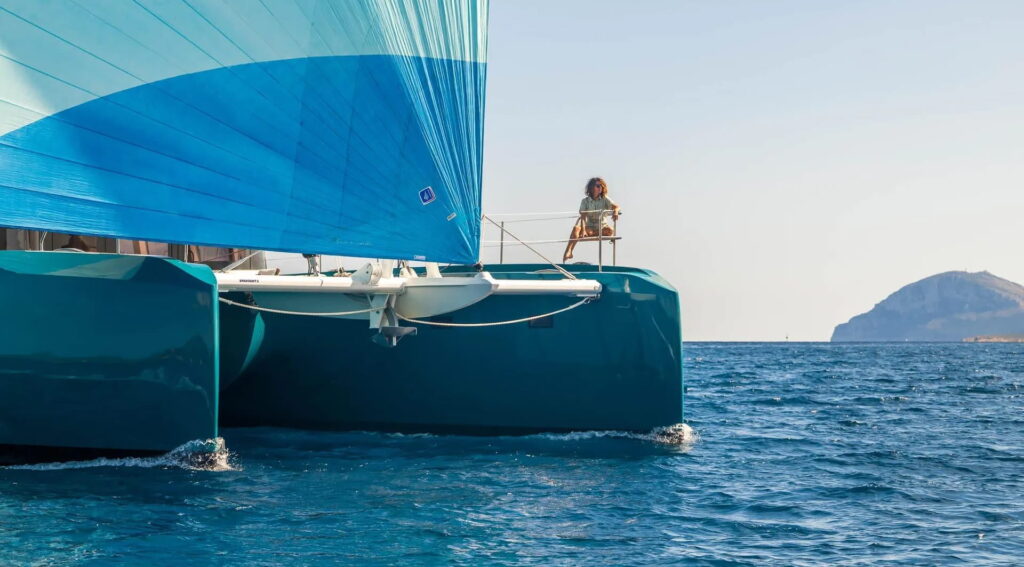
The night return to the boat by tender is an experience that Céline has written about elsewhere in the context of the anchor light: the specific quality of approaching the boat from the water in the dark, the anchor light steady at the masthead, the hull growing from a shape to a specific object as the tender closes the distance. It is a transition that sharpens the sense of the boat as a place rather than a vessel: you are going toward something, and the something is home in the specific temporary and complete sense that the offshore life produces.
The crew member who drives the tender at night does so with the specific care of someone who understands that the people in the tender have been ashore and are returning to the boat and that the quality of this transition matters. The engine is quiet, the approach is slow, the bow line is handed up to the stern crew without drama. The boarding is managed. The tender is secured. The boat receives its returning members and the evening continues.
The Tender as Independence
The tender provides the Eighty2 with a quality of independence that marina berths remove. When the boat is at anchor rather than alongside a dock, the tender is the only connection to shore, which means the boat is genuinely in the place rather than attached to the place’s infrastructure. The anchorage is chosen because it is the right place rather than because it has a berth. The shore relationship is managed on the boat’s terms rather than the marina’s. The freedom this produces is specific and real: the ability to be exactly where the cruising ground is finest rather than where the facilities are most convenient.
The tender is, in this sense, one of the most important instruments of the Naora philosophy: the specific capability that allows the boat to be in the places worth being in rather than the places worth docking in. It is inflatable and it has an outboard engine and it is nobody’s idea of glamour. It is also the reason the Mediterranean bays and the Pacific atolls and the Seychelles outer islands are accessible rather than theoretical. Small boat. Large consequences.