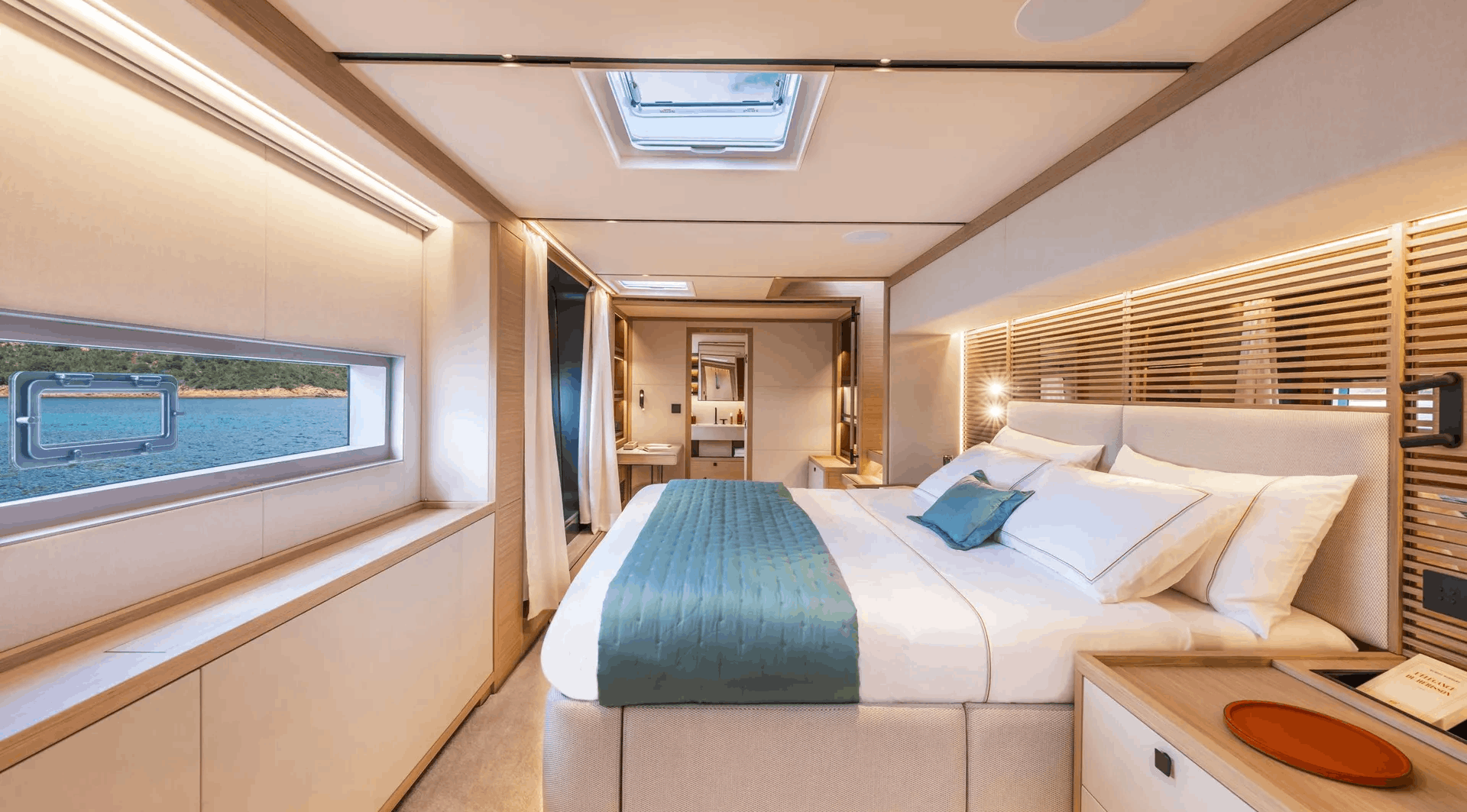
The cabins on the Eighty2 are not large. A double berth with a proper mattress, an en-suite bathroom with a hot shower, storage for everything you brought and slightly more, a porthole or a hatch that opens onto whatever the anchorage looks like this morning. By any measure other than the measure of the sea, they are modest spaces. By the measure of the sea, they are exactly right.
What the cabin gives you is yours completely. Not a hotel room that was someone else’s last night and will be someone else’s tomorrow, not a shared bunk in a floating hostel, not a cabin you move through on the way to somewhere more important. Your space, for the duration of your time aboard, tended by the crew each day and returned to you in the condition it deserves.
The bed made, the towels folded, the bathroom cleaned. You come back from a dive or a shore excursion or a morning watch and the cabin is ready again, and the specific pleasure of returning to a small space that has been cared for is one of the pleasures of the boat that most members notice within the first day.
What the Cabin Contains
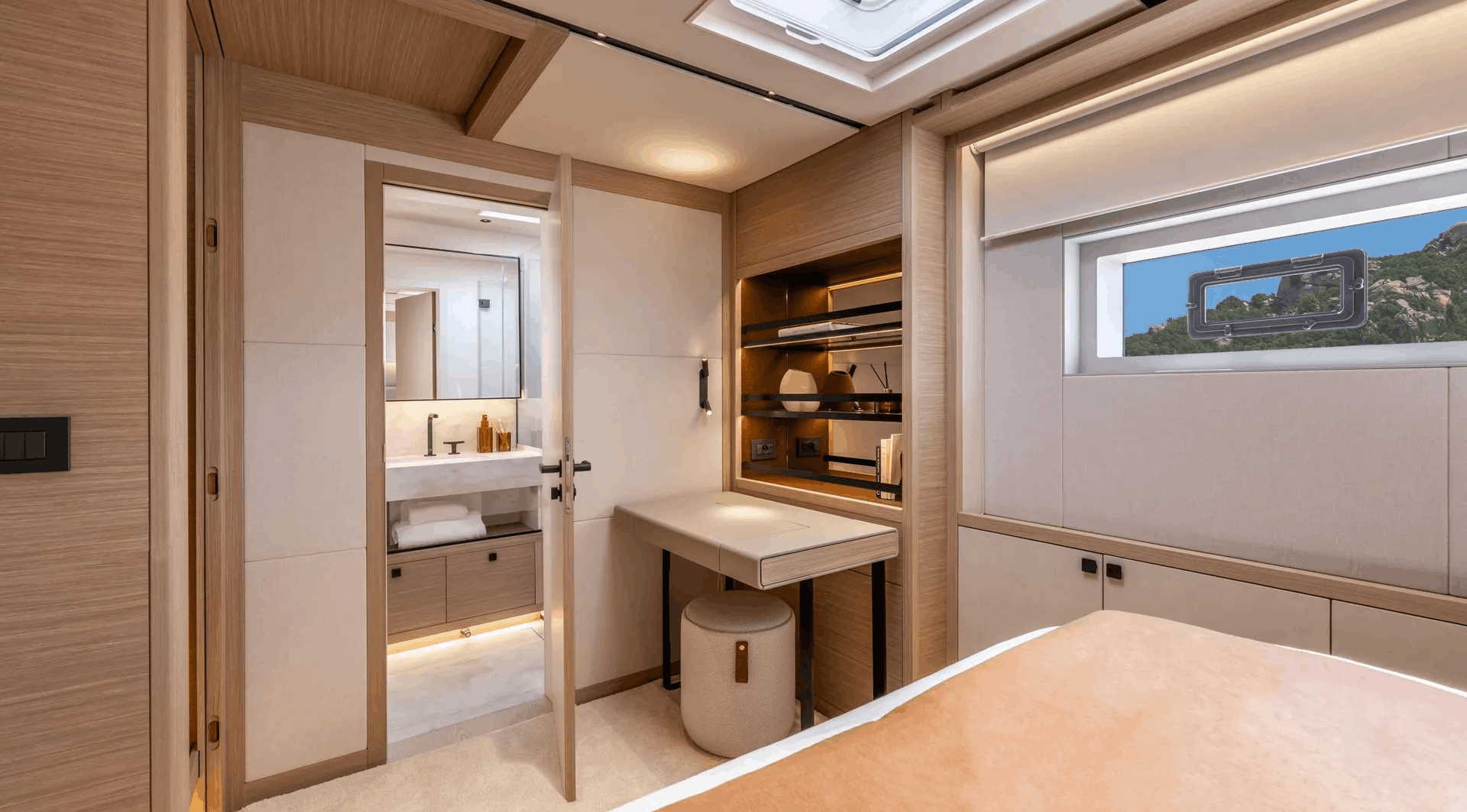
The en-suite is not a compromise. A hot shower with proper pressure, a basin, a head that works reliably because the marine sanitation systems on a vessel of this category are maintained to the standard that twelve people using them continuously across five years demands. The storage is considered: hanging space for the clothing that needs it, drawers for the rest, a dedicated space for the things that need to be accessible in the night without turning on a light.
The porthole is the feature I hear about most from members after they have been aboard. Not the view from the flybridge or the afterdeck, which is magnificent and shared. The view from the berth: the specific rectangle of world that the porthole frames when you wake up, which is different in every anchorage and which is the first information you receive each morning about where the boat is and what the day is going to be.
In the Mediterranean it is limestone and pine and a strip of sea that is already the right shade of blue. In the Tuamotu it is the lagoon, flat and turquoise and so close that the sound of the water is the first sound of the morning. In the Pacific trade wind belt on passage, it is the ocean moving past the hull at seven knots and the horizon sitting perfectly level in the frame.
The Stewardess and the Daily Service
The cabins are serviced daily. The stewardess manages this with the specific professional care of someone who understands that a person’s private space is where they decompress and recover and sleep, and that the quality of that space directly affects the quality of everything they do outside it. The bed is made properly, not pulled straight. The bathroom is cleaned, not wiped. The cabin is ventilated if the conditions allow, so that the specific marine smell that accumulates in an enclosed space on a boat is managed rather than tolerated.
This is not a luxury add-on. It is part of the fundamental offer of the Naora voyage: that the people aboard are free to be fully present in the experience because the logistics and the maintenance of that experience are managed by professionals who are good at it. The cabin service is part of that. It frees you from the domestic management that would otherwise occupy a significant fraction of the attention you came here to spend on something else.
Privacy on a Shared Boat
The cabin is the one space on the boat where you are genuinely alone if you want to be. The social spaces, the salon, the afterdeck, the flybridge, are shared: that is their function and their value. The cabin is not. The door closes and the boat’s social life continues without you until you are ready to return to it, which might be an hour or might be a morning or might be an afternoon if the passage has been demanding and the berth is the correct response to the day.
The crew respects this completely. The cabin service happens within the daily rhythm of the boat and does not interrupt the member’s use of the space unless the member specifically arranges it differently. Nobody knocks unless there is a reason. The privacy of the cabin is genuine and it is protected by the specific culture of a boat run by professionals who understand what privacy means to people who have come offshore to escape the constant availability that land demands.