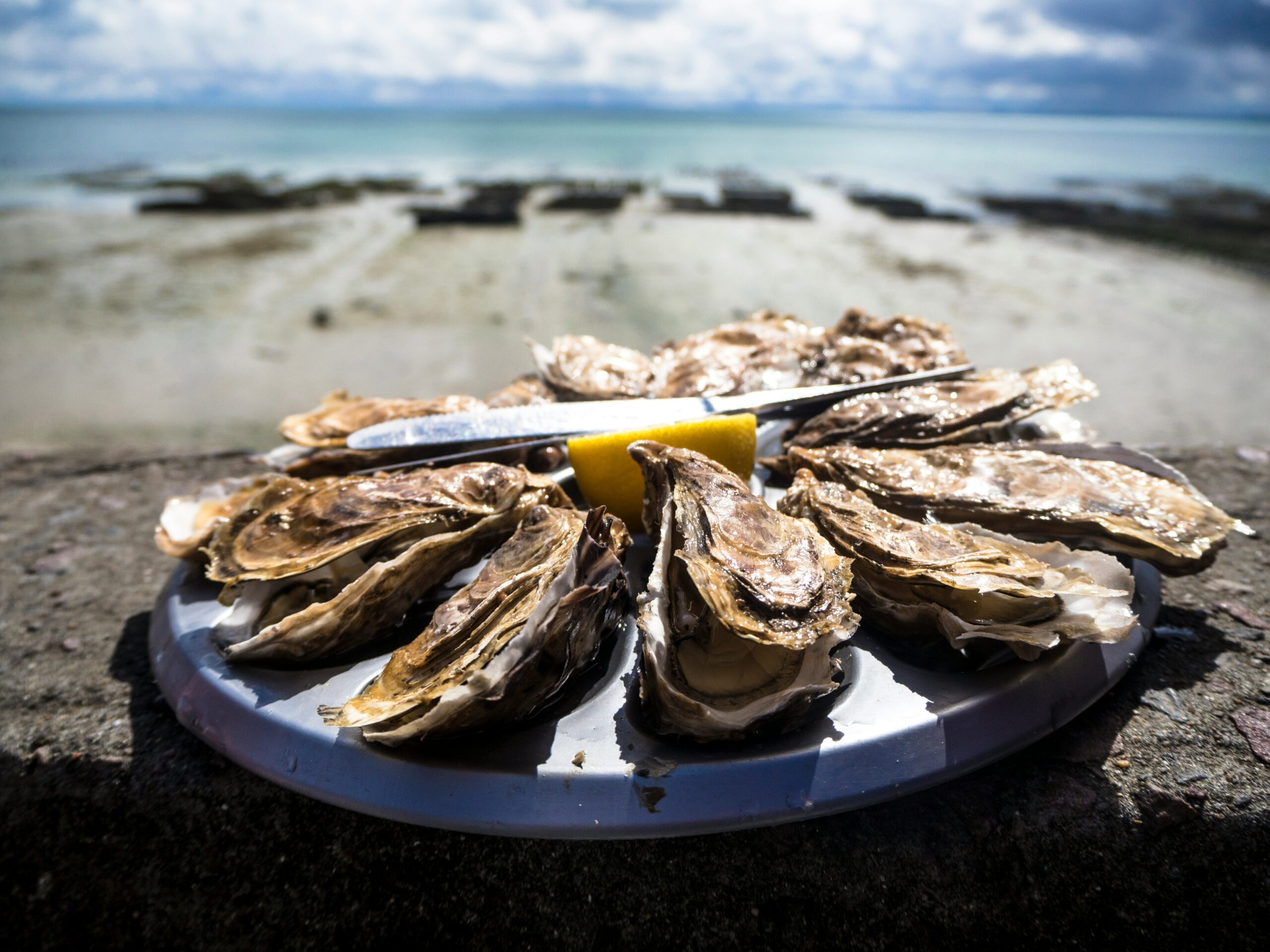
The oysters were not planned. They were noticed.
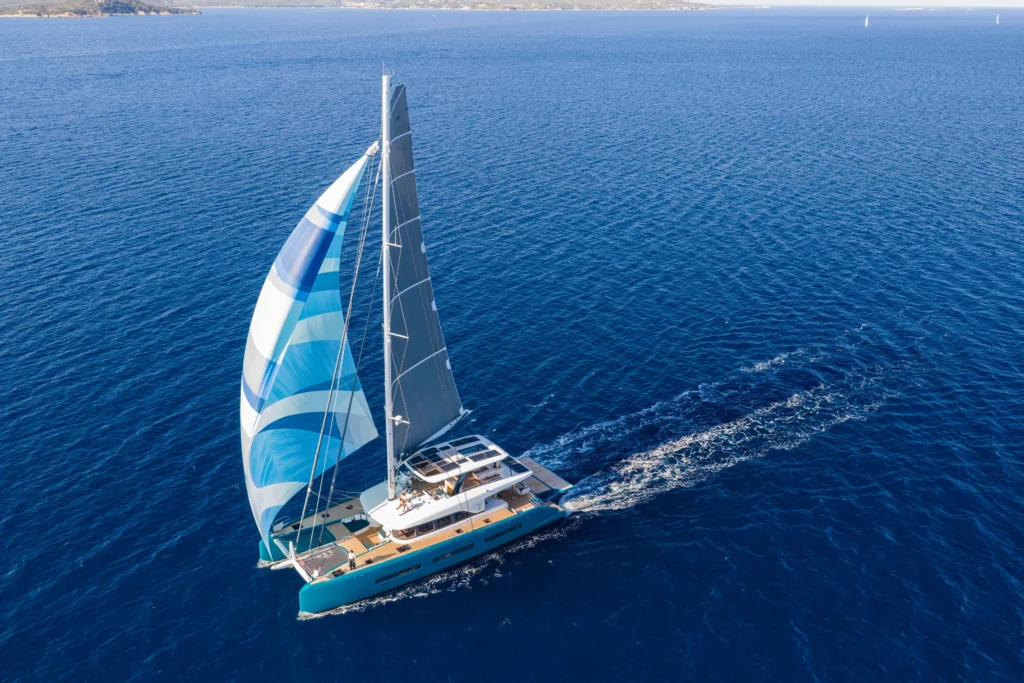
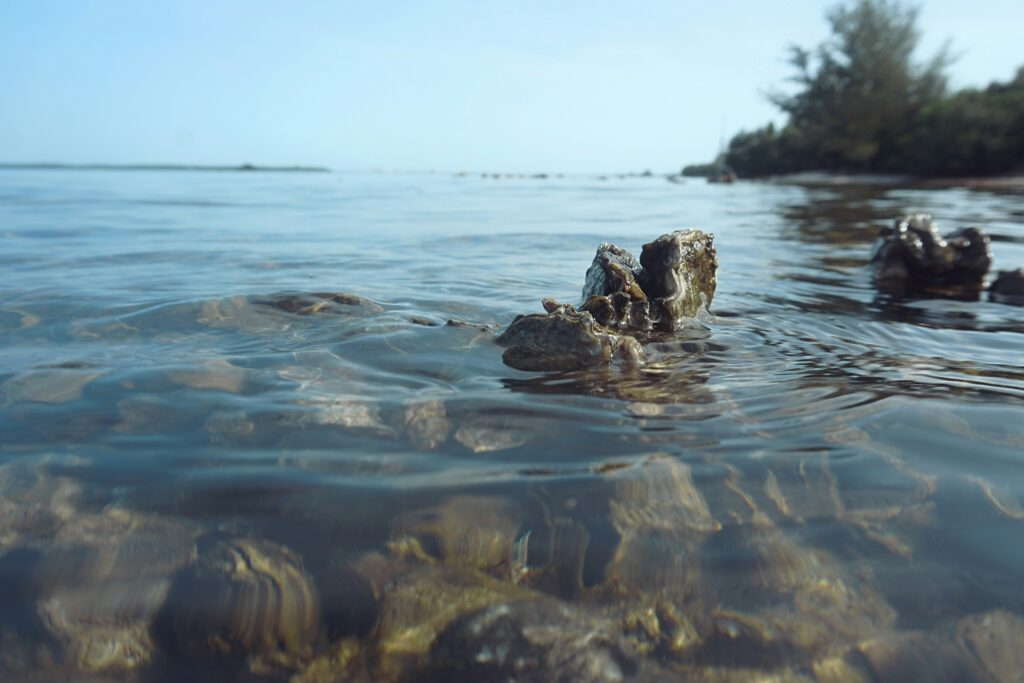
We were anchored in a bay in the Ionian Islands, on the Greek coast, and I had gone ashore in the tender in the late afternoon to walk the path above the bay. On the way back down to the waterline, at a point where the rocks were exposed by the falling tide, I saw the oysters. Clustered on the rock face below the tideline, dense and large and unmistakably what they were. I went back to the boat and reported the finding. Sven looked at me for a moment and said: bring a knife and a bag.
The Gathering
The gathering of wild oysters from a rock face requires a specific tool and a specific technique, both of which Sven provided on the spot. The knife must be a specific shape: not a sharp blade but a short, thick, wide knife designed to work into the joint between the shell and the rock without sliding and without opening the oyster prematurely. The technique is leverage rather than force: the knife enters the joint at the hinge end of the shell, a small rotational movement breaks the seal, and the oyster releases from the rock without breaking the shell.
We gathered for forty minutes. Not more: the bay was pristine and we were taking a portion of a resource that existed without our intervention and would continue to exist if we took sensibly. The rule, self-imposed, was to take only the largest, to leave the smaller ones to mature, and to take nothing from areas where the density suggested that the population was sparse. By the end of the forty minutes we had a bag that was, by the chef’s estimation when we returned to the boat, enough for an extraordinary aperitif for eight people.
What the Chef Did and Did Not Do
The chef opened the oysters and served them at the four o’clock aperitif on the afterdeck with a mignonette he made from a shallot and some of the wine vinegar we carry in the stores and a twist of black pepper. That was it. No bread, no butter, no elaborate accompaniment. The oysters were placed on a bed of the ice we had from the refrigeration system and arranged on the cutting board that served as the presentation surface.
This restraint was the correct decision. Wild oysters from a clean Greek bay in October, gathered an hour ago, do not need elaboration. They need to be cold, they need to be open, and they need a squeeze of lemon if you want it, which some of us did and some of us did not. The flavour is the flavour of that specific rock and that specific water and that specific October afternoon, and adding things to it is a form of obscuring rather than improving.
Eight of us ate them on the afterdeck with the Ionian Sea in every direction and a glass of cold white wine that the chef had also produced from somewhere at the exact moment it was needed. The conversation at the aperitif that evening was better than usual, and I have thought about why. I think it is because the oysters required something of everyone who ate them: a willingness to eat something that was alive in the sea ninety minutes ago, still tasting of the sea it came from, without the mediation of a restaurant or a market or a supply chain. The food was direct. The directness produced a specific quality of presence at the table.
What the Long Table Knows About This
I have been thinking about the Long Table since that evening with the oysters, because the connection between them seems important to me. The Long Table works the same way the oysters work: it removes the mediation between the people around it and the thing they are actually there to do, which is to say something honest to each other. The oysters removed the restaurant. The Long Table removes the presentation. Both ask the same thing: be here, with what is actually here, without the layer that usually stands between you and the reality of the moment.
The meal that requires only patience is the meal that teaches you something about the meal that requires a lot of it. The oysters on the rock face in October, gathered and eaten with minimal intervention, are the argument for why the Long Table is set simply: local food, people around it, a conversation that starts from something real. The elaboration is not the point. The presence is the point. The oysters, as usual, said it most directly.