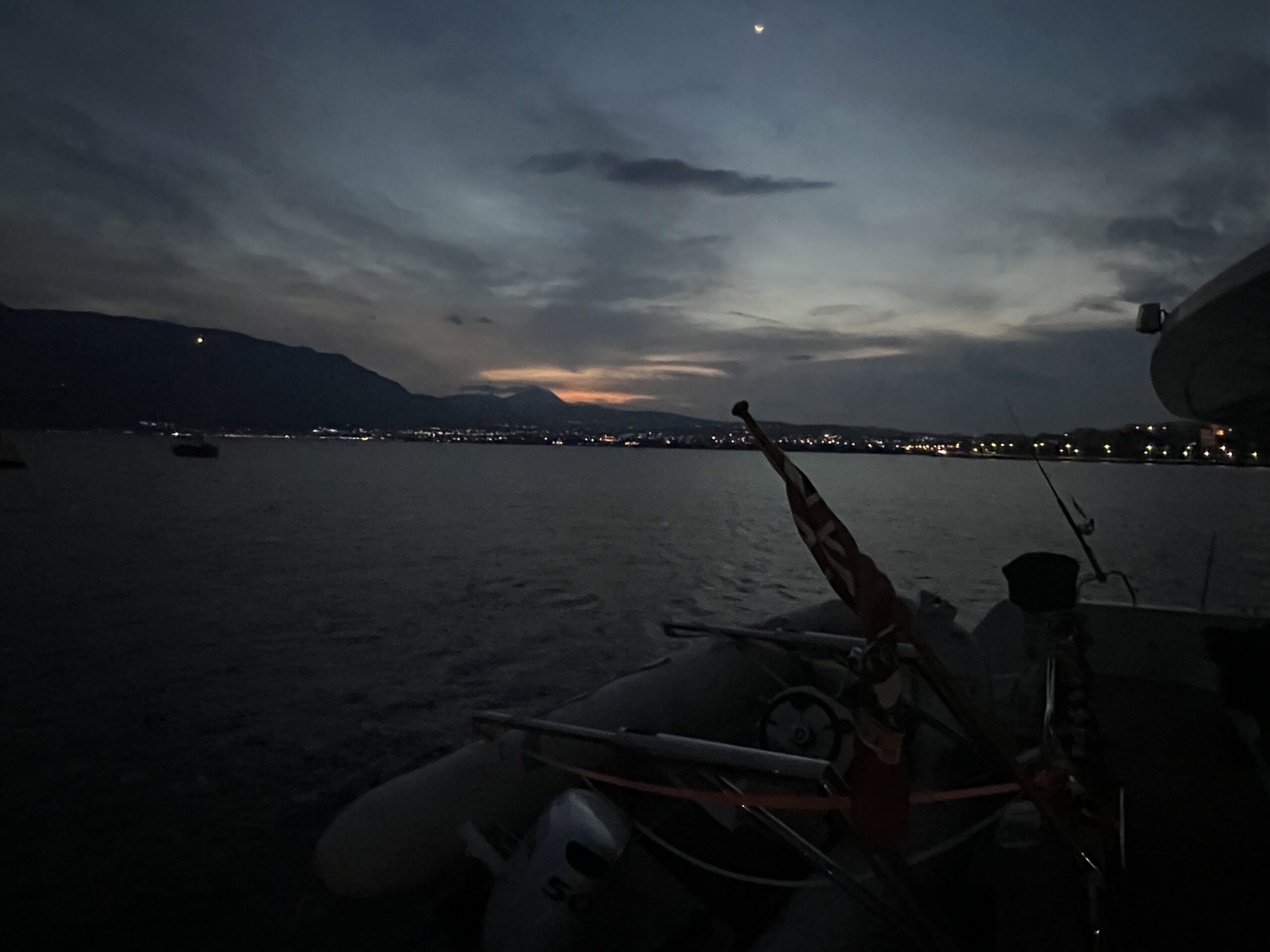
I am not the most experienced person aboard when it comes to this. Sven knows the reefs and Céline knows the diving and the chef knows what to do with whatever comes back. What I can tell you is what it feels like to be part of the lobster hunt on a reef at low tide, which is one of the more completely unexpected pleasures I have encountered in the sailing life.
It happens after dark, and it happens when the tide is low enough to expose the reef flat to the point where wading is possible. The lobster, unlike the cold-water lobster that most Europeans have encountered, lives in the crevices and holes of tropical reef systems and comes out at night to feed in the shallows. At low tide, on a calm night, with torches, you can walk the exposed reef and find them.
The Reef at Night
The first time I did this I was entirely unprepared for the experience of a reef at night. The same reef that was a snorkelling site in the afternoon is, after dark, a completely different environment. The fish that were visible during the day have retreated into the coral structure and their place has been taken by the nocturnal species: the hunting crabs moving across the reef flat with a purposeful efficiency that makes their daytime torpor in the crevices seem like a pretence. The sea urchins that were tucked into holes in the afternoon are fully extended in the darkness. The lobsters, invisible during the day, are suddenly present in the torchlight, their antennae visible first as twin lines extending from a crevice before the rest of the animal emerges.
Catching a lobster is a technique rather than a chase. They are fast and they can disappear back into the coral faster than you can react if you approach incorrectly. The correct approach is from above and in front: the torch held steady on the animal, the movement slow and deliberate, the catch made from behind the head where the lobster cannot see clearly and cannot reverse effectively.
Sven demonstrated this once and I reproduced it approximately twice before developing something that could be called competence. The lobsters we caught were taken in pairs, never more, returned immediately if they were below the size that the local community considers mature, and in the bag for the boat if they met the standard.
The Crab Question
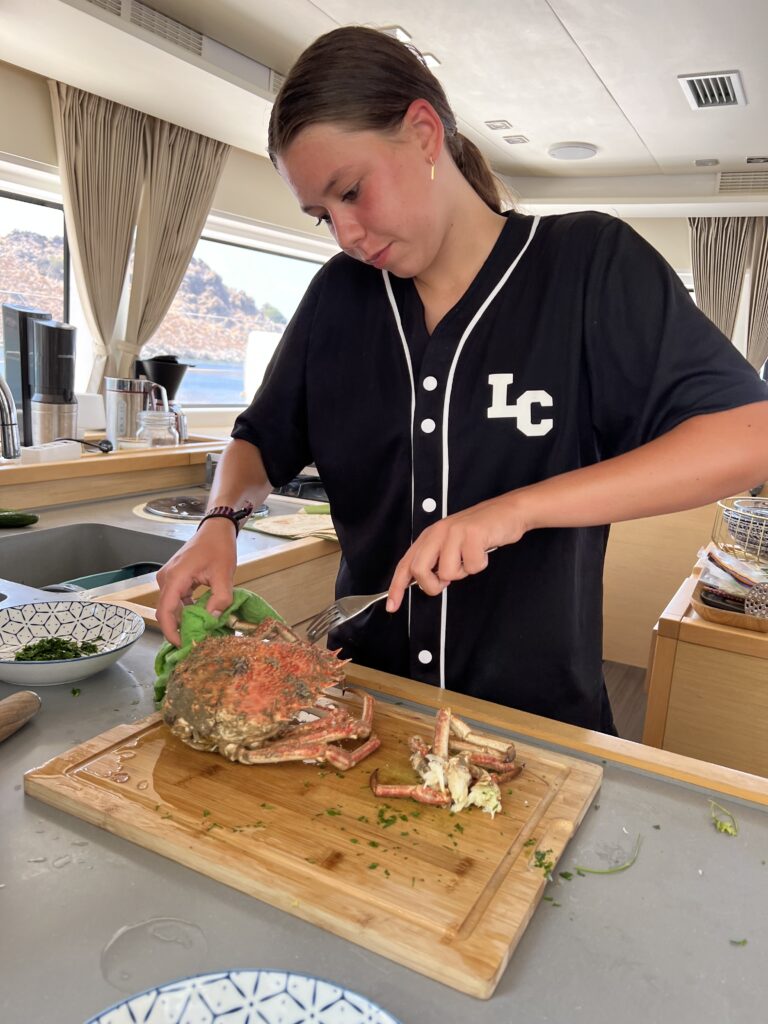
The crab situation in the Pacific is different to the lobster situation in one important respect: the coconut crab. The coconut crab is the largest terrestrial invertebrate on earth and lives on the islands and atolls of the Pacific, feeding primarily on coconut and various plant matter. It is protected in many jurisdictions and we do not take it. What we do take, in the appropriate quantities and from the appropriate locations, are the reef crabs that inhabit the shallower coral areas and that come onto the reef flat at low tide in the same patterns as the lobster.
The reef crab is smaller than the lobster and faster than its size suggests. The technique is different: you need gloves for the larger specimens because the claws are effective and specific in their application to fingers. The catch is usually incidental to the lobster hunt, a bonus rather than a primary objective, and the chef treats it as such: the crabs come back to the boat and enter whatever preparation the morning produces, sometimes a specific crab dish and sometimes a addition to something else, always immediately and never frozen because the freshness is the point.
What Comes Back to the Boat
The return from a successful lobster hunt is one of the more satisfying endings to an evening that I have encountered at sea. The tender comes back to the boat in the dark, the catch in a bag in the bottom, and the chef is waiting at the stern with the specific expression of someone who has been told what is coming and has already decided what to do with it. The lobsters go into fresh water briefly to calm them and then directly into the pot or onto the grill, depending on what the chef has decided and what other ingredients are available to work with.
The preparation is always simple. Lobster of this quality and this freshness does not need technique applied to it in the way that lesser ingredients need technique. It needs heat and time and salt and the herb from the deck garden and the lemon or the lime from the last atoll and whatever the chef has decided to put alongside it. The simplicity is not laziness. It is the correct response to an ingredient that is already extraordinary and that complexity would obscure rather than improve.
I thought about this on the evening we ate the lobsters from the reef, sitting on the afterdeck with the lagoon around the boat and the stars overhead and the specific satisfaction of food that was alive and wild and free two hours before it was on the table. This is what the hunt produces that a market cannot. Not better food, necessarily, though it is very good. A different relationship with the food: one where the eating is the end of a process that you were part of, in the dark, on a reef, in the middle of everything.