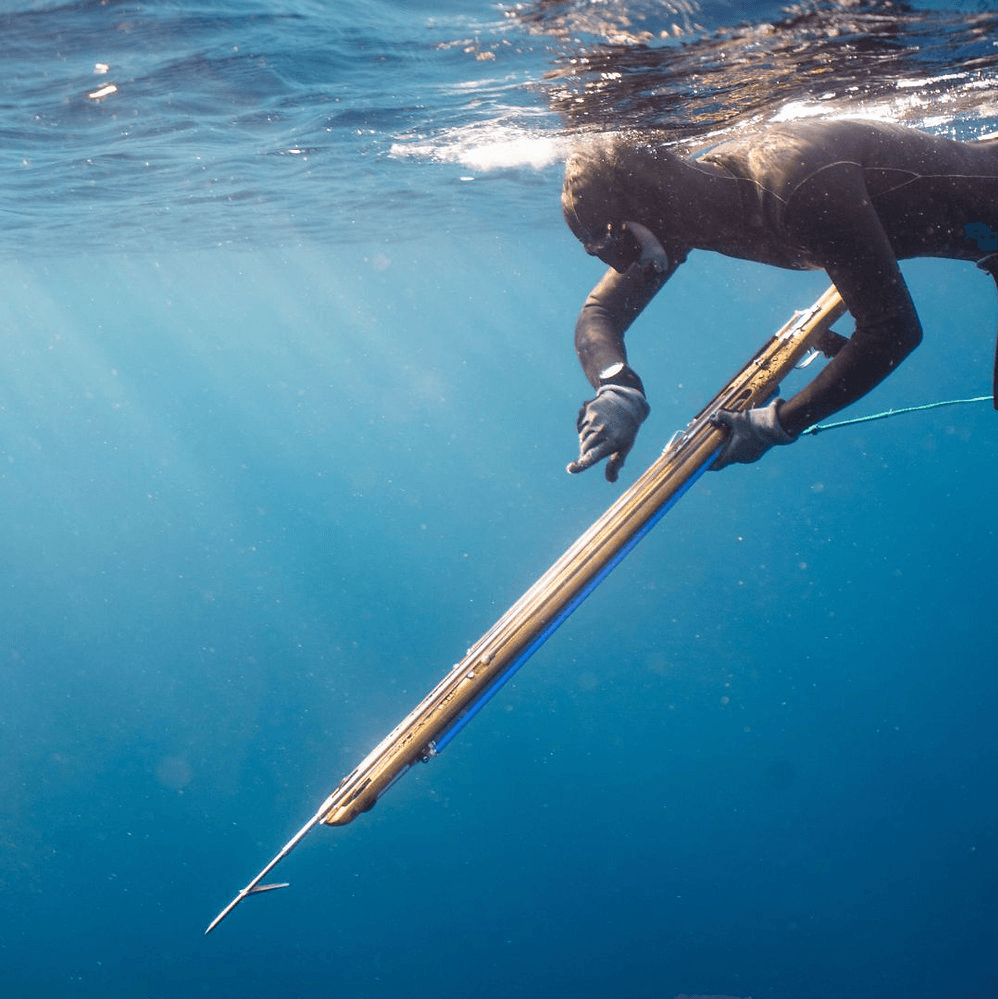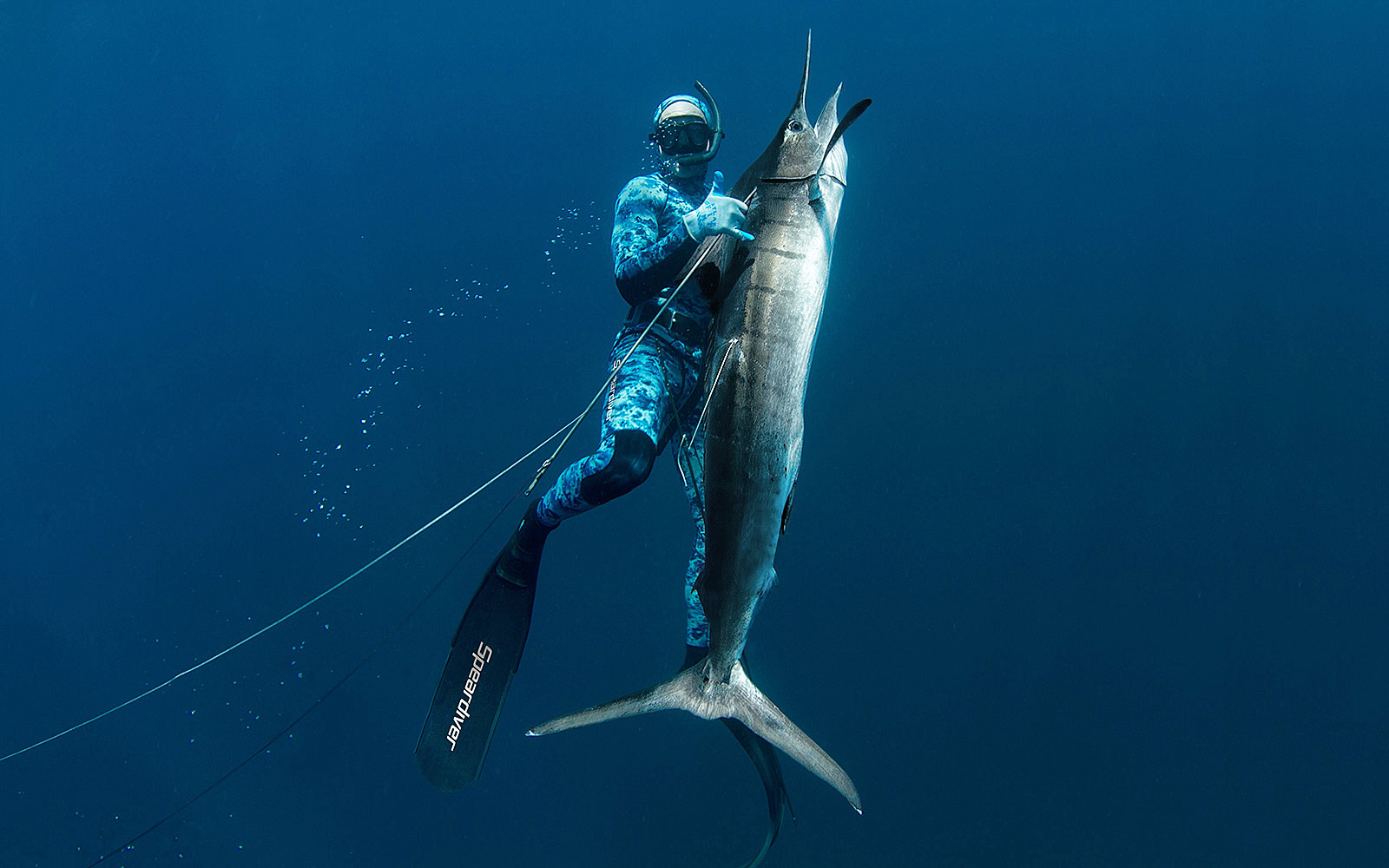
The speargun lives in a specific locker on the starboard side of the Eighty2, alongside the freediving fins and the wetsuit and the float and line that marks the position of a diver below the surface. It is not the most used piece of equipment on the boat. It is the most satisfying, in the specific way that something is satisfying when the skill required to use it is not trivial and the result when you use it well is a fish on the table that you caught with your own breath and your own patience and your own aim.
My father taught me to spearfish the way he taught me most of the things that matter at sea: not in a formal lesson but by doing it in front of me until I understood it and then letting me try until I was doing it correctly. The first principle is stillness. The fish do not flee from something that is not moving. The second principle is patience: you wait for the shot rather than taking the shot. The third principle is breath control, which is the same principle that freediving requires and that the reef teaches to anyone who stays in it long enough to understand what the fish are doing and why.
The Tuamotu Outer Wall
The best spearfishing I have done on the Naora route has been on the outer walls of the Tuamotu atolls in French Polynesia. The water clarity is exceptional, the fish populations are healthy because the outer reefs are not fished heavily by the local communities, and the species are large and varied: parrotfish, grouper, jack, and the occasional grey reef shark that passes along the wall at depth and requires a specific kind of equanimity to share the water with without disrupting the hunt.
The parrotfish is the Tuamotu spearfishing target that I return to most often in memory and most specifically in appetite. Not because it is the largest or the most difficult shot, but because the flesh, grilled over charcoal the same afternoon it was caught, has a flavour that is specific to the reef system it came from: the algae and the coral that it was eating, the specific minerals of the Tuamotu lagoon water, the fact that it was alive and free in a clean ocean four hours before it arrived at the table. I have eaten parrotfish in restaurants. It is not the same fish.
The Ethics of It
We spearfish selectively and within what the reef can sustain. This means specific things in practice: we do not target species that are protected or that local communities depend on for subsistence. We take only what will be eaten that day. We do not spearfish in protected marine park areas where it is not permitted. We avoid areas that show signs of heavy fishing pressure, which in the Pacific are relatively rare in the remote anchorages we visit but which exist and require judgement.
The selective approach also produces better eating. A fish taken selectively, from a specific part of a specific reef, at a specific size that indicates full maturity, is better than a fish taken simply because it was there and in range. The judgment about which fish to take is not only an ethical one. It is a culinary one, and the two happen to align in a way that I find satisfying: what is right for the reef is also, usually, what is best for the table.
My father has been making this judgment for longer than I have been alive, and the reef knowledge he has accumulated across many seasons in many oceans is the foundation of how we spearfish on Naora. He knows which species are resilient and which are not, which sizes indicate a fish that has reproduced and can afford to be taken, which parts of a reef are productive and which are recovering. I am learning this knowledge and it is taking time to learn, which is appropriate for knowledge of something as complex and as specific as a living reef system in a specific part of the Pacific Ocean.
What Comes Off the Reef and Onto the Table
The spearfishing catch on a Naora passage goes directly to the chef, who has usually been monitoring the morning hunt with the specific attention of someone who needs to know what will be available for the afternoon preparation. The parrotfish grilled whole over charcoal with the herbs from the deck. The grouper prepared in a Provençal style that has no particular logic in the Tuamotu except that the chef wanted to try something and the fish was good enough to try it on. The jack filleted and eaten as sashimi twenty minutes after landing because the chef determined, correctly, that this specific fish required no improvement from cooking and that the best way to honour it was to eat it as it was.
This is the specific pleasure of spearfishing that the trolling line does not provide: the choice. The trolling line takes what it takes and the fish is determined by the ocean. The speargun takes what you decide to take, from a reef you have been in and understood, at a moment of your choosing. The fish on the table is the result of a decision made underwater with a specific aim at a specific target, and the eating of it carries that specificity in a way that I cannot fully explain but that I notice every time.