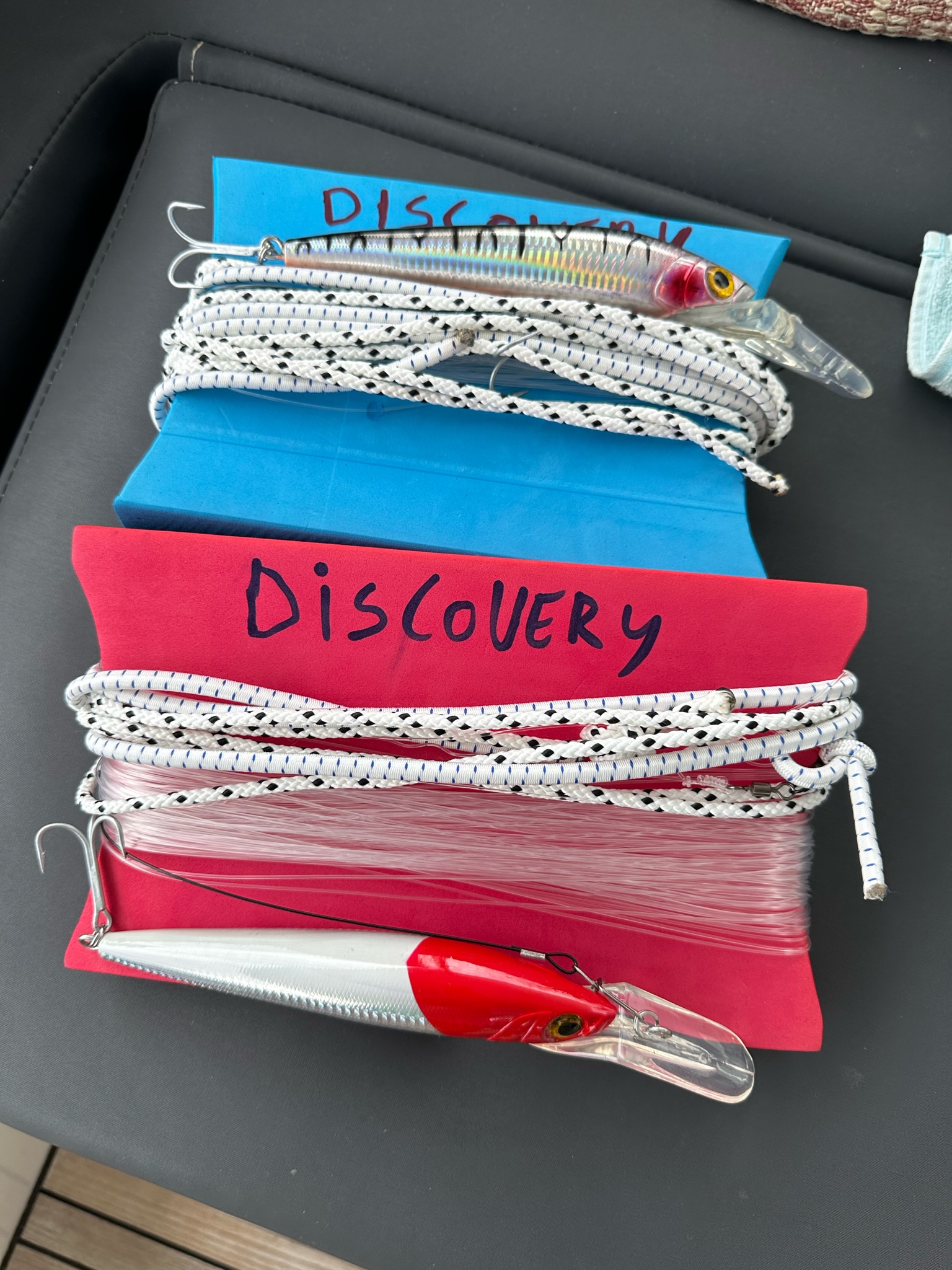
The trolling line goes out the moment we leave an anchorage on a Pacific passage and comes in the moment we approach the next one. This is not always, but it is the intention and the practice. Over a Pacific crossing of three weeks, the line is in the water for the majority of the passage, and what it produces is among the finest eating available anywhere on the five-year route.
The Pacific is an extraordinarily productive ocean in the trade wind latitudes. The southeast trade wind belt, between five and twenty-five degrees south of the equator, pushes warm surface water westward and creates the upwelling conditions that concentrate pelagic fish: yellowfin tuna, dorado, wahoo, and the various species of jack and bonito that work the current edges and the temperature gradients. The trolling line in this water is not optimistic. It is the correct tool for the correct conditions, used by the correct people, and it produces with a regularity that continues to satisfy me after many Pacific passages.
The Strike
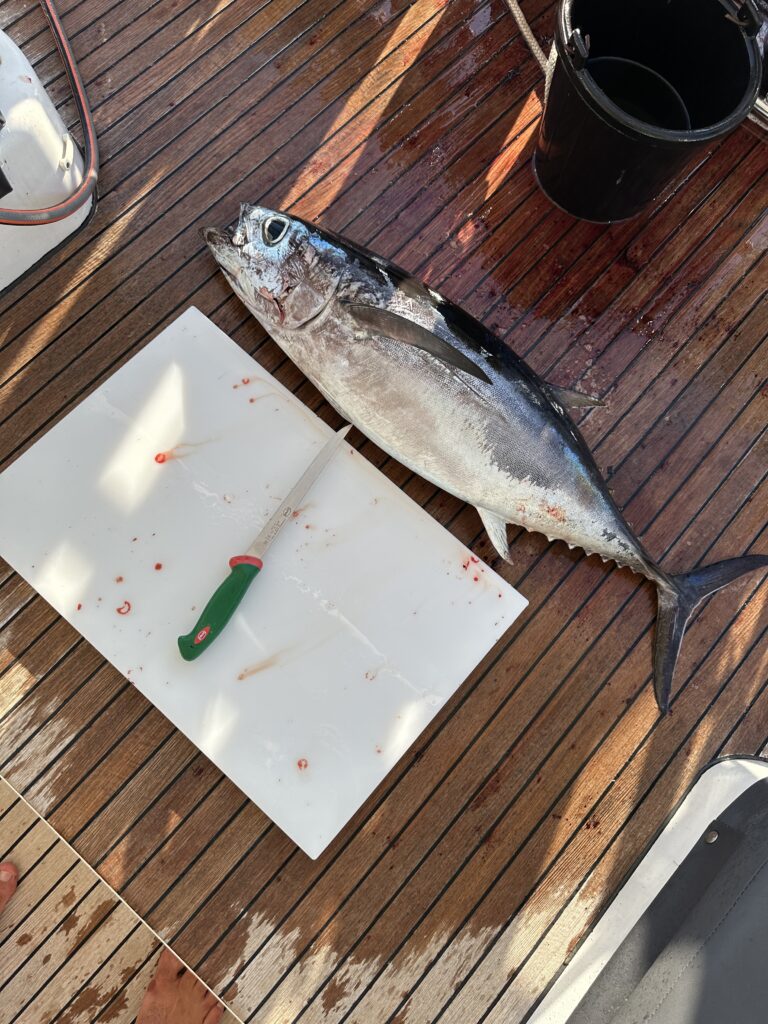
The strike of a large yellowfin on a trolling line is unmistakable. The reel screams. The line goes bar-taut. The whole stern of the boat vibrates with the fish running away from it at a speed that the line must absorb gradually or the connection fails. I have been landing Pacific tuna for enough years that the first thirty seconds after a strike are now almost automatic: brake applied, drag adjusted, rod secured. But the visceral response to that sound, the specific high-pitched scream of line leaving the reel fast, has never entirely lost its effect on me. It is the sound of something alive and powerful and completely uninterested in cooperating.
A large yellowfin fights for twenty to forty minutes. Not continuously: there are periods of sustained runs and periods of slower circles as the fish tires. The battle is a negotiation between the fish’s strength and the angler’s patience. Rushing it loses the fish. The experienced approach is to apply consistent pressure, never more than the line and the connection can sustain, and to take line when the fish gives it and give line when the fish demands it. The fish comes in when it is ready. I have learned this across many decades and many fish and I still occasionally forget it when the excitement of a large tuna overrides the patience of experience.
The Mahi-Mahi
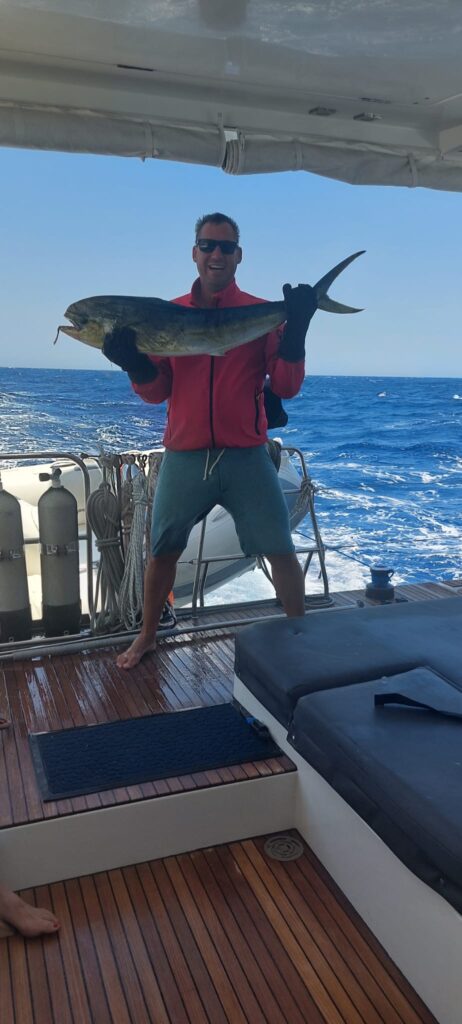
The mahi-mahi, or dorado, is the most common Pacific trolling catch in the trade wind latitudes and one of the finest eating fish available. What makes it distinctive at the moment of landing, before any thought of eating, is the colour: an extraordinary iridescent blue-green and gold that fades within minutes of death. The living fish, alongside the boat, is among the most beautiful things I have encountered in the water, which is a considerable claim given what lives in the Pacific. The dead fish, filleted on the cutting board, is white and firm and mild in a way that is entirely detached from the spectacular appearance of the living one.
Mahi-mahi feeds well at every scale of preparation. Grilled simply over the gas burner with olive oil and the lemon that we keep in the stores specifically for this purpose and the herbs from the deck garden: this is the basic version and it is superb. Made into ceviche with lime juice and coriander and whatever the chef decides to put alongside it: this is the more elaborate version and it is what happens when the fish is very fresh and the lime tree at the last atoll produced enough fruit and the chef has been thinking about a specific combination since the fish came over the stern two hours ago. Both versions share the fundamental quality of Pacific trolling fish: the fish was alive in the ocean this morning and it is on the table this afternoon, and the interval between those two facts is short enough to matter in every aspect of the eating.
The Wahoo
The wahoo is the fish that experienced Pacific anglers specifically seek and that most of the world has never encountered because it does not travel well and is therefore almost never the species on a restaurant menu. It is long and sleek and extremely fast, a specialist predator that takes the lure at speed and runs with it in a way that distinguishes it from tuna immediately: where a tuna fights in circles and surges, a wahoo makes long, straight, almost geometric runs that strip line off the reel at a rate that requires respect.
The flesh is white and dense and has almost no fat, which makes it different in preparation requirements to the oily tuna. It does not work well as sashimi. It works extraordinarily well grilled or smoked, and our chef’s smoked wahoo, prepared over a simple wood smoke setup on the afterdeck when the conditions allow a longer stay at anchor, is one of the meals that members describe specifically and at length when they talk about the food on the Pacific chapter. The smoking takes several hours. The patience required is substantial. The result is something that exists nowhere outside the specific combination of a fresh wahoo, a skilled chef, a wood smoke, and an afternoon at anchor in the Pacific with nothing else to be doing.