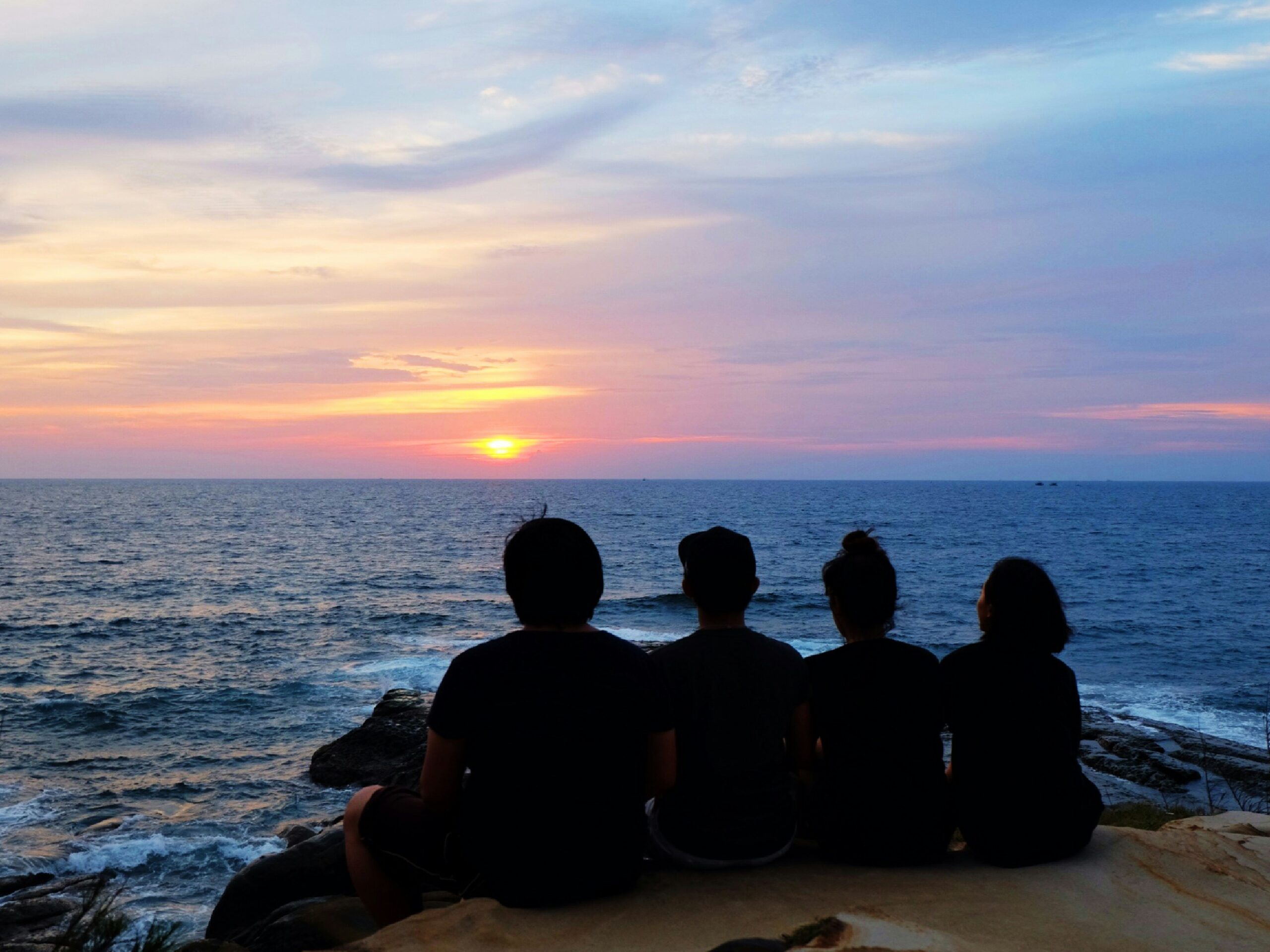
You have been reading about Naora for a while now. Maybe a few minutes. Maybe, if you found this site some weeks ago and have been returning to it, considerably longer. You have read about the route and the boat and the community and the meals and the diving. You know more about what the Tuamotu atolls look like from the water and what the Atlantic crossing produces in people who have never been offshore than most people will ever know without having been there.
And you have not yet reached out. I want to write to you directly about that.
What You Are Probably Thinking
You are thinking some version of: this is extraordinary, but I am not sure it is for me. Maybe the timing is not right. Maybe you are waiting for a moment when life is less complicated, when the business is at a better point, when the children are slightly older, when the calendar has a gap that is long enough. Maybe you are not sure whether you deserve it, which is a version of the same thought that people with highly developed achievement instincts tend to have about anything that is primarily for their own benefit rather than for someone else’s.
Maybe you are waiting to be sure. Waiting until you know that you will get seasick or you will not, that you will get on with the other members or you will not, that the experience will be what you are imagining or something different. Waiting for the certainty that no decision of any significance has ever offered before being made.
What I Want to Tell You
The timing will not become right by waiting for it. The window in the calendar, if you do not make it deliberately, will not appear on its own. The business will not reach the settled state you are imagining, because businesses do not reach settled states: they reach new levels of complexity. The children will grow and require different things, not simpler ones.
Life, as observed across enough years and enough conversations with people who have waited for the right moment, tends to become more complex rather than less, and the space that would accommodate an adventure tends to shrink rather than expand as the years accumulate.
The people I have spoken to who waited too long and then joined, or who waited too long and did not join in time, are consistent in what they say. The ones who joined late say: I wish I had come earlier, when I could have been part of more of it. The ones who did not join say: I should have made the time. The ones who joined when they were uncertain and the timing was imperfect say, almost universally: it was the right decision, and the moment I was waiting for was not coming from outside. It was waiting for me to make it.
What the Conversation Actually Is
The conversation we are asking you to start is not a sales call. There is no pitch prepared, no close at the end, no follow-up sequence if you do not respond. It is a conversation in the Naora sense: two people talking honestly about whether this is the right thing for you at the right time, with both sides genuinely interested in getting that assessment right rather than producing a specific outcome.
If the conversation confirms that Naora is right for you, we will tell you that and we will talk about what comes next. If the conversation confirms that Naora is not right for you, or not right now, we will tell you that too. The only outcome we are not interested in is the one where someone joins who should not have, for a voyage that was wrong for them, at a time that was wrong for them. That serves nobody.
So reach out. Not because you have decided. Because you are curious enough that the question deserves a real answer rather than a page on a website. Because the worst outcome of the conversation is that you learn something useful about what Naora is and decide it is not for you, which is a perfectly good outcome and leaves everyone better informed. And because the best outcome, which is that the conversation confirms something you have been sensing since you first read about us, is worth finding out about.
What Is Waiting
On the other side of the decision, if you make it, is a specific version of your life that is not available in any other way. The morning watch on the Atlantic crossing when the dawn comes up and the trade wind is in the sails and you are three weeks from anywhere and the only thing required of you is to be there. The Tuamotu lagoon where the water is the colour that has no name. The Long Table in a port you arrived at by sea after a passage that cost you something and gave you more in return. The community of people who went offshore together and came back knowing each other in the specific honest way that the sea produces.
None of this is guaranteed. The crossing is real, the conditions are real, and the experience will be what the ocean and the people and the specific days of the voyage produce rather than what any description promises. What I can tell you is that the people who come back from Naora passages describe something that I recognise from my own life at sea: a specific quality of having been fully somewhere, which is different from the quality of having visited, and which stays in the memory in a form that most other experiences do not.
That is what is waiting. And the conversation that leads to it starts with a single message.