We start every sailing season in the Mediterranean. Not because it is the only option or the most dramatic beginning. Because it is, consistently and across many years, the sea that rewards the return most reliably. Every other ocean on the Naora route we are visiting for a finite period and then leaving. The Mediterranean we return to. It is where the circumnavigation begins and where it ends. It is the sea we know most completely and the one that most consistently produces experiences that could not have been planned.
This article is about why that is. Not about specific anchorages or sailing conditions, which are covered elsewhere. About the specific character of the Mediterranean as a place to sail and to live on a boat, and why that character produces a specific kind of loyalty in the people who know it well.
The Light
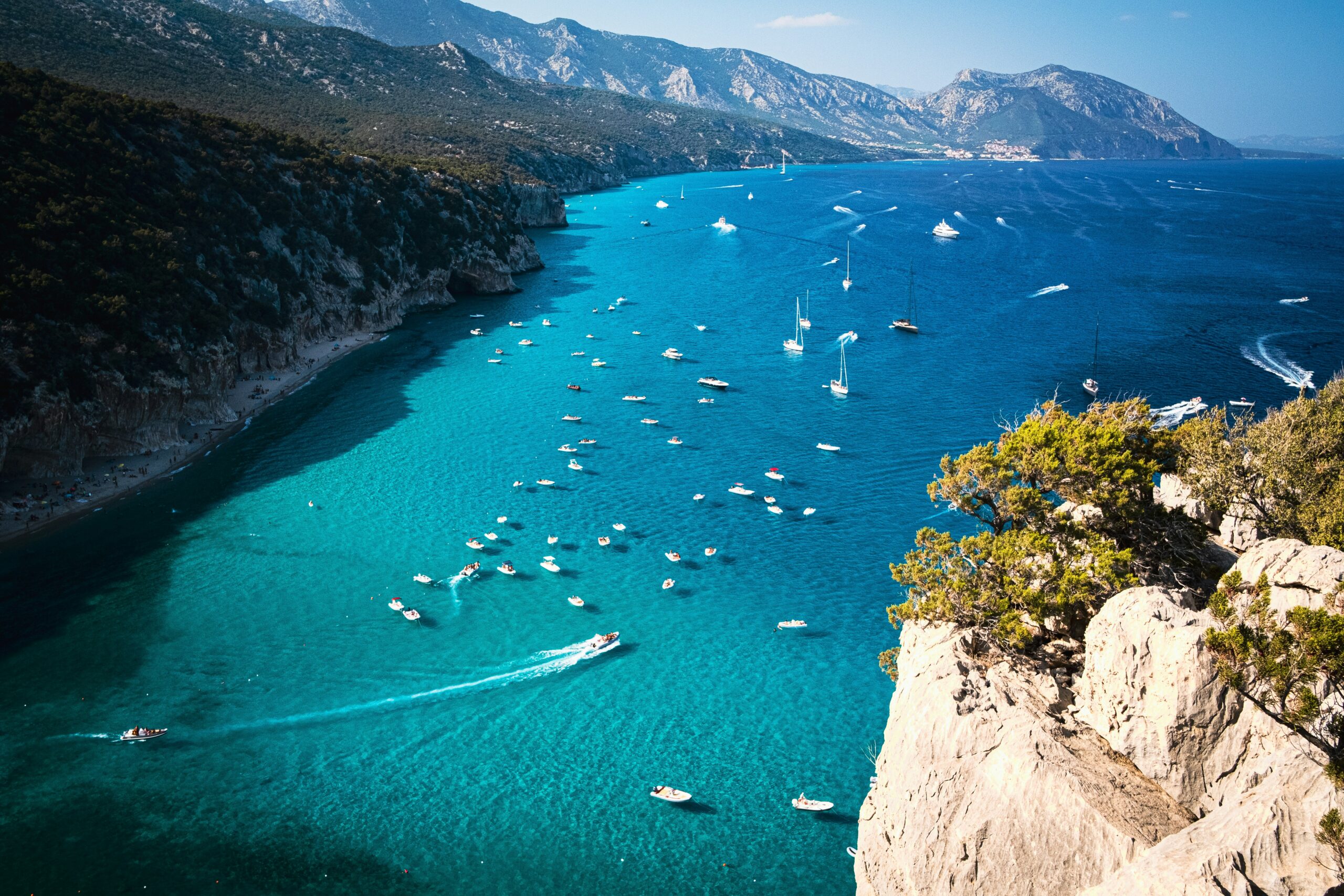
The Mediterranean light is the thing that painters have been trying to capture for five centuries and that photographs almost but never quite reproduce. It is not simply bright, though it is very bright. It is specific in a way that changes how everything looks: the limestone of the Greek islands, the terracotta of the Italian coast, the whitewash of the Turkish villages, the pine forest dropping to the water in Croatia. All of these things exist in their fullest version in the Mediterranean light. Seen in grey northern European light, the same objects would be beautiful but different. Here they are themselves.
The light changes through the day in ways that reward attention. The early morning is cool and pale and the sea is at its most translucent. By mid-morning the light has sharpened and the colours have become vivid. The afternoon is full and hot and the shadows are short and precise.
The late afternoon, the hour before sunset, is when the light turns gold and the limestone catches it in a way that makes anchorages look like they have been arranged by someone who understood exactly what the light would do to them at this hour. The sunset itself is the Mediterranean at its most excessive, and it happens every evening without any diminishing of its effect on the people watching it.
The Food
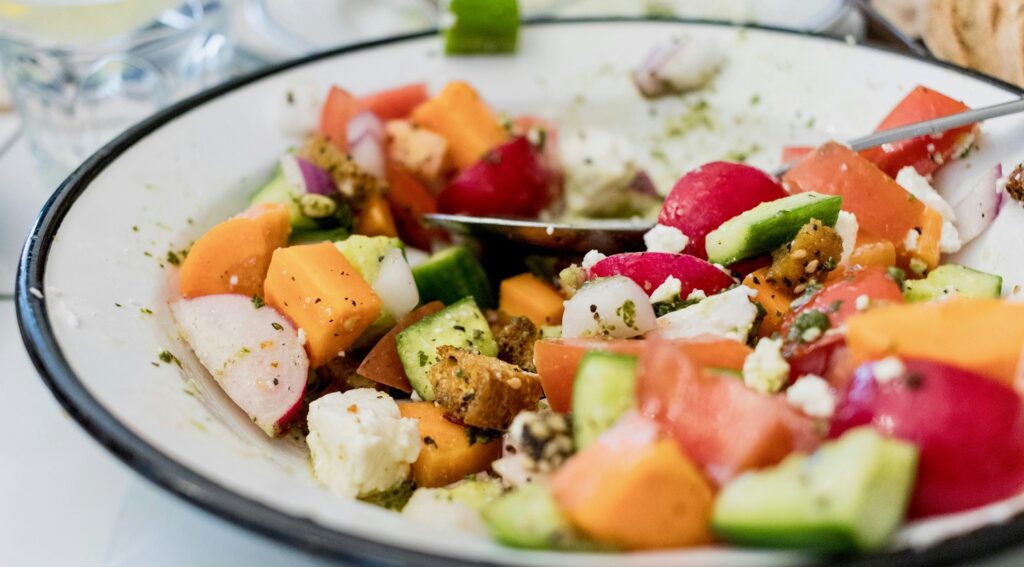
The Mediterranean diet is not a marketing term aboard the Eighty2. It is what our chef buys at every port market and what grows on the deck in the herb garden and what comes off the fishing line in the afternoons. Olive oil from the grove above the bay. Tomatoes from the woman at the Bodrum dock. Fish bought directly from the fishermen at the morning market in Split or Antibes or Palma. Cheeses and bread and vegetables that reflect the specific soil and sun of wherever we are anchored.
The food of the Mediterranean is inseparable from the places it comes from. The tomato in Palermo’s Ballarò market tastes the way it does because of the volcanic soil of Sicily and the specific amount of sun it received and the fact that it was picked this morning rather than last week. The olive oil in a Cretan taverna tastes the way it does because of the specific olive groves on the hillsides above the village and the specific traditions of the family that has been pressing it for generations.
Eating well in the Mediterranean is not about finding the best restaurant. It is about being in the right place at the right time with the right ingredient, which on a boat that moves from market to market through the season is exactly the situation we are always in.
The Anchorages in May
May in the eastern Mediterranean is one of the finest months available in any sailing ground in the world. The water is warm enough to swim in but not yet hot. The air temperature is perfect for being on deck all day. The anchorages that will be crowded in August are empty in May: bays in the Turkish gulfs and the Greek Dodecanese where we anchor alone, with pine forest above and clear water below and no other boat in sight.
The Gokova Gulf in May is the Mediterranean at its most undisturbed. A hundred-kilometre inlet surrounded by pine-covered mountains, with bays accessible only by boat, where we spend entire days without seeing another vessel. The water in the bay at Cokertme, where the pine trees come to the shoreline and the bottom is sand at five metres and the fish are visible from the surface, is the Mediterranean that the charter brochures promise and that most visitors do not find because they arrive in July when everyone else is there.
We start in Bodrum and move into these waters in the first weeks of May, deliberately, before the season catches up with us. This is one of the specific privileges of the Naora route: we are not constrained by the two-week charter window that dictates when most visiting sailors arrive. We are there when the places are at their best, and we leave when the season changes, and we do not return until the following year when the cycle begins again.
The Familiarity That Deepens Rather Than Diminishes
The reason the Mediterranean always brings us back is ultimately this: familiarity with the Mediterranean deepens rather than diminishes it. Most destinations become less interesting on the third or fourth visit, when the novelty has worn off and the surprise is no longer available. The Mediterranean becomes more interesting on the third and fourth visit, because each return adds a layer of knowledge that makes the next one richer.
The bay that was just beautiful the first time has a specific character by the fourth time: the way the afternoon wind comes around the headland at precisely three o’clock, the specific quality of the water in the morning before the wind builds, the fishing spot on the eastern side that the local boats know and that we found by watching where they went.
The restaurant in the small town above the anchorage that had no sign and was recommended by the harbour master’s wife: we know where it is now, and we know that the owner’s daughter is studying in Athens and that the table by the window has the better view and that arriving before eight means you can still get the rabbit.
This accumulation of specific knowledge, of relationships that have been built over multiple seasons, of places that have been understood rather than visited: this is what the Mediterranean gives to people who return to it regularly and attend to it carefully. It gives it, year after year, without running out. That is why we always come back. And that is why the Mediterranean is not just the beginning and end of the Naora circumnavigation. It is the place that makes the whole journey make sense.