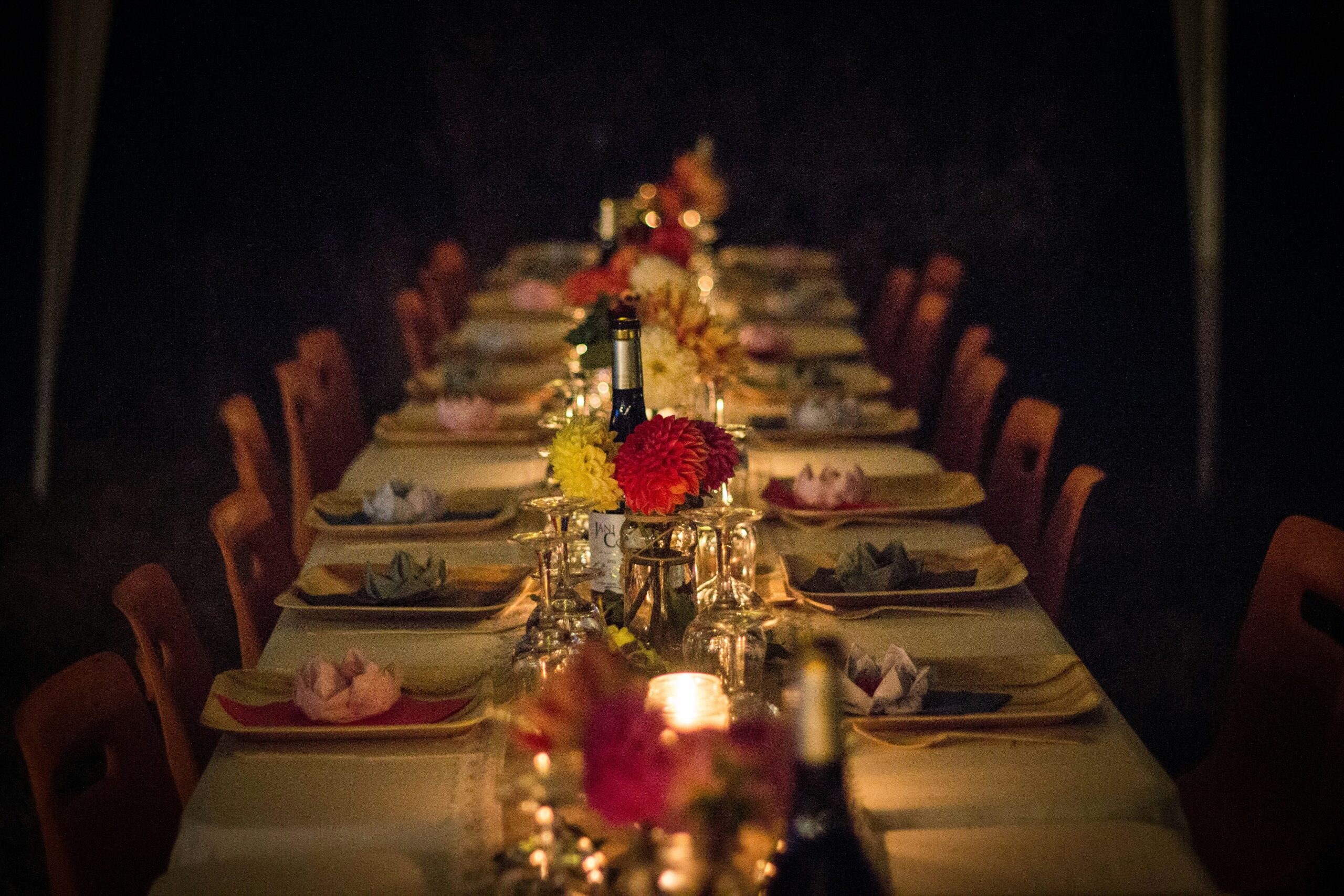
I have given a great many presentations in my professional life. I know how they work: the preparation, the structure, the slides, the thirty minutes at the end labelled questions but which everyone understands to be the social wind-down before the next thing on the schedule. Presentations are useful. They transfer information efficiently. They are the right format for a great many things.
They are the wrong format for the thing the Long Table is trying to do.
The Long Table is not a presentation with dinner. It is not a keynote with better food. It is not a panel discussion with fewer chairs. It is a conversation with a starting point, which is entirely different from a performance with an audience, and the difference matters more than it might initially appear.
The Problem with the Stage
When someone steps onto a stage, or to the front of a room, or even to the end of a table where they are clearly positioned as the presenter, a specific dynamic activates. The audience becomes an audience. They receive. They evaluate. They compare what they are hearing to what they already believe and they form a judgment, silently, about whether the person at the front is worth listening to. All of this happens before the first sentence is finished.
The person presenting feels this dynamic and responds to it. They perform. Not necessarily falsely, but they present a version of their thinking that has been curated for the specific purpose of being received well by this specific audience. The rough edges are smoothed. The uncertainties are resolved or omitted. The genuine questions, the ones the presenter has not answered yet and which would be the most interesting things to put on the table, are held back because this is a presentation and presentations are supposed to arrive at conclusions.
The result is efficient and often impressive and almost never the most interesting conversation available. The most interesting conversation is the one that happens afterwards, in the corridor, between two people who both found themselves thinking something during the presentation that they did not say out loud because the format did not invite it.

What a Conversation Requires
A real conversation requires three things that a presentation does not provide: genuine uncertainty, genuine listening, and the willingness to be changed by what is said.
Genuine uncertainty means that the person who opens the conversation does not know how it will end. They have something to share, a thing they have thought about or lived through or are in the middle of figuring out, and they bring it to the table without having resolved it in advance. The question is alive. The people around the table can actually affect the answer. This is the condition that makes a conversation worth having rather than a monologue worth listening to.
Genuine listening means that the people at the table are not waiting for their turn to speak. They are actually receiving what is being said and allowing it to change what they were going to say next. This sounds simple and is, in practice, one of the harder things that a social format can ask of people. Most conversation, including most of what passes for conversation in professional contexts, is a series of parallel monologues that happen to be directed at each other. The Long Table is specifically designed to interrupt that pattern.
The willingness to be changed is the most demanding requirement and the most valuable outcome. The person who leaves the Long Table with the same opinion they arrived with has not been to a Long Table. They have been to a presentation with better food.
Why It Works at Sea
The Long Table works better at sea than it does in any professional or social context I have experienced on land. Not because the people are different, though the Naora community attracts people who are unusually good at conversation. But because the context that the sea creates around the table is different.
At sea, particularly on a long passage or in a remote anchorage, the usual reasons for performing rather than speaking honestly are absent. You are not building a reputation that will outlast this conversation. You are not competing for position in a hierarchy that continues after dinner. You are not managing the impression that other people in this room will carry back to an office or a social network that matters to your standing. You are, in the most literal sense, in the middle of nowhere with a group of people you have been unable to escape for several days, and the pretence of not being exactly who you are has become not just unnecessary but exhausting.
This is the condition that the Long Table was designed for. The sail has been doing the preparation work for two days before the table is set. By the time the food arrives and the conversation begins, the performance layer has already been removed by the passage. What is left is people, around a table, with something real to say to each other.
What I Bring to the Table
My role at the Long Table, as Commodore, is not to chair the conversation. It is to open it when needed, to hold the space that allows it to go somewhere real, and to model the thing that I am asking of everyone else: genuine uncertainty about something I care about, offered without performance, in the hope that the people around the table will do something with it that I could not have done alone.
I have spent years working across cultures and languages and contexts where the ability to create the conditions for honest exchange is the thing that actually produces results. I have sat with people who were deeply different from each other and found the specific question or the specific framing that allowed something real to emerge between them. I am not better at this than many of the people who will sit at the Naora Long Table. But it is the thing I have thought about longest and practised most, and it is what I want to bring to the table, literally.
The Long Table is not an event. It is a practice. It will return at every gathering, in different places, with different people opening the conversation. Some of those conversations will be profound. Some will be warm and funny and end in laughter rather than insight. All of them, if they are conducted properly, will leave everyone at the table with something they did not have when they sat down. That is the only standard worth holding it to. And it is the reason that a table, not a stage, is where the most important things in the Naora Circle will happen.