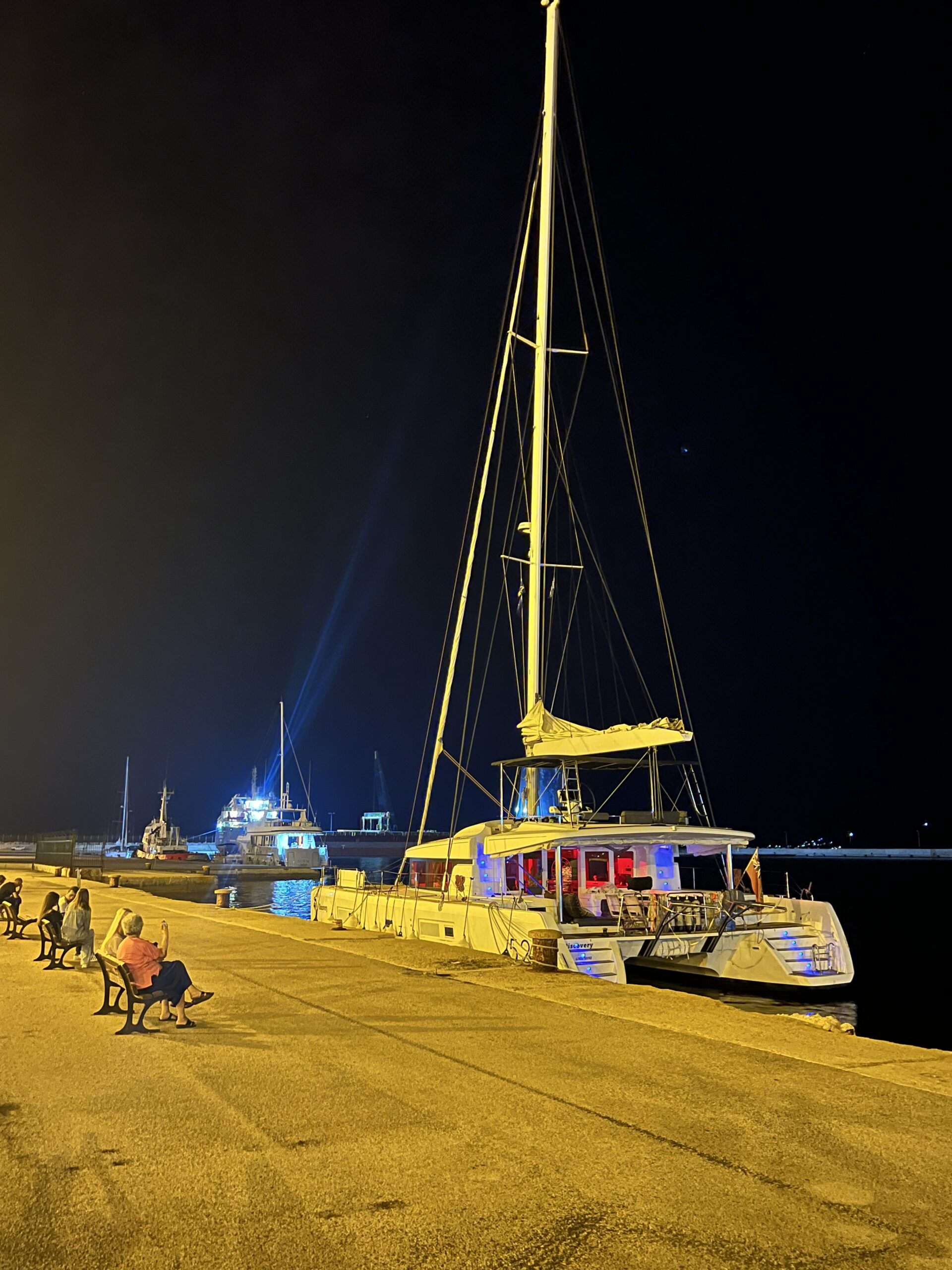
There is a particular quality to the evening before a major passage. I have felt it enough times to recognise it now as something specific, something that does not quite exist in any other context. It is not anxiety, or not only anxiety. It is more like the heightened attentiveness of someone who knows that tomorrow everything will be different and who wants, for one more evening, to be fully present in the place they are currently in before the transition begins.
The evening before we leave for an ocean crossing has a different texture to every other evening on the boat. I notice things more specifically. The way the harbour looks from the afterdeck. The specific smell of the port, which I will not smell again for weeks. The sounds of the marina: other boats, voices, the water against the pontoon. All of these things that were background yesterday become foreground tonight, because tonight is the last night of this and tomorrow is the beginning of something else.
What My Father Does
My father has a specific routine for the evening before a passage, and I have watched it enough times to know it by heart. He goes through the boat once, from bow to stern, in a specific order that never changes. Not checking the things that were checked this morning and the morning before: those are done. He is doing something different, something that looks like checking but is actually more like a conversation with the boat. Touching the things that will be important tomorrow. Making sure that the relationship between him and the vessel is current and confirmed before the passage begins.
Then he sits in the flybridge with a coffee and the weather GRIBs and he reads the weather one more time. Not because it will have changed since the last time he read it, though sometimes it has. Because the process of reading it one more time, in the quiet of the evening before departure, is how he arrives at the specific calm that the night requires.
By the time he puts the bulletin down and comes below for dinner, he has made his peace with whatever the weather is going to do and he has a plan for all of the versions of it that might materialise. This preparation is invisible to everyone at the dinner table. It is the most important thing that happened today.
The Dinner
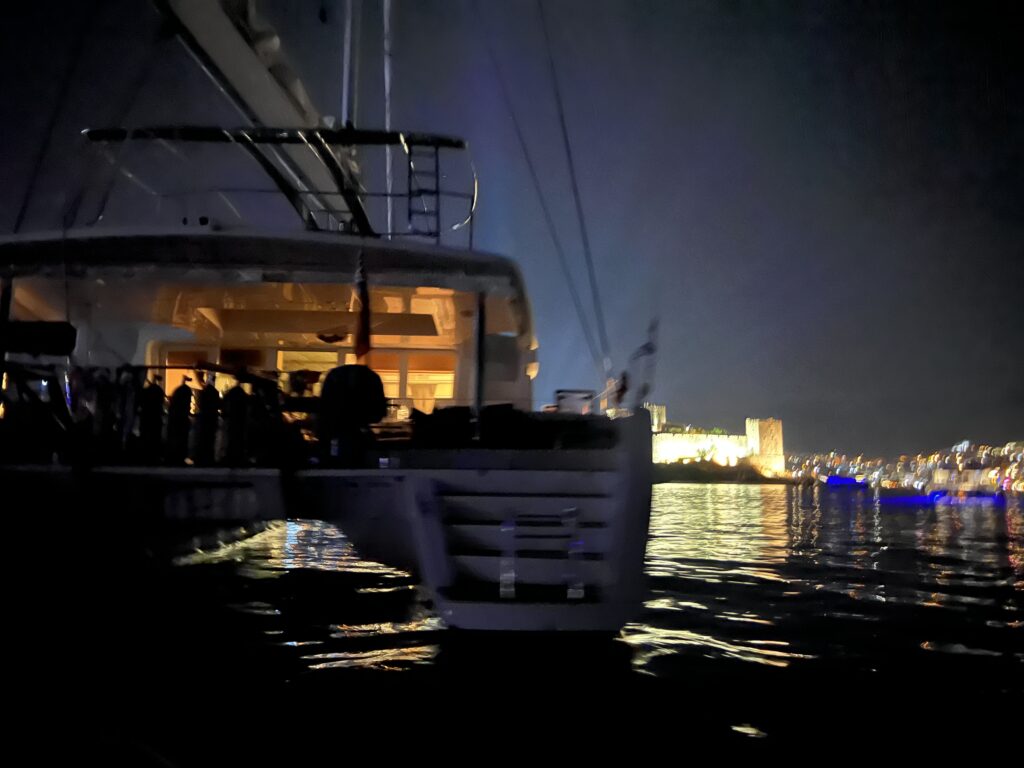
The dinner the night before a passage has a specific character. We usually produce something that is better than average, partly because the last provisioning from the port brought fresh ingredients that will not keep and partly because the evening deserves it. There is a quality of attention at the table that is different from other evenings.
People are talking about the crossing: what they are looking forward to, what they are mildly apprehensive about, what they have heard about the conditions from other boats. These conversations are a form of preparation, both practically and emotionally, and they are part of the evening’s function.
My father contributes to these conversations specifically. He tells people what to expect in the first 48 hours, which are usually the most active in terms of adjustment. He explains what the watch rotation will be and what he needs from the crew and the members who are joining it. He is direct about what the passage requires and what he will ask of people, and this directness is itself reassuring. Clarity about what lies ahead is the best preparation for what lies ahead.
The dinner ends later than most evenings because nobody is in a hurry to start the night that precedes an early departure. The dishes are cleared. Someone makes tea. The conversation continues on the afterdeck until it runs out, which takes longer tonight than most nights. Then people go below. The boat is quiet. The harbour is quiet. Tomorrow at four the engine will start and the dock lines will come off and the passage will begin.
The Hours Before Sleep
I rarely sleep well the night before a major passage. Not because I am afraid, or not primarily for that reason. More because the mind is preparing, running through things without being asked to, checking its own inventory of what the next few days might require. I have learned to let this happen rather than fighting it. The mind knows what it is doing. By about two in the morning it has usually finished and I sleep until the alarm at three-thirty.
There is a specific quality to the few hours of that night, lying in the bunk with the harbour sounds still audible and the boat moving very gently on the pontoon. It is the quality of a threshold: something is ending and something is beginning and for these few hours both are simultaneously true. The place we are leaving is still fully present. The passage has not yet started. There is a stillness in that liminal moment that I have found nowhere else in the sailing life and that I have come to value specifically, to lie in quietly rather than trying to sleep through.
Then the alarm. Then the engine. Then the dock lines in a neat pile on the deck. Then the harbour entrance, and the sea, and the crossing that was tomorrow and is now today and is everything we have been preparing for since the last port and possibly since much longer ago than that.