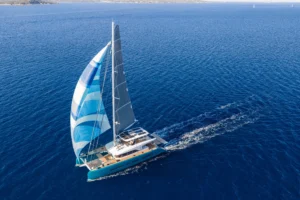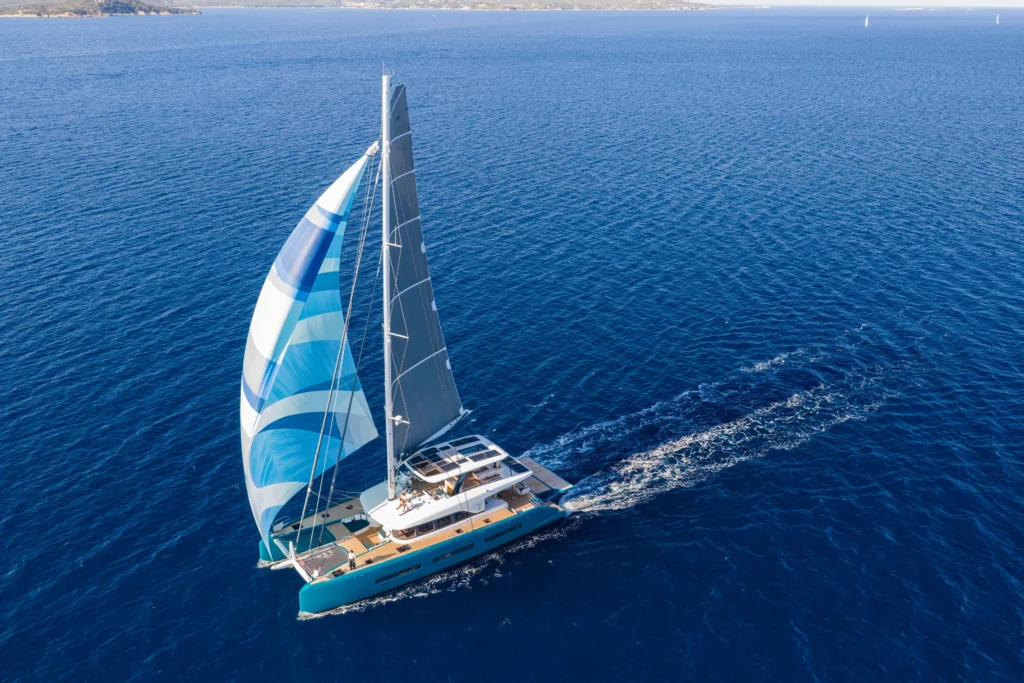
Discovery, a 2025 Lagoon Eighty2, is the boat Naora is built around. But it is not the first boat, and the boats that came before it are part of the story in a way that I think is worth telling. Because the circumnavigation did not begin when we stepped aboard a 24-metre catamaran. It began on much smaller boats, in much closer waters, making much shorter passages, and learning things that you can only learn by being on a boat that does not have a professional crew and a watermaker and a 300-bar compressor and everything else that the Eighty2 carries.
As Naora’s founder and captain, I plan every weather window and sail every leg myself. Every boat I have sailed has taught me something specific. This is the account of what they taught.
The First Serious Boat
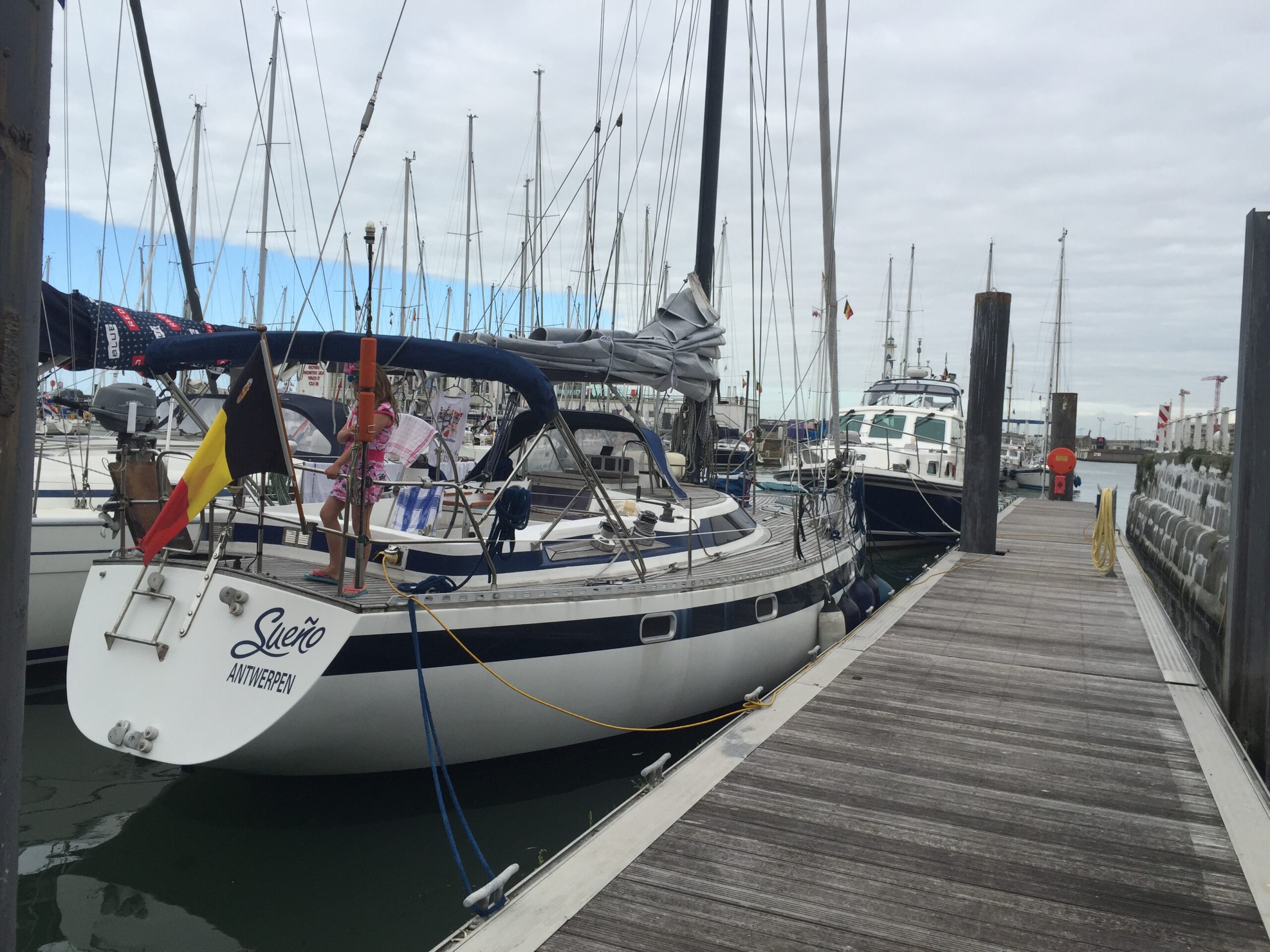
The first boat I owned that was capable of offshore sailing was small enough that everything about it was a compromise. Small bunks, a galley the size of a large suitcase, an engine that required persuasion in cold weather, and a sail inventory that had been assembled over many years by a previous owner whose priorities were not always mine. It was exactly right for where I was at the time.
What a small boat teaches is efficiency. You cannot carry what you do not need because there is nowhere to put it. You cannot ignore a problem because the consequences of ignoring it are immediate and in some cases structural. You cannot delegate the maintenance because there is no one to delegate to. Everything that is right about the boat is right because you made it right, and everything that is wrong about it is wrong because you have not fixed it yet. This is a clarifying relationship with a piece of equipment. It teaches you what a boat actually requires of the person who sails it.
The North Sea crossings on that boat, and the first Channel passages, and the first overnight offshore legs along the Belgian and Dutch coast: these were the passages where I understood what sailing actually was. Not what it looked like from the dock, not what it felt like on a comfortable day-sail in sheltered water, but what it required of you when the weather changed and the tide was foul and the engine would not start in the dark and you had to figure out what to do next.
The Mediterranean Years
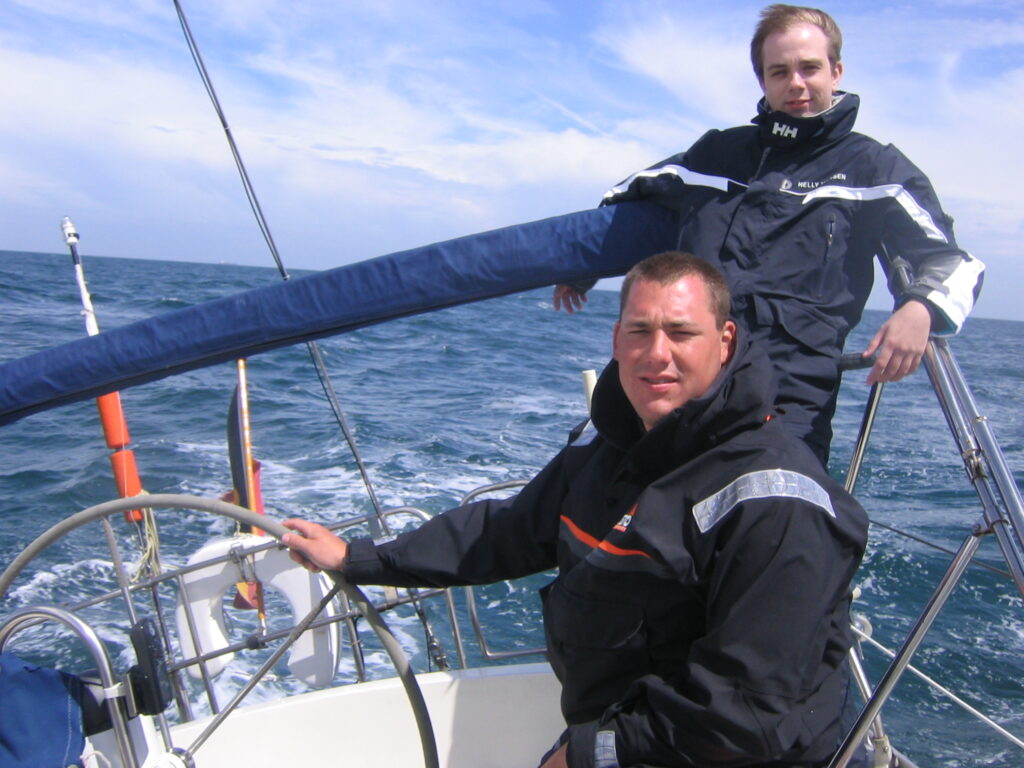
The boat that took me seriously into the Mediterranean was larger and more capable, but still modest by the standards of what Naora operates today. It had a proper chart table and a functional galley and bunks that people could actually sleep in on passage, which represented a significant quality of life improvement over what came before.
The Mediterranean taught me things about sailing that the North Sea could not. The North Sea taught me to be tough and to be prepared and to treat the weather with absolute respect. The Mediterranean taught me to be patient, to read an anchorage before you enter it, to understand the difference between the wind that the forecast predicted and the wind that the local geography is actually producing, which can be very different in a sea surrounded by mountain ranges on three sides.
It taught me to provision from markets rather than supermarkets because the market is better and cheaper and produces better food. It taught me how to anchor properly in deep water on a short scope, which is a different skill to anchoring in the tidal waters of the North Sea on a long scope in a shallow anchorage.
These years also deepened my friendship with Antony, who would become Naora’s co-founder. Naora grew out of that partnership between the two of us. Beyond it was the network of sailors I met in marinas from Turkey to Spain who had been doing this longer than I had and who knew things I needed to know and who shared that knowledge in the specific generous way that offshore sailors share knowledge with each other: directly, without condescension, because they remember what it was like to not know it yet.
The Offshore Passage Boat
The boat that made the longer passages, the Atlantic crossings and the first serious offshore legs, was a purpose-built offshore cruising yacht. This was the boat on which I began to understand what a passage actually demands of a vessel over multiple weeks rather than multiple days. Watermaker reliability. Fuel capacity and fuel planning. Sail inventory for conditions from flat calm to storm force. The specific demands of passage provisioning for two over 2,500 Nm with no resupply options.
This boat also taught me what I would eventually want to do differently at the scale of Naora. The single hull means heeling, and heeling means cooking is difficult and sleeping is uncomfortable and the social space of the boat, which is the saloon and the afterdeck, is always at an angle. For a voyage of three weeks, this is manageable. For a voyage of five years with guests and crew expecting to live well aboard, it is not the right solution.
The catamaran conclusion did not arrive suddenly. It arrived after years of understanding what the offshore life actually requires at scale, and of comparing that understanding against what different vessel types can and cannot provide. The Eighty2 is the answer I arrived at after all of those years and all of those boats. It is the right vessel because I had the wrong ones first, and I know the difference.