I was about five or six years old when a classmate asked me what I did at weekends and I listed the things: the marina, the boat, the crossing to Zeeland, the race on Sunday, the sail repair in the garage on Saturday evening. She looked at me the way children look at something they cannot categorise. Her weekends had football practice and birthday parties and television. The idea that someone our age spent most of their free time on the water, that the smell of salt and varnish and marine diesel was just what weekend smelled like, was genuinely outside her frame of reference.
We did not live on a boat. We lived in Belgium, in a house, like normal people. But looking back, I am not entirely sure the distinction was as significant as it sounds. The boat was always there. Every weekend that the weather allowed, and quite a few that it did not. Every holiday. Every long weekend. The years before Asia, when my father was still building what would eventually become Naora and the boats were smaller and the passages were closer to home, were years in which I spent more time on the water than most sailors manage in a decade of dedicated effort.
I think all my father’s friends had boats. I cannot remember a single one who did not. When I was small this seemed completely normal. When I was a teenager I started to understand that it was not, quite, normal. And now, looking back from the other side of the Atlantic crossing and everything that came after, I understand it as the specific and unusual childhood that it was: one conducted largely in marinas and on water and in the company of people for whom a boat was not a luxury but simply a fact of life.
This is the article about that life. Not the circumnavigation. Not the Pacific or the Galapagos or the Tuamotu atolls. The ordinary, specific, deeply particular life of growing up around boats in Belgium and the Netherlands and England and France and the grey North Sea in between.
The Winter Boat
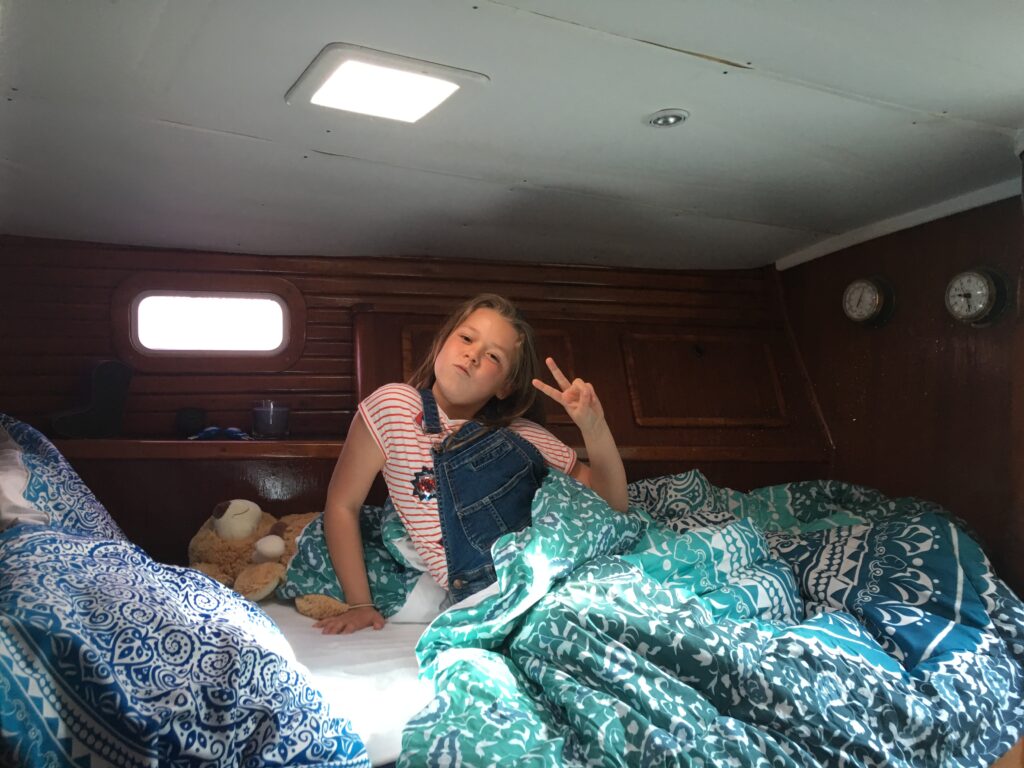
A boat in winter is a specific kind of cold. Not the dry cold of a house that has lost its heat, but a cold that comes from below as well as from the sides, from the water beneath the hull that is three or four degrees and that communicates its temperature through the fibreglass in a way that the diesel heater fights all weekend without ever fully winning. You learn to deal with this cold the way you learn to deal with any persistent condition: by dressing in layers before you step aboard, by making the first cup of tea before anything else, by accepting that the forward cabin will always be slightly colder than the saloon and that this is fine.
Winter weekends on the boat had a specific rhythm. My father would light the diesel heater when we arrived on Friday evening. By the time we had stowed the bags and eaten something, the saloon was warm. Saturday was for work: the varnish that had lifted, the seacocks that needed servicing, the engine that wanted an oil change. Sunday was for sailing if the weather allowed, and for sitting in the marina if it did not. Monday morning we drove home and the boat sat in the marina all week until the next Friday.
The marina in winter had its own community, and because we were there most weekends we were part of it. There were people who did live aboard year-round, and we knew them well: the couple on the wooden ketch three berths down who had been there for twenty years and knew the harbour master by first name, the single-hander on the Albin Vega who had sailed to the Azores and back and was spending the winter reading and planning the next departure. They were a different category to us, the full-timers, but the community was continuous and we moved through it every weekend as naturally as we moved through our neighbourhood at home.
I think what I absorbed from those winter marina weekends, without knowing I was absorbing it, was an understanding that this was simply how a certain kind of life was organised. You had a house and you had a boat and the boat was where you went when the week ended. All the adults around me operated this way. It never occurred to me that it was unusual until I started spending time with classmates whose families did not have boats, and even then it took a while before I understood what they did with their weekends instead.
The Calm Days
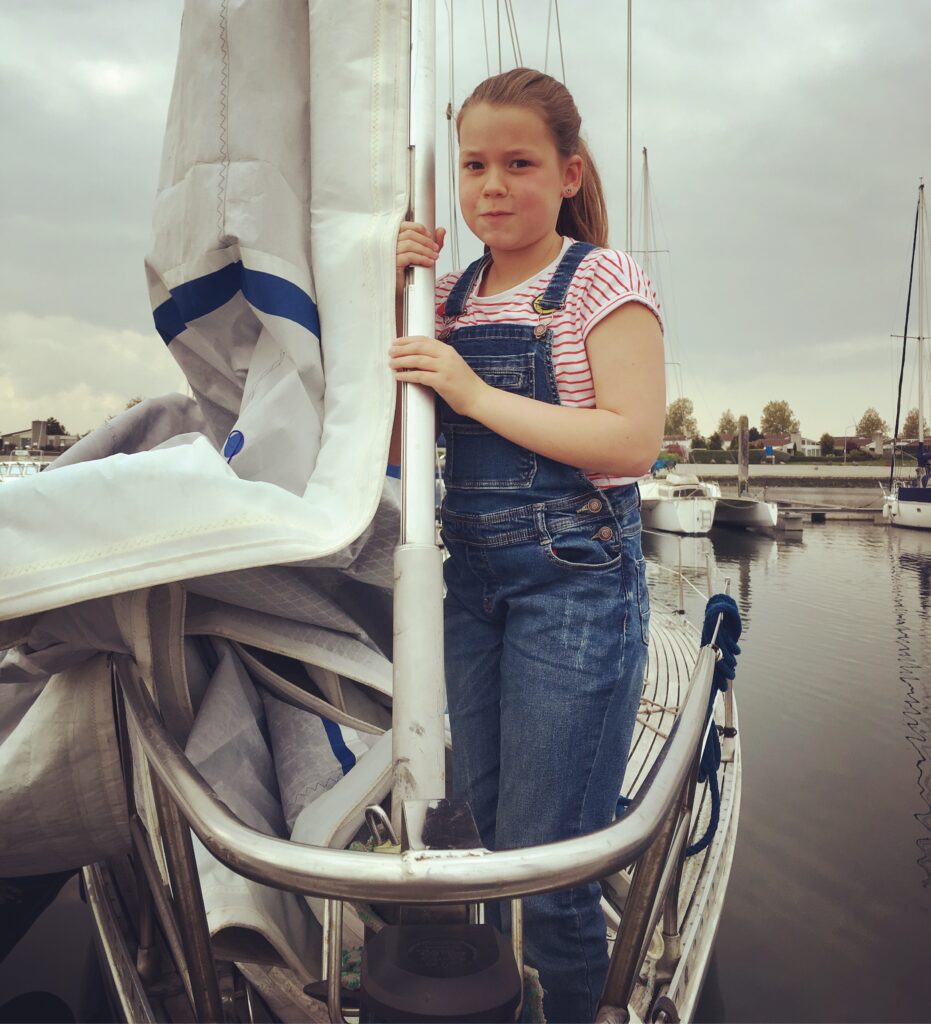
The calm winter weekend days were the best days on the boat. Not sailing days usually: the wind was either absent or too much in the North Sea in January and February, and the passages we made in those months were planned around the narrow windows when conditions briefly aligned. But the calm days at the dock, when the water was flat and the sky was pale grey and the boat sat entirely still and the marina was quiet enough to hear the birds on the pilings: those days had a quality of peace that I never quite found at home during the week.
I did my homework at the chart table sometimes, when we stayed on the boat for a weekend that stretched into Sunday evening and Monday morning was already close. The chart table was exactly the right size: a surface at the right height with a light above it and a chart drawer below it that I used to keep things in for years before I understood what it was actually for. I could hear the water against the hull while I worked. The boat was still. It was a better place to concentrate than my bedroom at home, though I could never explain exactly why.
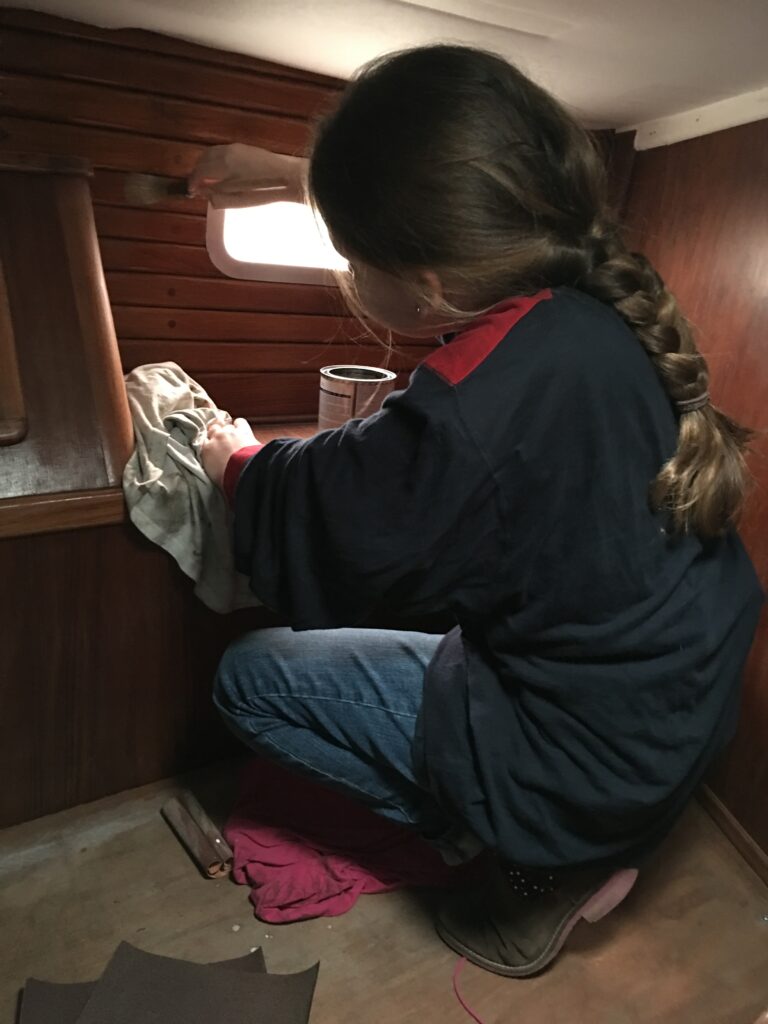
My father worked on the boat on calm days. There is always something to work on. Varnish that has lifted at the joint, seacocks that need service, the engine that wants an oil change, the running rigging that has been putting off inspection since the summer. A boat requires continuous maintenance and the calm days of winter are when you catch up on the things that the sailing season generates and the sailing season does not allow time to address. I learned to help with this work when I was old enough to hold a tool without danger and young enough that I still thought it was interesting. Some of that interest has stayed. I can do most of what needs doing on a boat. Not all of it. But most.
The Spring Storms
March and April on the Belgian and Dutch coast are the months of the spring storms. Not the sustained heavy weather of winter, which has a brutal consistency to it, but the quick, violent depressions that sweep through from the Atlantic and produce a day of force eight before moving east and leaving the sky clean and the barometer rising and the water covered in the debris of what just happened.
I loved the spring storms in the way that a child loves anything that is dramatic and loud and that the adults around her are taking seriously. The preparation was itself a kind of ritual: my father checking the dock lines and adding springs, adjusting the fenders, going over the boat systematically from bow to stern to make sure nothing was loose or unsecured. The other liveaboards doing the same on their boats. The marina taking on a specific tense attentiveness as the barometer dropped and the clouds built in the southwest and the first gusts came through the masts in the harmonic frequencies that sound like singing.
During the storm itself, I usually sat in the saloon and read or watched through the porthole. The boat moved: not the sailing motion of being underway, but the irregular jerking of something held in place against its nature, the dock lines coming tight as a gust hit and then releasing, the fenders squeaking against the pontoon, the rigging of the neighbouring boats making its various contributions to the noise. My father checked the lines every hour or so. I asked once if we were going to be okay and he said yes in the tone of voice that means the question is not as interesting as the weather itself and I stopped asking and watched the weather instead.
The morning after a spring storm has a quality I have never found anywhere else. The sky is completely clean. The water in the marina, which was brown and churned the day before, has settled to a dark clarity. The air smells of salt and the specific freshness that comes after a big blow, and the pontoons are littered with leaves and small branches carried in on the wind. The boats that came through it are still there. The marina has survived, as it always survives, and the day is quietly extraordinary in its cleanliness.
Crossing to England
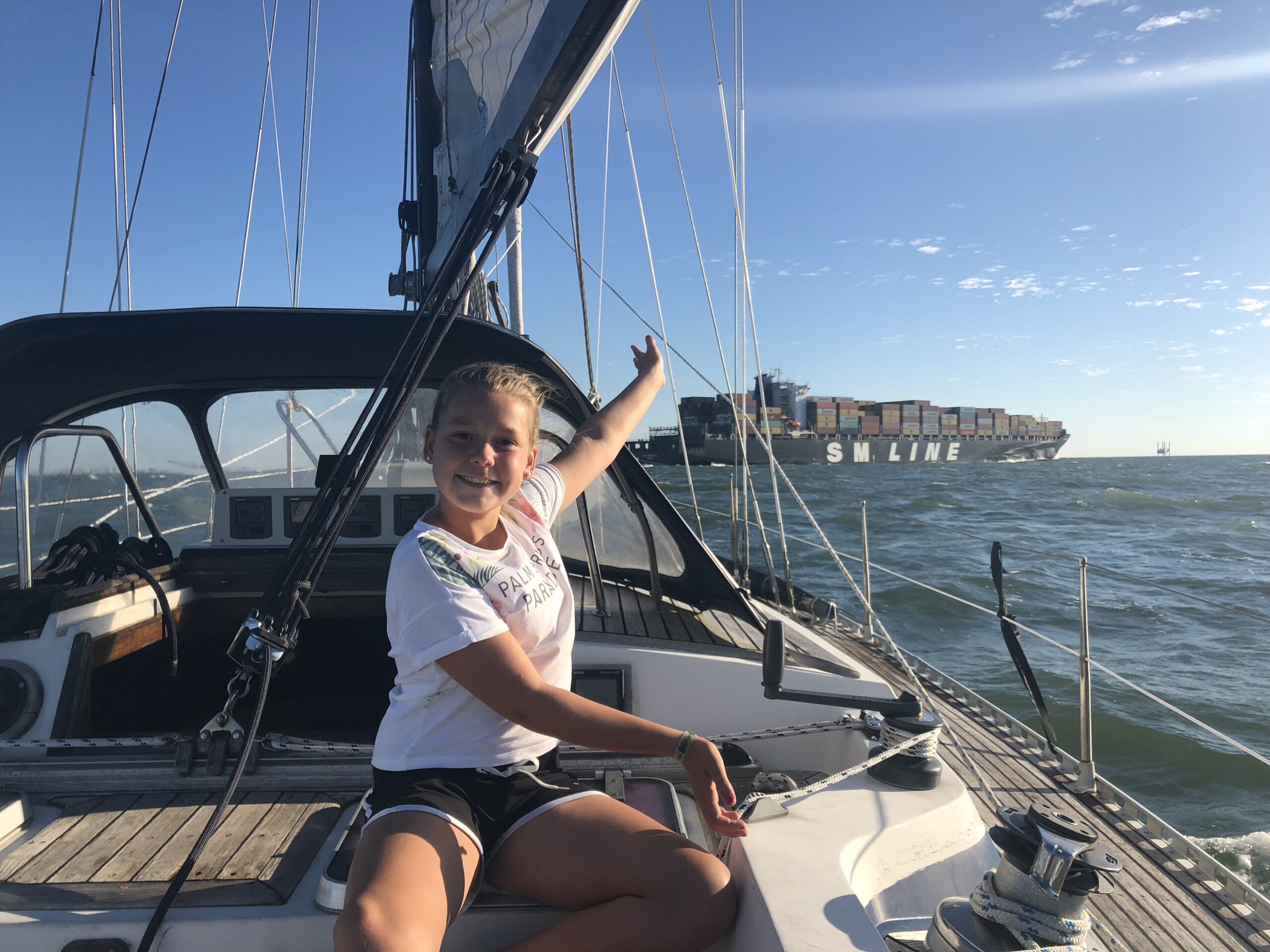
The crossings to England was the passage of my childhood. Not the Mediterranean, not the Atlantic: those came later. The crossing of the North Sea or the Channel from Belgium or the Netherlands to the English coast, which my father made several times a year and which I was part of from very early on, was the crossing that taught me what sailing actually was.
The North Sea is not a forgiving sea. It is shallow and cold and the weather systems move through it fast and the shipping traffic on the main lanes requires constant attention and the tides and the currents are specific and consequential in ways that the open ocean is not. My father treated these crossings with the same seriousness he brings to everything on the water, and watching him do that at close quarters from a young age taught me more about seamanship than any book or course.
The departure was always early. Four in the morning sometimes, or earlier, to catch the tide at the harbour entrance and the favourable stream across the main shipping lanes. I was lifted into my bunk in my sailing clothes and woke up when the engine started in the dark and felt the boat move under me before I was fully conscious. By the time I had come to enough to climb into the afterdeck, the harbour lights were already receding and the compass heading was set and the North Sea was ahead in the dark.
I was seasick on the North Sea crossings until I was not. There was no specific day when the seasickness stopped. It faded gradually across multiple passages until one crossing I noticed I had not been sick and I thought about that and realised that something in my body had adapted, finally, to the short steep chop that the North Sea produces in any kind of wind. After that I was almost never sick again, on any sea, in any conditions. The North Sea had sorted it out for me the only way it knows how: by making me cross it until the body had no choice but to cope.
The English coast arriving was always the same. The white cliffs if we were going to Dover, the low dark shore if we were making for the Medway or the Thames estuary. The smell of England is different to the smell of Belgium: something greener, something cooler, something to do with the specific vegetation of the English coastline that I have never been able to identify exactly but that I recognise immediately every time I arrive.
The harbour, the customs check when it was still required, the English welcome which is real but takes a specific form that is not immediately obvious if you are not used to it. The fish and chips from the place near the marina that was always the first meal ashore. My father eating them out of the paper with the specific satisfaction of a man who has arrived somewhere he wanted to be.
What This Life Made Me
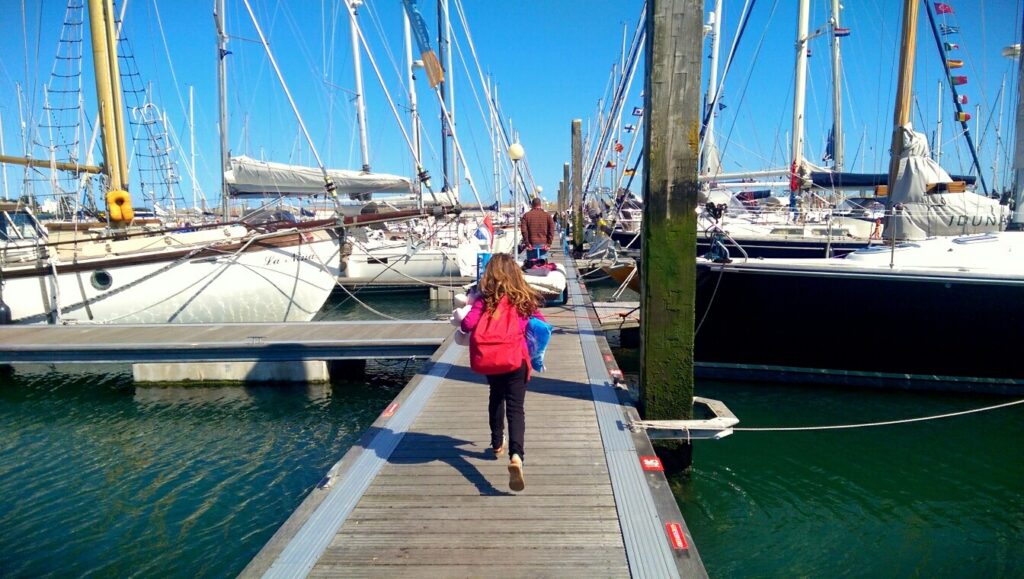
I am 19 now and I am chasing my own version of the horizon that my father has been sailing toward for as long as I can remember. The shape of that pursuit is different to his: I have things I want to do on land, studies and projects and the specific ambitions of someone who is still figuring out what she wants. But the water is the constant. It always has been.
The years in Asia when everything smelled of sea and engine oil and the specific humidity of tropical harbours. The years back in Belgium when the weekend meant the marina and the boat and the crossing if the weather held. And now Naora, which is the continuation of something that started long before I was old enough to understand what it was.
The classmate who could not understand what I did at weekends grew up in the same house until she was eighteen and then moved to a flat in the same city. She has a good life. She knows where she is from in the way that people who have always been in one place know where they are from: specifically, solidly, without ambiguity.
I know where I am from too. I am from the marina on a grey Saturday in February with the diesel heater going and the varnish work that needed doing and my father on the foredeck doing it. I am from the spring storms and the morning after them.
I am from the North Sea in the dark at four in the morning, small enough to fit in a bunk in my sailing clothes, waking up to the engine and the motion and the harbour lights already behind us. I am from every friend of my parents who had a boat, which was all of them, and the specific world that produced: a childhood in which the water was always close and always normal and always the place things got interesting.
I did not grow up on a boat. But I grew up around them, and the difference is smaller than it sounds.