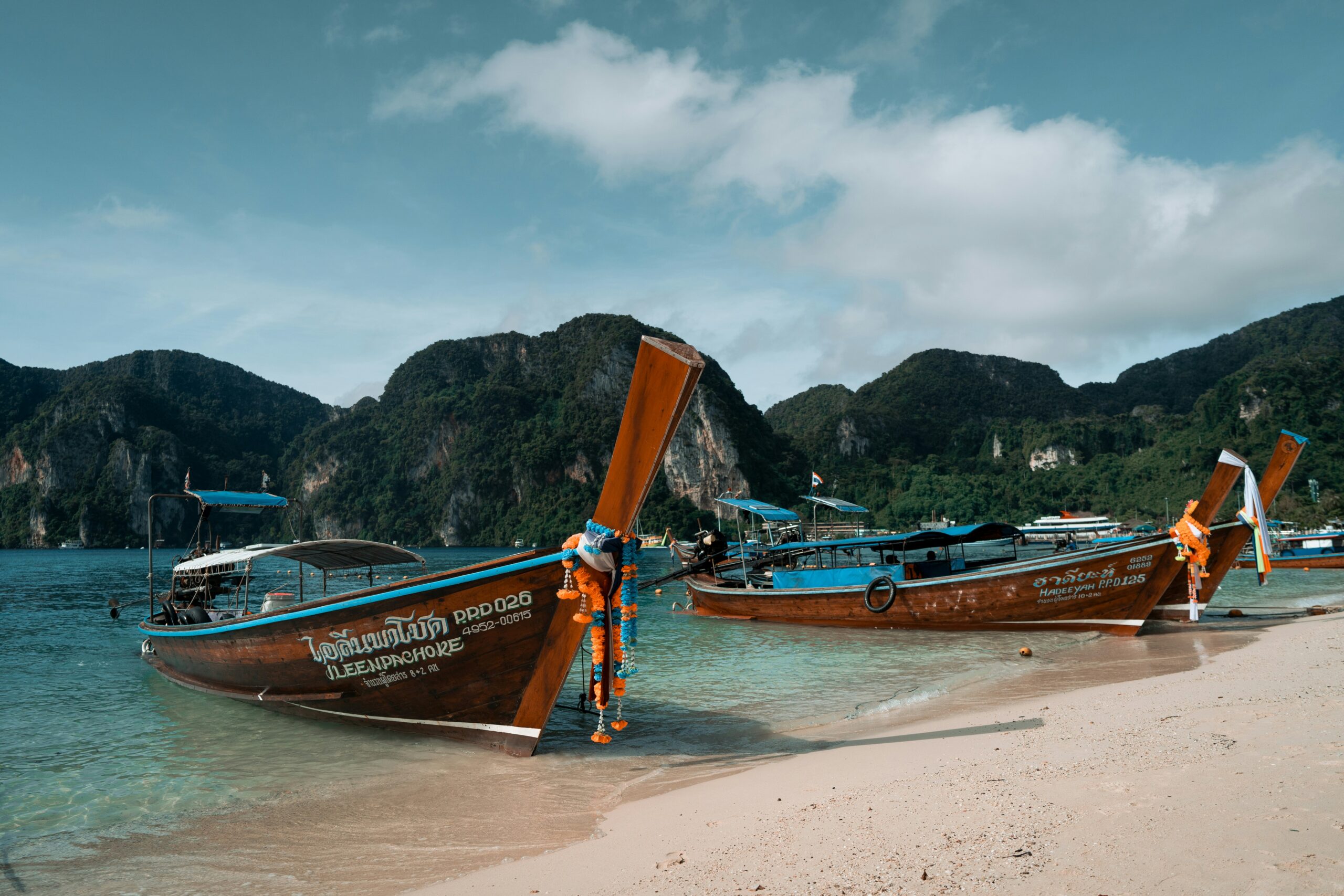
Maya Bay was closed for three years. Between 2018 and 2022, the Thai authorities shut the bay to all boats after decades of tourism had degraded the coral to the point where the ecosystem was in serious trouble. The closure worked: the coral recovered significantly, the fish returned, and the bay that was filmed as a remote tropical paradise for The Beach in 1999 looked something like itself again.
It is open again now. And on a morning when you arrive before the tourist boats from Ko Phi Phi Don start their first runs, it is one of the most beautiful places I have been in all my years of sailing these waters.
Arriving Before the Day Starts
The tourist boats from Ko Phi Phi Don arrive from about nine in the morning. Before that, the bay belongs to whoever is already there. We anchor outside Maya Bay in the early evening and go in by tender at first light, typically around six. The limestone karst cliffs that ring the bay are catching the first sun from the east. The water in the bay is completely flat because the cliffs shelter it from any swell. The sand is white and untouched from the night.
We swim. We snorkel the coral that has regenerated along the bay walls. We have breakfast from a bag that the chef packed the night before, on the beach, with nobody else anywhere in the picture. This is the version of Maya Bay that the film was trying to suggest and that the hundred daily speedboats full of tourists prevent by their presence. The only way to have it is to be there first.
By eight-thirty we are back on the tender. By nine, the first longtail boats from the mainland are already rounding the headland. We watch them from the afterdeck as we move to the next anchorage. They are going to have a beautiful day in a beautiful place. So did we. Ours was two hours earlier and will stay in the memory differently.
What Remains of The Beach
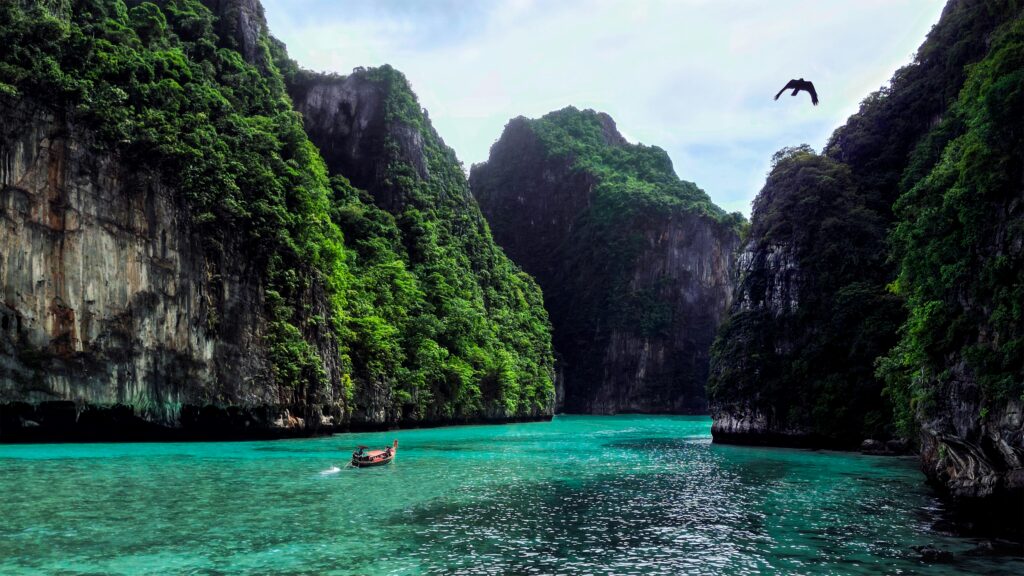
The film version of The Beach was about the fantasy of a place so remote and perfect that the world cannot follow you there. The irony is that the film itself made the place famous enough that the world did follow, in enormous numbers, and almost destroyed what it came to find. The closure was a correction: an acknowledgment that some places require protection from the intensity of human attention that beauty creates.
What remains after the recovery is a bay that is genuinely extraordinary. The coral is not what it was before the decades of anchor damage and sunscreen runoff, but it is recovering with the specific speed of healthy tropical reef ecosystems when the pressure is removed. The fish are back. The water clarity is back. The cliff walls that ring the bay are unchanged because limestone does not care about tourism. The shape of the place is what the film found in 1999 and what the crowds were chasing: a natural amphitheatre of rock and water with a flat sandy floor and a sky between the cliffs that is specifically, unreasonably beautiful.
The Rest of Ko Phi Phi Leh
Ko Phi Phi Leh, the smaller and uninhabited of the two main Phi Phi islands, has other anchorages beyond Maya Bay that receive almost no visitor traffic. We spend time in these bays on the days before and after the Maya Bay visit, diving the walls and snorkelling the coral gardens and having the experience that the film suggested was available only in fiction.
The Viking Cave on the eastern side of the island, where swiftlet nests have been harvested for bird’s nest soup for centuries, is accessible by tender and is one of those places that is extraordinary for reasons entirely unrelated to any film. The cave is enormous. The platforms built to reach the nests near the roof are terrifying. The swiftlets fill the air above with a sound like nothing else.