There is a specific kind of hospitality in the Pacific that I have never encountered anywhere else in the world. Not the hospitality of a restaurant that wants your money, or the hospitality of a resort that has been designed to make you feel welcome. The hospitality of a village that invites you to eat because you are there, because sharing food is simply what you do when someone arrives, because the alternative of watching a visitor go hungry while you eat is genuinely inconceivable to people whose culture has been built on communal nourishment for generations.
I have eaten in village homes in the Marquesas, at community lovo feasts in Fiji, at Sunday umu gatherings in Samoa, at long tables in the Solomon Islands where I did not know what I was eating until someone explained it and sometimes did not know even after. These are among the most significant meals of my life, and they happened because we stayed long enough to be invited.
The Lovo in Fiji
A lovo is an earth oven. A pit is dug in the ground, lined with stones, and a fire is built inside it. When the stones are hot, the fire is removed, the food is wrapped in banana leaves and placed on the stones, and the pit is covered with earth and left for two to three hours. What emerges is cooked in the heat of the stone: fish, taro, cassava, chicken, pork, the specific combination that the village has decided on for this particular occasion.
The first lovo I attended in Fiji I was twelve years old and my father was talking with the village chief about a navigation question while the men dug the pit outside. By the time the food came out of the ground and was laid on the woven mats, twenty people were sitting around it who had not been there an hour before. I sat next to a girl my age who did not speak any French or English and we communicated entirely through the food, passing things to each other and reacting to things and laughing at the reactions. I ate more taro that afternoon than I have eaten in all the years since combined.
The Umu in Samoa
In Samoa, the Sunday umu is not an event. It is simply Sunday. The umu is prepared in the early morning, the food goes in before church, and by midday when the family returns the meal is ready. We were invited to a Sunday umu in a village near Apia because my father had fixed the outboard motor of the family’s fishing boat the day before and the invitation was the response to that. There was no ceremony around the invitation. It was simply assumed that we would come.
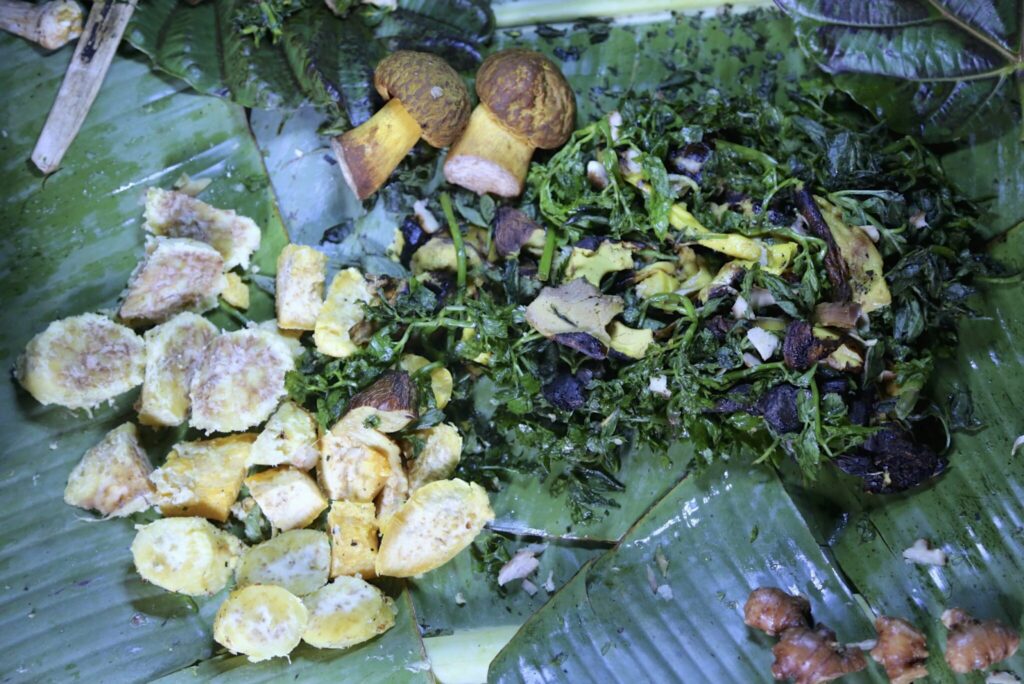
The meal lasted three hours. The food was extraordinary in its simplicity: palusami, taro leaves cooked in coconut cream, fish from the morning catch, breadfruit that had a flavour I still cannot accurately describe but that I think about every time I eat something that is close to it. The conversation was in Samoan with occasional translation from the youngest family member who was studying English in school and was delighted to have real subjects to practice on.
We brought a bag of coffee from the boat, which was received with more genuine pleasure than anything we could have bought in a shop. My father and the grandfather of the family spent the afternoon on the veranda talking about fishing. I helped the women clean up and learned three Samoan words and forgot two of them before we got back to the boat.
What These Meals Require
These invitations do not happen on short visits. They happen because we have been in the anchorage long enough for the people ashore to understand that we are not passing through, that we are interested in them rather than in the photograph of them, that we can be trusted with their hospitality because we will not treat it as a commodity.
My father taught me very early that the correct posture when visiting a Pacific community is complete attentiveness and zero agenda. You do not arrive with a plan for what you want to see or experience. You arrive with time and openness and the willingness to follow the invitation wherever it leads. The meal is always the endpoint of a relationship that has been building since the day the anchor went down. What you eat is less important than who you eat it with, and you can only eat with them if you are still there when the invitation comes.