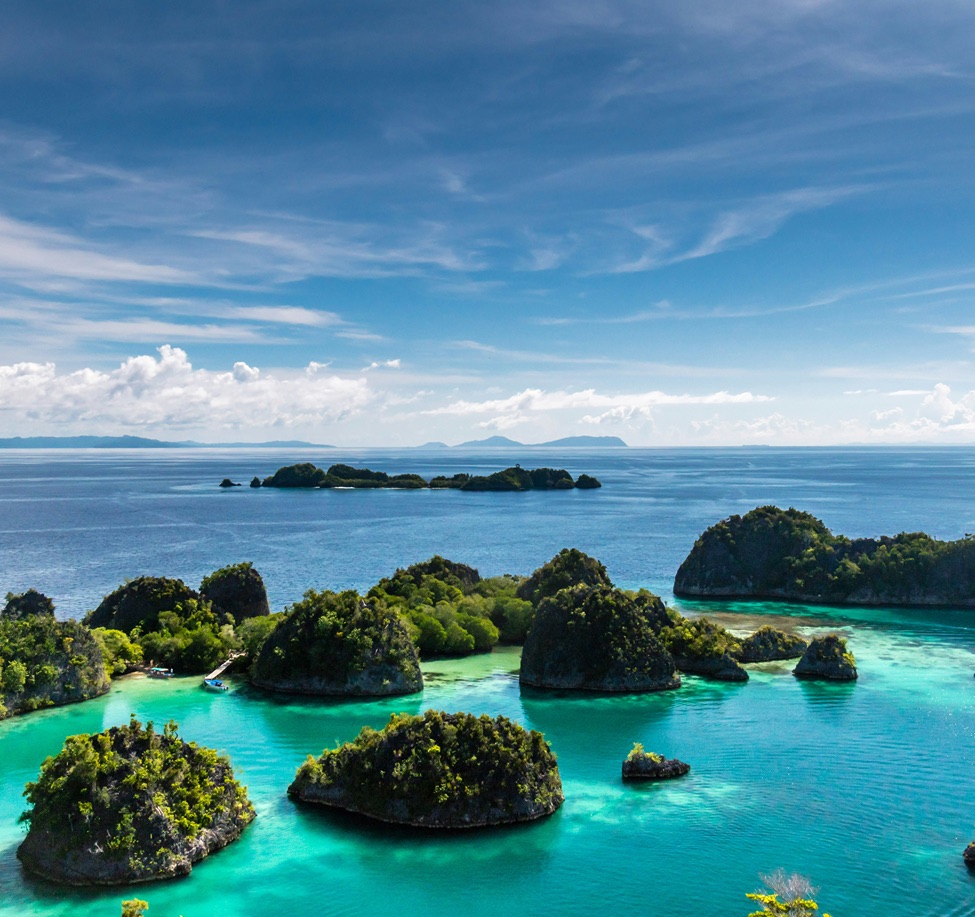
Indonesia is 17,508 islands. It spans 5,000 kilometres from west to east. It sits across the equator, bridging two oceans and three major seas. It contains more languages than any country on earth, more active volcanoes than any other nation, some of the finest diving in the world, and sailing grounds that most of the cruising community never reaches because getting there requires either the time and preparation of a serious offshore passage or the context of a five-year circumnavigation that has already crossed the Pacific and the Banda Sea.
We enter Indonesia from the east, coming from the Solomon Islands through the Banda Sea, which means we arrive in the part of the country that most visitors never see. Banda Neira. The Spice Islands. The historical and geographical centre of the trade that shaped the modern world, now accessible by a handful of vessels per year and virtually untouched by the tourism industry that has transformed Bali and Lombok beyond recognition.
The Banda Islands: Where Empires Began
The Banda Islands were, for most of human history, the only source of nutmeg on earth. In the 16th and 17th centuries, nutmeg was worth more than gold by weight in European markets, and the competition for control of its source drove the Portuguese, Spanish, Dutch, and English into some of the most violent colonial conflicts of the early modern period. The Dutch eventually won and held the Bandas with a ruthlessness that depopulated the islands almost entirely.
What remains is extraordinary. Banda Neira, the main island, has a colonial Dutch town that has changed so little in two centuries that it feels less like a museum piece and more like a place that simply did not get the message that the world moved on. Fort Nassau and Fort Belgica stand on the hillside above the harbour. Nutmeg trees still grow in the valleys below. The population, descended from the survivors of the Dutch period and the waves of migration that followed, receives the occasional visiting yacht with the particular warmth of people who understand that you have come a long way to be here.
The diving around the Bandas is outstanding. Walls dropping to several hundred metres, extraordinary coral cover, pelagic fish in numbers that have not been seen in most heavily fished areas for decades. Because so few boats visit, the marine environment here is as close to pristine as anything on the Naora route outside the most remote Pacific atolls.
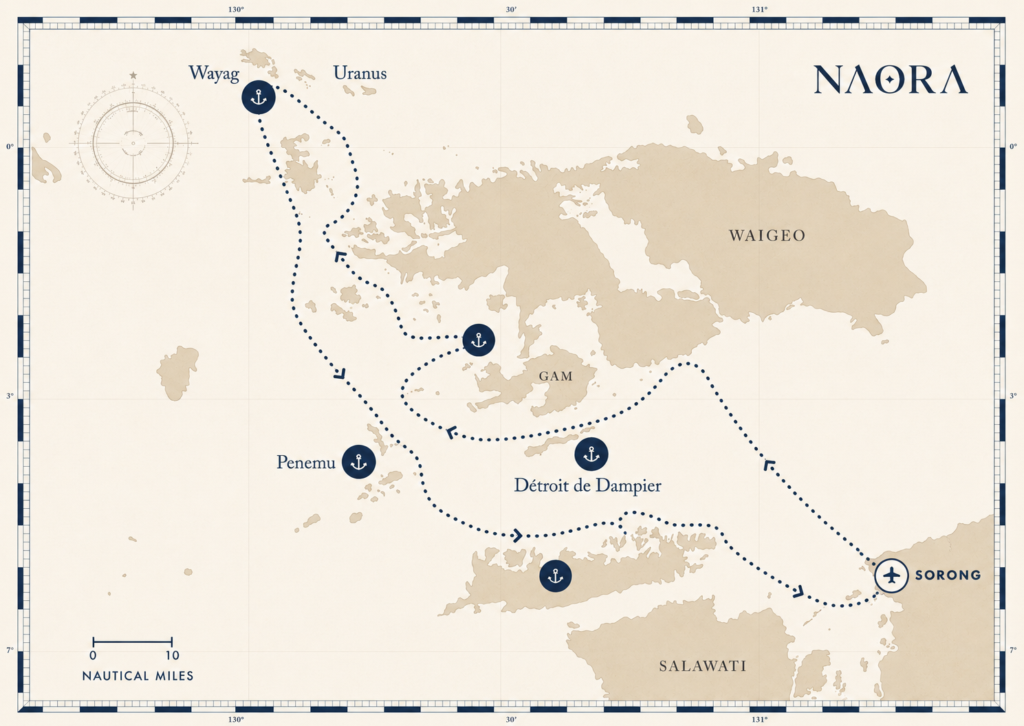
Komodo, Lombok, and the Route West
From the Bandas we move westward through the Indonesian archipelago, with the route shaped by the currents, the seasons, and the specific things that make each island group worth stopping in rather than sailing past.
Komodo National Park is the obvious stop, and it earns its reputation. The komodo dragons are real and impressive: the world’s largest lizard, reaching three metres in length, hunting deer and wild pigs on islands that feel genuinely prehistoric. But the diving at Komodo is equally significant. The park sits at the confluence of the Pacific and Indian Ocean water masses, which produces extraordinary nutrient upwelling and one of the highest densities of marine biodiversity on earth. Manta rays aggregate here in numbers that are among the highest recorded anywhere. The currents are powerful and the diving is serious, and it is exactly the kind of site that justifies carrying a 300-bar compressor and a CMAS instructor.
Lombok offers a different character: a majority Muslim island with a conservative culture that is entirely hospitable to respectful visitors, excellent food markets, and the Gili Islands just offshore with their own diving and the particular charm of tiny coral-fringed islands with no motorised vehicles and no particular agenda for the day.
Bali is where the Indonesian chapter ends for Naora, and it is where members who have joined for this leg typically step off. Bali is the best-known part of Indonesia for good reason: beautiful, culturally rich despite the tourism, and genuinely welcoming in a way that never feels performed. The arrival in Bali from the Banda Sea, having crossed the Pacific and sailed the length of the Indonesian archipelago from east to west, is the end of something significant. What begins next, the Indian Ocean passage on the northeast monsoon, is something different again.
| Destination | Character | Why we stop |
|---|---|---|
| Banda Islands | Colonial Dutch history, nutmeg, pristine marine environment | Among the most historically significant anchorages on the circumnavigation; world-class diving on untouched reefs |
| Komodo National Park | Komodo dragons, extraordinary marine biodiversity, powerful currents | Manta ray aggregations; one of the highest marine biodiversity densities on earth |
| Lombok and the Gilis | Authentic Indonesian culture, excellent markets, coral island diving | Cultural immersion and quality diving in a less-visited context than Bali |
| Bali | Cultural richness, outstanding food, accessible infrastructure | End of the Pacific chapter; crew rotation and provisioning for the Indian Ocean |
What Indonesia Requires
Indonesia is not a simple cruising ground. The currents are strong and in places violent. The tidal flows through the straits between islands can run at six to eight knots and must be timed correctly. The customs and immigration process, while manageable, requires patience and local knowledge. Remote areas have limited or no communication infrastructure, which means genuine self-sufficiency in terms of water, fuel, and medical preparedness.
These are exactly the conditions that the Eighty2 and the Naora crew are equipped for. The watermaker produces all the fresh water we need from the sea around us. The diving compressor is fully independent of shore facilities. Sven’s experience in Indonesian waters, built across multiple passages through the archipelago over many years, means the currents are timed correctly, the anchorages are known, and the local relationships that open doors in remote areas have been built over time rather than arranged for a visit.