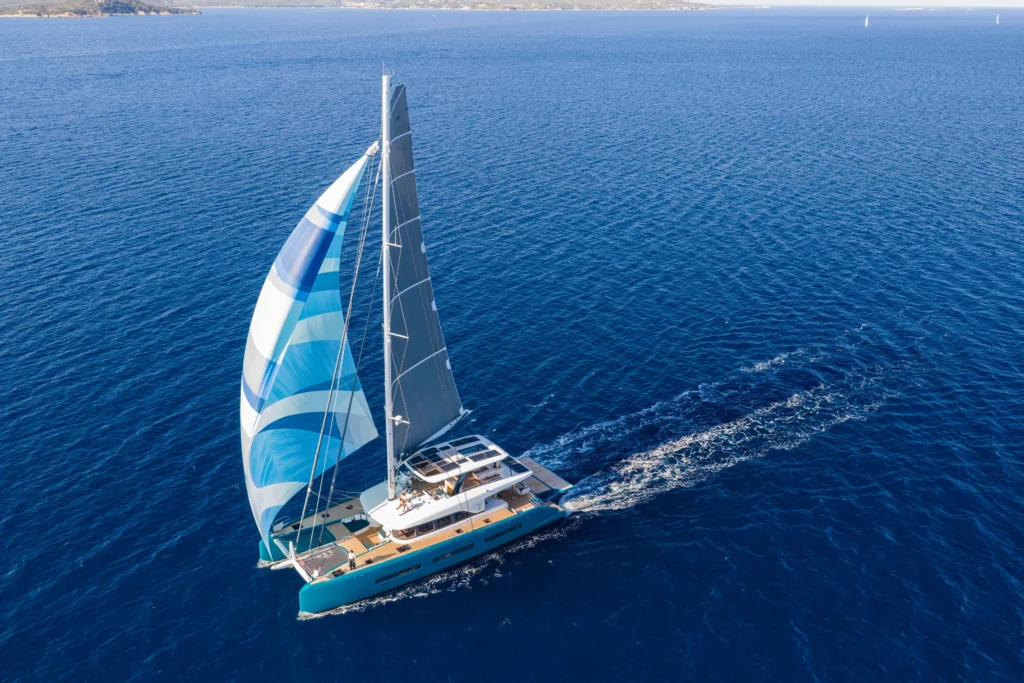
A vessel crossing oceans is, by definition, sometimes far from medical assistance. On the passage from Panama to the Marquesas, the nearest hospital is at least ten days sailing in any direction. On a passage through the outer Solomon Islands, the nearest physician may be a day’s sailing away. This reality shapes how we think about medical preparedness aboard the Eighty2, and it shapes what we carry.
This article is an honest account of our medical approach: what is in the kit, how the crew is trained, and what happens when something goes genuinely wrong offshore. We share this not to alarm anyone, but because the people who ask us the most direct and useful questions before boarding tend to be the ones who feel most at ease once they are aboard. The more you know about how we prepare, the more confident you can be in what we can handle.
The Principle Behind the Kit
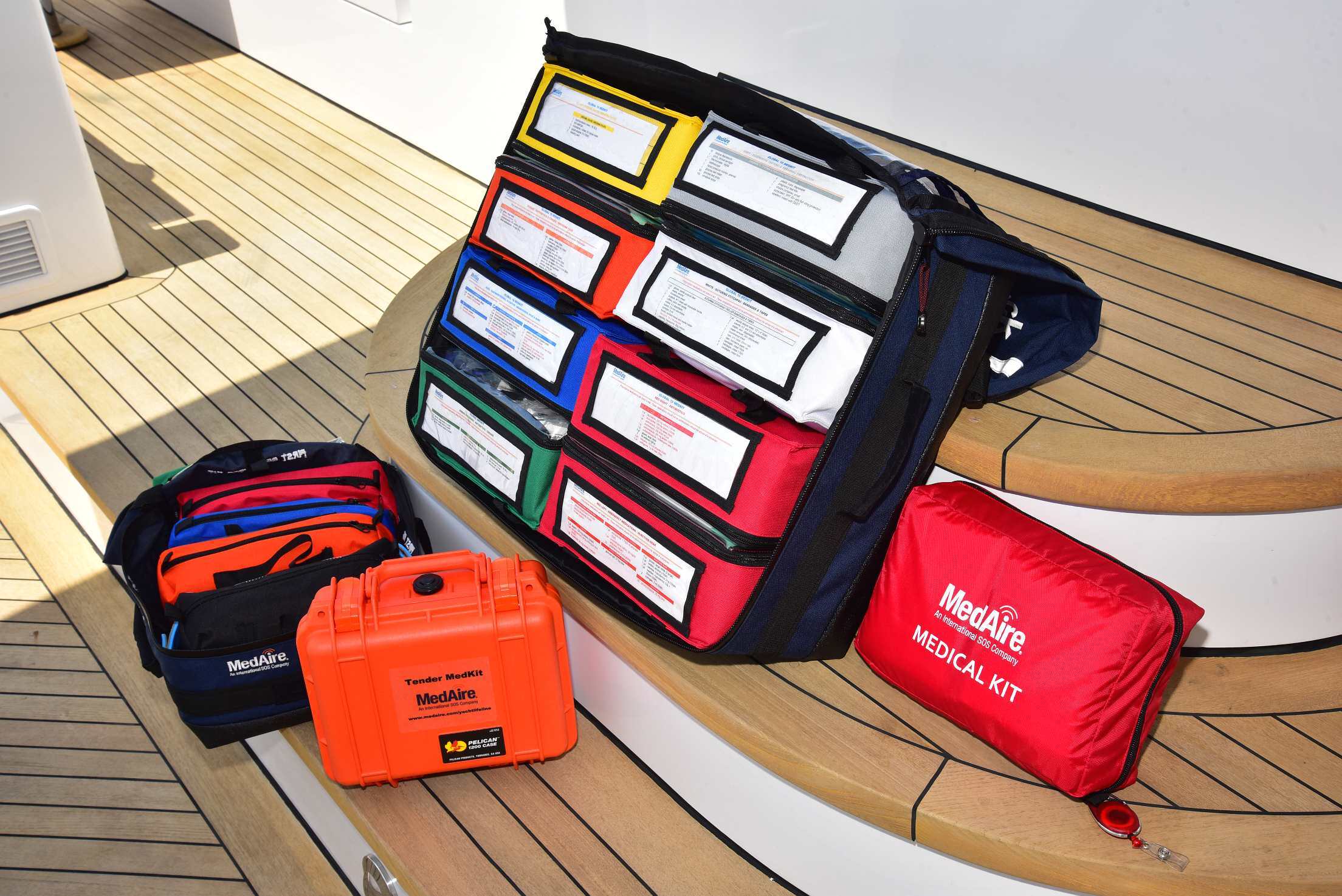
The medical kit aboard the Eighty2 is built around a single principle: the ability to stabilise, treat, and if necessary manage any medical situation for long enough to reach professional help. Not to replace a hospital. Not to perform surgery at sea. But to handle the full range of situations that actually occur on an offshore passage, from the manageable to the serious, with the equipment and training to respond competently to all of them.
The kit is assembled with the advice of a travel medicine specialist and reviewed before each major passage segment. It is stored in a designated, clearly labelled location that every crew member knows. The contents are inventoried regularly and expiry dates are checked as part of the standard pre-departure checklist.
What the Kit Contains
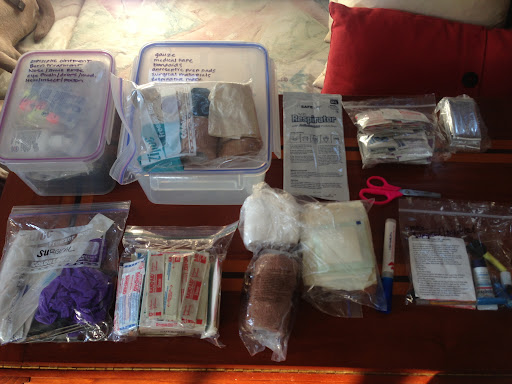
The offshore medical kit covers several distinct categories of need, each assembled to provide genuine capability rather than token reassurance.
For pain and inflammation: prescription-strength analgesics, anti-inflammatory medications, and topical treatments for the minor injuries that offshore sailing produces regularly. Cuts, bruises, friction burns, sunburn, and the occasional collision between a crew member and a piece of hardware in a seaway are daily-life events on a passage, and they are treated with proper medication rather than wishful thinking.
For infection: a course of broad-spectrum antibiotics with the dosing guidance to use them correctly. At sea, the standard medical advice to wait and see whether an infection resolves does not apply in the same way. An infection that would be a minor inconvenience on land, two days from a pharmacy, can become serious on a passage where the next port is a week away. We carry what is needed to treat it properly before it escalates.
For seasickness: antihistamine tablets, scopolamine patches, and acupressure wristbands. The full range, not just one option, because different people respond to different approaches and the first 48 hours of a passage deserve proper management.
For dental emergencies: a dental kit with temporary filling material, clove oil, and the basic equipment to manage the pain and instability of a dental problem that cannot be professionally treated until the next port. Dental emergencies are among the most common medical situations on long voyages. Being prepared for them is straightforward and prevents a significant amount of misery.
For wound care: sterile dressings, suture strips and needle-thread sutures with the training to use them, irrigation equipment for deep cleaning, and wound closure adhesives. For burns, eye injuries, and joint support: the appropriate equipment in each category.
For cardiovascular emergencies: an automated external defibrillator is aboard. This is standard equipment on a vessel of this category and is maintained and tested on the same schedule as the life-saving equipment.
How the Crew Is Trained
The STCW certification that our crew holds includes medical first aid at the level required for commercial vessels operating offshore. This is not a basic first aid course. It covers the assessment and management of serious medical situations in a remote environment, with the specific constraints of being at sea: no immediate evacuation, limited equipment, and the need to make decisions and act on them without physician oversight.
Sven additionally maintains his medical training currency through refresher courses at regular intervals. The crew as a team practices medical scenarios as part of the safety drills that happen at the start of every significant passage. Everyone aboard knows where the medical kit is, how to open it, and what the basic protocols are for the most likely situations.
For complex medical situations that exceed the crew’s immediate capability, we have access to remote medical consultation via satellite communication. Several services exist specifically for offshore vessels that connect the crew with physicians by phone or email, allowing diagnosis guidance and treatment advice to be received from qualified professionals even when the vessel is thousands of miles from the nearest hospital.
What Members Bring and What We Need to Know
The onboard medical kit covers the situations that arise at sea regardless of who is aboard. What we ask members to bring is the medication specific to their own health needs: regular prescriptions in sufficient quantity for the full voyage plus a buffer, in original packaging, with any special storage requirements communicated to us in advance.
We also ask, before every voyage, for a brief health overview through our standard health form. Not to screen people out, but to prepare appropriately. If a member has a specific condition, a known allergy, or a medication that requires refrigeration or careful timing, we need to know this before departure so that the environment is set up correctly. Everything shared is treated with complete discretion and used only to serve the member’s wellbeing.
| Category | What we carry | What it handles |
|---|---|---|
| Pain and inflammation | Prescription analgesics, NSAIDs, topical treatments | Injuries, headaches, muscle pain, joint inflammation |
| Infection | Broad-spectrum antibiotics, antifungals, wound antiseptics | Bacterial infections, wound infection prevention, skin infections |
| Seasickness | Antihistamine tablets, scopolamine patches, acupressure bands | Motion sickness across the first 48 hours of adjustment |
| Dental | Temporary filling kit, clove oil, dental instruments | Lost fillings, dental pain, broken teeth offshore |
| Wound care | Sterile dressings, sutures, irrigation, closure adhesives | Cuts, lacerations, deep wounds requiring closure |
| Cardiac emergency | Automated external defibrillator, CPR guidance | Cardiac arrest; crew trained to STCW medical aid standard |
| Remote consultation | Satellite communication to offshore medical consultation service | Complex situations requiring physician guidance from any position |