There is a version of yoga that happens in a heated studio, on a mat two feet from the person next to you, with a timer running and the next class waiting outside. And then there is the version that happens on the bow of a catamaran at six in the morning, with nothing between you and the horizon, the boat barely moving, and the only sound the water against the hull below you.
These are not the same practice. The mechanics are identical. The quality of attention is not.
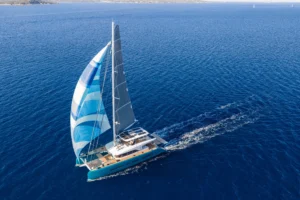
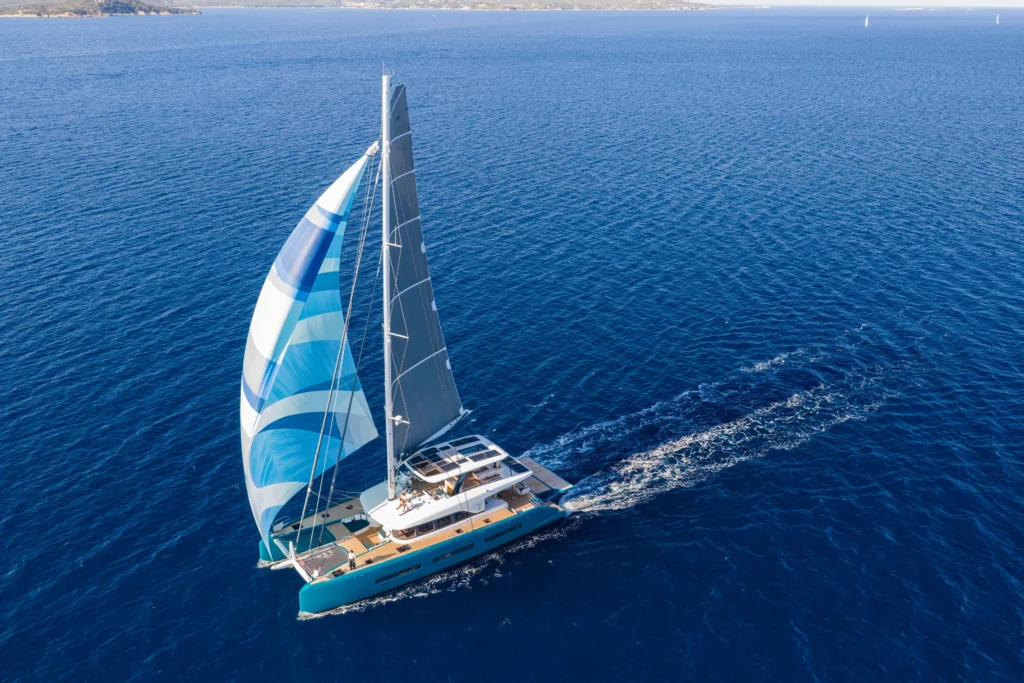
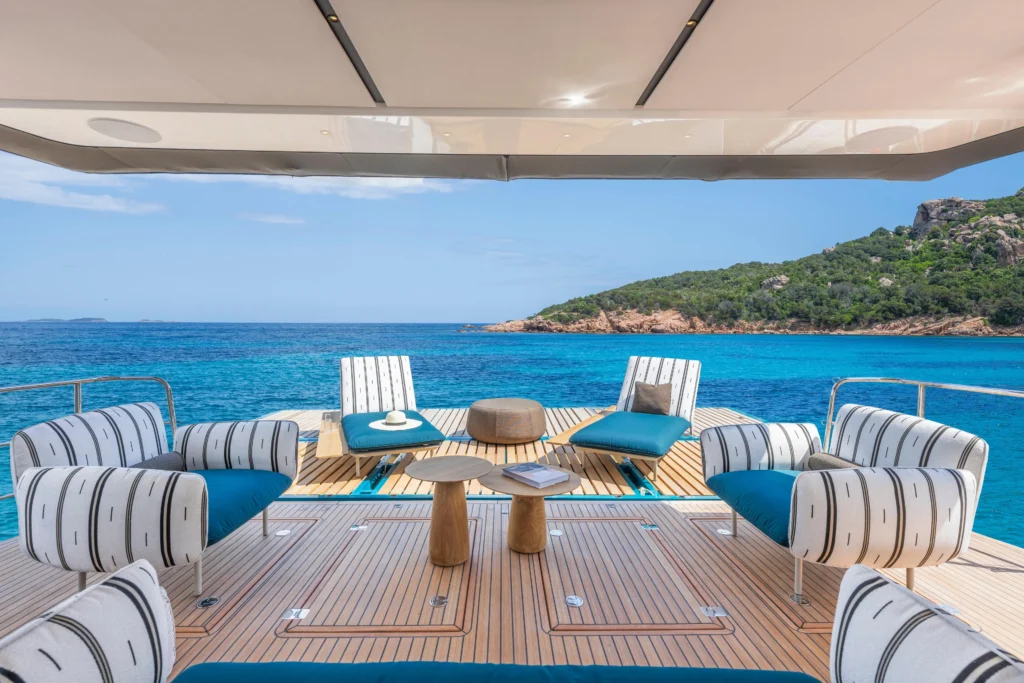
On Naora, the deck becomes a yoga space every morning for the members who want it. The Lagoon Eighty2 has a forward deck and a wide coach roof that give enough flat, open space for a full practice. At anchor in a quiet bay, the boat is stable and the surface is dry and warm within an hour of sunrise. On passage, the motion of the sea adds a different quality to the practice: balance poses become more honest, and the body has to find its own stability rather than relying on the stillness of the floor beneath it.
What the Boat Does to the Practice
The most obvious difference between practising on a boat and practising on land is the surface. At anchor in calm conditions, the Eighty2 is extraordinarily stable. The wide catamaran hull minimises heel and dampens the motion of the water to the point where a morning practice feels close to what you would have on a studio floor. In light swell, the boat introduces a subtle, rhythmic movement that becomes part of the practice rather than a distraction from it.
What changes more significantly is everything else around the practice. The air is different at sea. Cleaner, cooler in the morning, with a quality that feels noticeably different to urban air even to people who have not thought much about it before. The light is different: the Mediterranean dawn over open water has a quality that studio lighting cannot approximate. The absence of noise is different. There are no traffic sounds, no other people, no phone notifications unless you choose to turn the phone on.
What members who practice regularly tend to notice is that the quality of their attention improves at sea. The mind that is usually managing three threads simultaneously, even during a studio practice, quiets down more readily when it has been at sea for a few days and the daily inputs have simplified. The practice becomes more absorbed. The stillness that yoga is nominally working toward arrives with less effort.
The Locations: Specific Spots We Practice Ashore
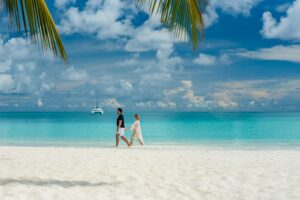
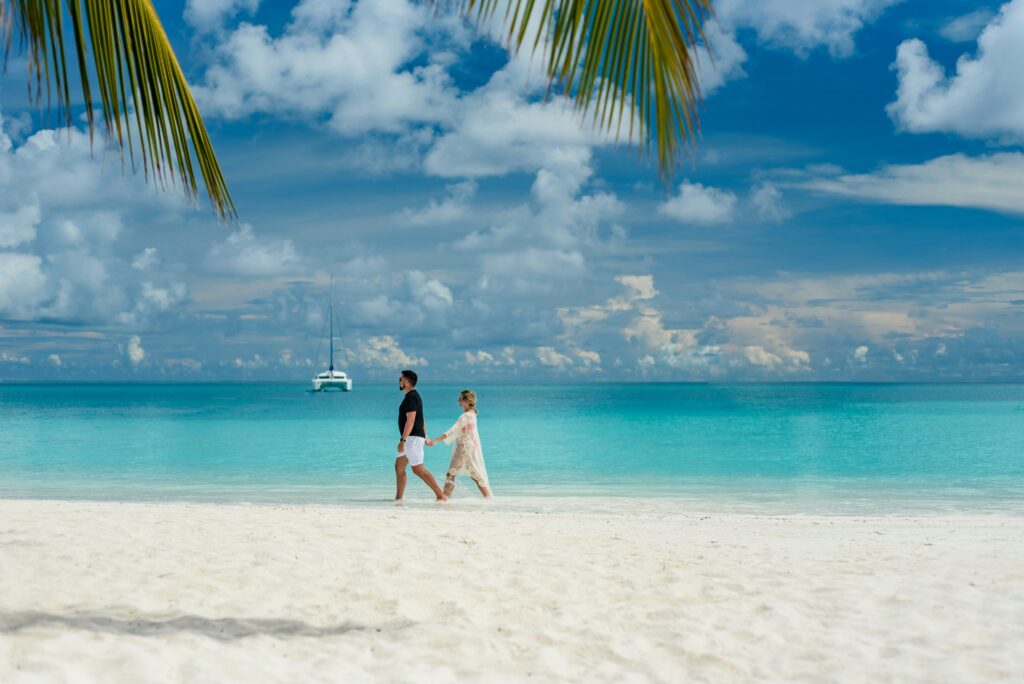
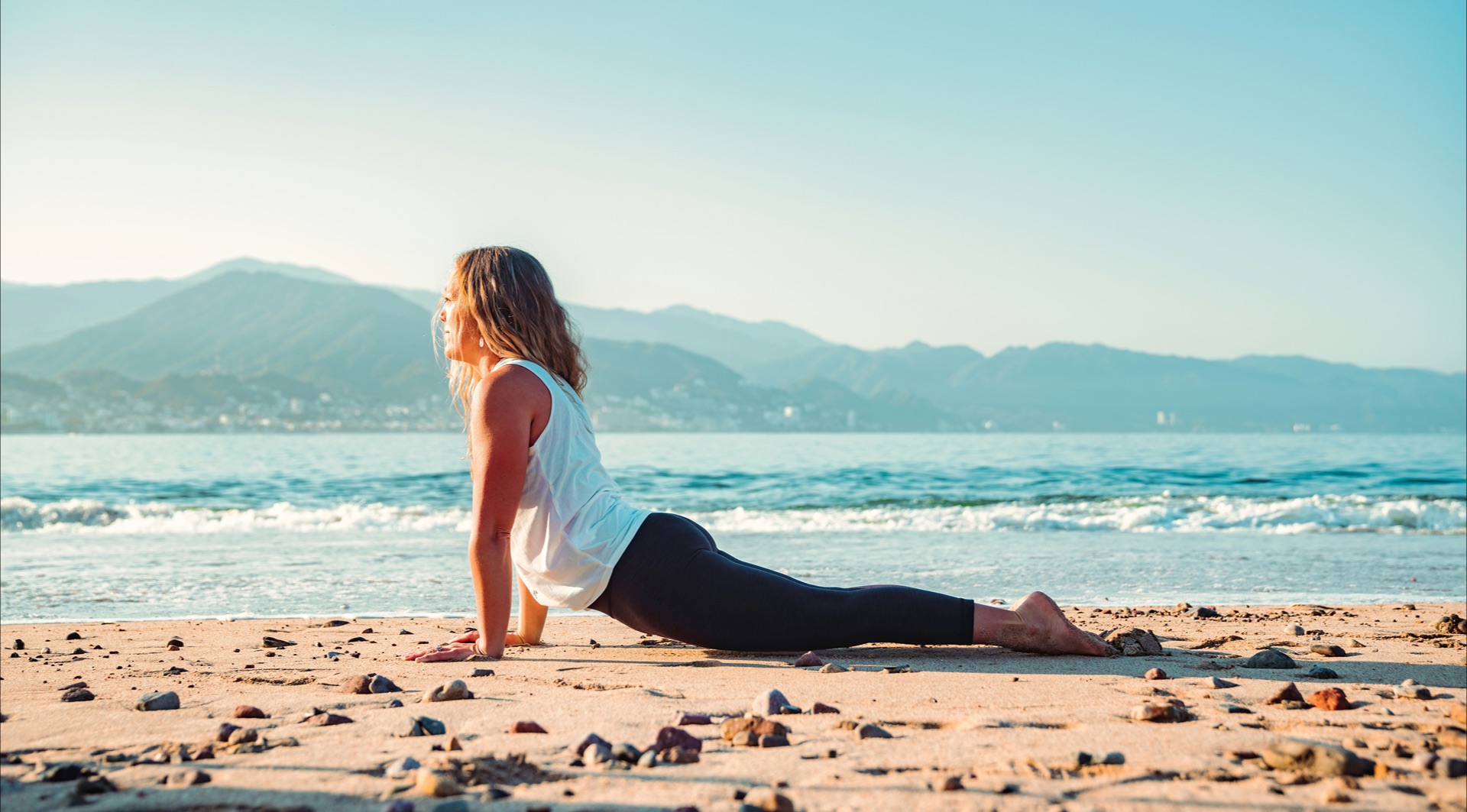
The deck is the daily default. But certain anchorages invite practice ashore, and we go. There are few better yoga surfaces in the world than a flat granite slab above a Sardinian bay at seven in the morning, or a smooth pebble beach in a Croatian cove that no road touches, or the warm limestone shelf above the waterline at the base of a Turkish cliff.
In the Gokova Gulf in Turkey, the pine forest comes to the shoreline and the bays in May are completely empty. We go ashore at first light, lay mats on the flat sand above the tideline, and practice with the pine trees behind us and the water in front. The temperature is perfect. The morning light through the trees is extraordinary. No one else is there.
In the Ionian Islands in Greece, the flat rocks above the waterline on the eastern sides of the smaller islands are among the finest natural yoga platforms in the Mediterranean. Smooth limestone worn flat by the water, warm by mid-morning, with a view down into the clear water below and across to the next island on the horizon. We anchor off and swim in first, then climb up to the rock above the waterline and practice until the temperature makes it preferable to be back in the water.
In the Balearics, the flat roof of the tender garage at the stern of the boat serves as an elevated platform above the water level. It is one of those spots that members who arrive without a regular practice tend to start using anyway, just to sit in the morning before the day begins. Which is, of course, its own version of the thing.
Practice on Passage
Passage days introduce a different quality to the practice. The boat is moving. The surface beneath you is alive. Balance poses require the body to find its own stability without the crutch of a static floor, which is both more demanding and, for many practitioners, more interesting. A tree pose on a moving deck is a different negotiation entirely to the same pose on a studio floor. The body has to engage differently. The concentration required is higher.
For members who practice regularly, passage days tend to produce shorter practices with higher quality. Twenty minutes in the early watch rotation, before the wind builds and the deck becomes less cooperative, with the boat running under sail and the motion rhythmic and predictable. The simplicity of having no choice about the conditions, no option to reschedule because the surface is imperfect, produces a kind of acceptance that experienced practitioners recognise as valuable.
For members who are less experienced, the passage practice often begins as a balance exercise and becomes something else. The combination of the boat’s motion, the horizon, and the particular mental state that offshore sailing produces tends to make the practice feel more immediate than it does on land. Not better, necessarily. More present.
Deck vs. Studio vs. Shore: An Honest Compariso
| Studio | Shore at anchor | Deck at anchor | Deck on passage | |
|---|---|---|---|---|
| Surface | Flat, stable, heated | Varies: rock, sand, grass | Stable in calm, slight movement in swell | Active surface, requires balance engagement |
| Air quality | Conditioned or urban | Sea air, dependent on location | Clean sea air, cooling morning breeze | Moving air, temperature varies with speed |
| Light | Artificial or controlled | Natural, changes with sunrise | Full sunrise, unobstructed horizon | Full sky, sometimes extraordinary |
| Noise | Music, class sounds, traffic outside | Wind, birds, water | Water on hull, rigging, nothing else | Wind, sails, water, no human noise |
| Mental quality | Depends on the day you brought with you | Quieter than land, location-dependent | Significantly quieter after a few days at sea | Highest quality of absorption we have found anywhere |
| Practicality | Scheduled, requires travel, requires clothing | Spontaneous, requires tender and conditions | Available every morning, no commute | Best in light to moderate conditions |
For Those Who Do Not Have a Practice
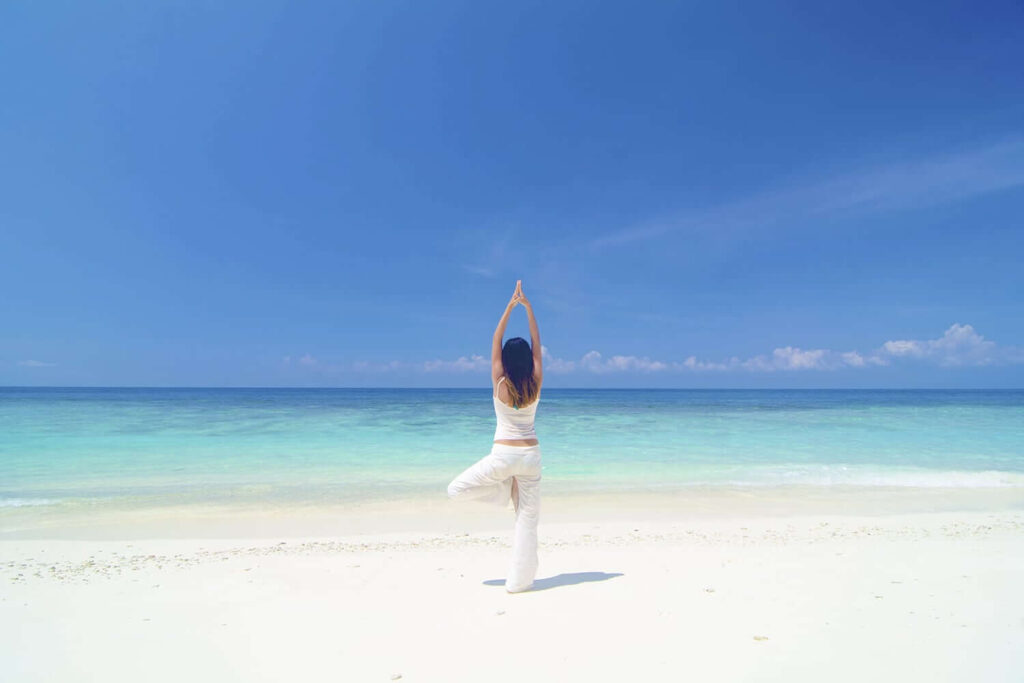
Not everyone who joins Naora has a yoga practice. That is entirely fine. What the deck offers in the morning is not limited to people who can name poses or follow a sequence. It is simply a quiet, open space above the water, in good air, before the day has started. What people do with that space varies. Some stretch. Some sit. Some drink coffee and watch the horizon. Some do nothing at all except be there.
What we notice, across every season, is that the people who make a point of being on deck in the early morning tend to be the ones who get the most from the time at sea. Not because of any specific practice, but because they are choosing, actively, to be present in the place they are in rather than waiting for it to start. That disposition, it turns out, is the whole point. The yoga is just one way of expressing it.
The mornings belong to whoever wants them. We sail, we anchor, we provide the space. What happens between sunrise and breakfast is entirely yours.
- Forward deck and coach roof give ample flat space for a full practice at anchor
- The Eighty2’s wide catamaran hull provides exceptional stability in calm and moderate conditions
- Shore practice available at deserted anchorages throughout the route, from Turkish bays to Ionian rock shelves
- Passage days offer a different quality of practice: balance-focused, absorbed, stripped of distraction
- No practice required to benefit from the early morning deck. Sitting in the right place at the right time is its own thing