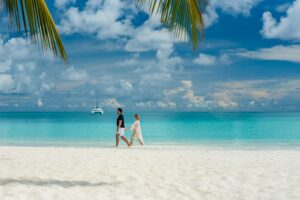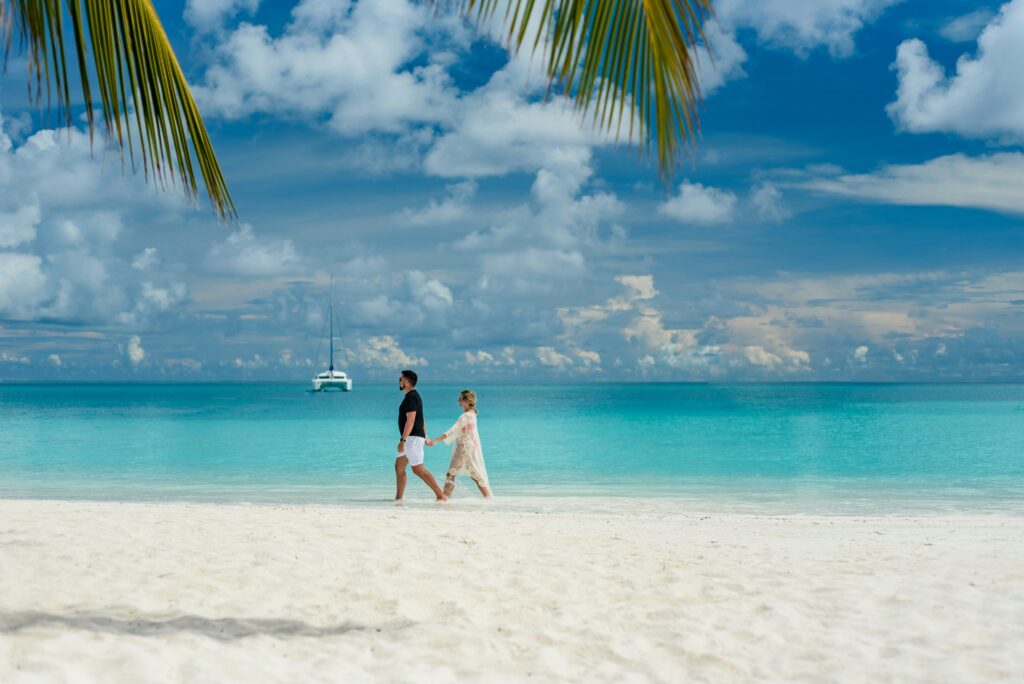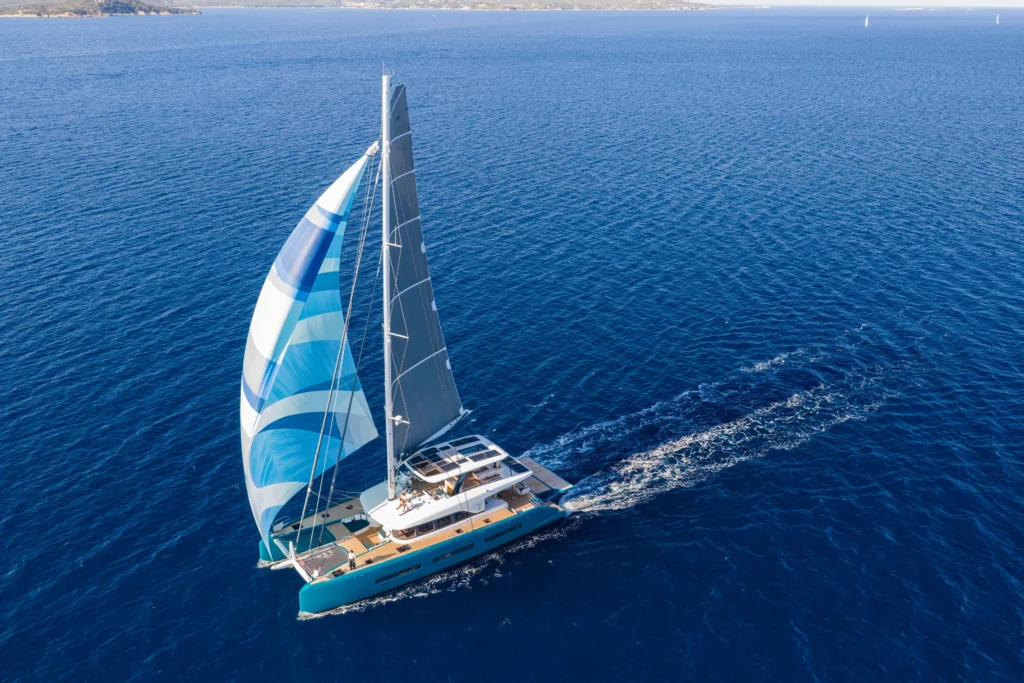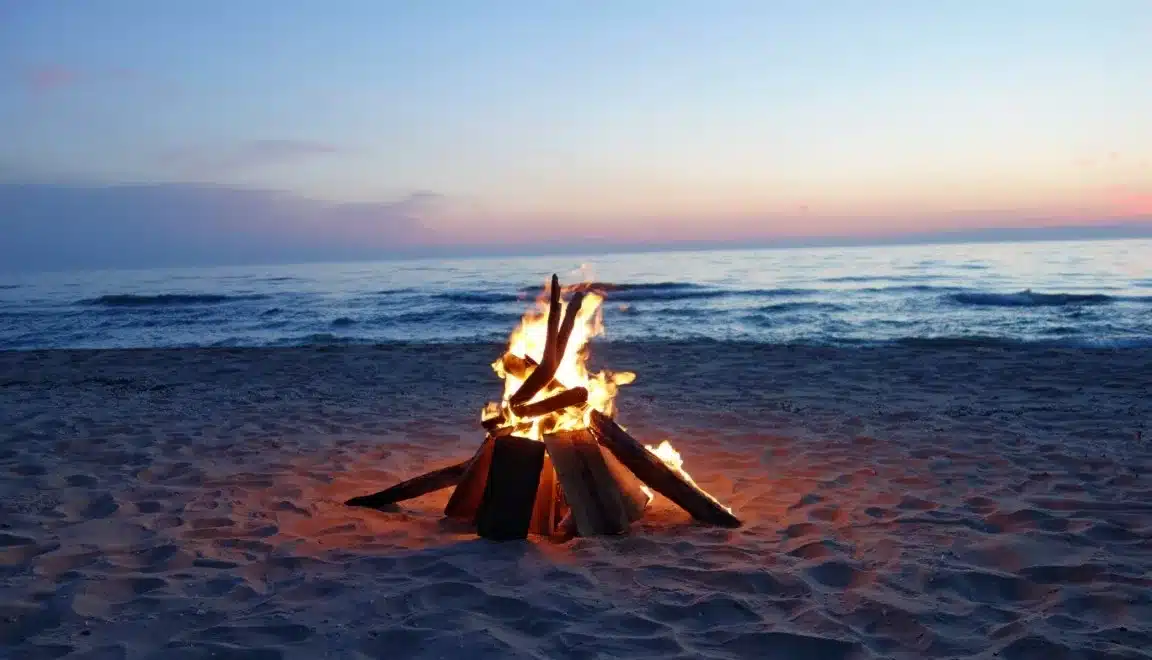
There is a particular kind of evening that happens a few times each Mediterranean season. We are anchored off a beach with no road access, no other boats in the bay, and enough driftwood on the shoreline to build a proper fire. The tender goes in. The grill comes out. By the time the sun is down, there is a fire going on the sand, food on the coals, and a version of the evening that simply cannot be arranged from a hotel or a restaurant reservation.
These evenings are not scheduled. They happen when the right beach and the right conditions arrive together, and you are in a position to take advantage of both. Being at anchor, with the freedom to go ashore whenever and for as long as you want, is what makes them possible. This is part of what we mean when we talk about what sailing allows that nothing else does.
What follows is our list of the Mediterranean beaches we return to for exactly this reason. Beaches only reachable by boat. Beaches with driftwood. Beaches where you can light a fire, grill something properly, and sit until the fire dies without anyone asking you to move on.
A note before we begin: open fires on beaches in protected marine parks and national parks are generally not permitted, and we respect those restrictions absolutely. The beaches below are chosen in part because they sit outside protected zones or in areas where fires are traditional and accepted on the shoreline. We always carry our own wood as backup, clean up completely before returning to the boat, and leave nothing behind. The point of these beaches is that they are still exactly as we found them. That requires some care to maintain.
The Gokova Gulf, Turkey: Where the Season Starts
We start every Mediterranean season in Bodrum and move east into the Gulf of Gokova before turning west with the season. In May and early June, the inner gulfs of the Turkish coast give us some of the best wild beach evenings of the entire year. The combination of pine forest reaching almost to the shoreline, driftwood accumulated over the winter, and complete absence of other boats in the smaller bays creates conditions that are difficult to find later in the season anywhere else in the Mediterranean.
The bays around Cokertme and the Seven Islands (Yedi Adalar) in Gokova are our preferred spots early in the season. Pine-covered hills dropping to pebble and sand beaches, flat water, and the particular silence of a Turkish bay in May when the charter traffic has not yet arrived. Driftwood is plentiful. We go ashore by tender in the late afternoon, collect wood from the tideline, and have the fire going before dark. The fishing from the shore here is also exceptional: red mullet and sea bream come in on a simple rig in the evening.
The Hisaronu Gulf, south of Bodrum, has a similar character. More sheltered, more remote, and with bays that see almost no visitors outside July and August. We anchor off the small beach at the head of the gulf in the evenings, and the driftwood accumulated on the east-facing shorelines through the winter months is consistently good for a fire.
Navagio Beach, Zakynthos: The Fire by the Wreck
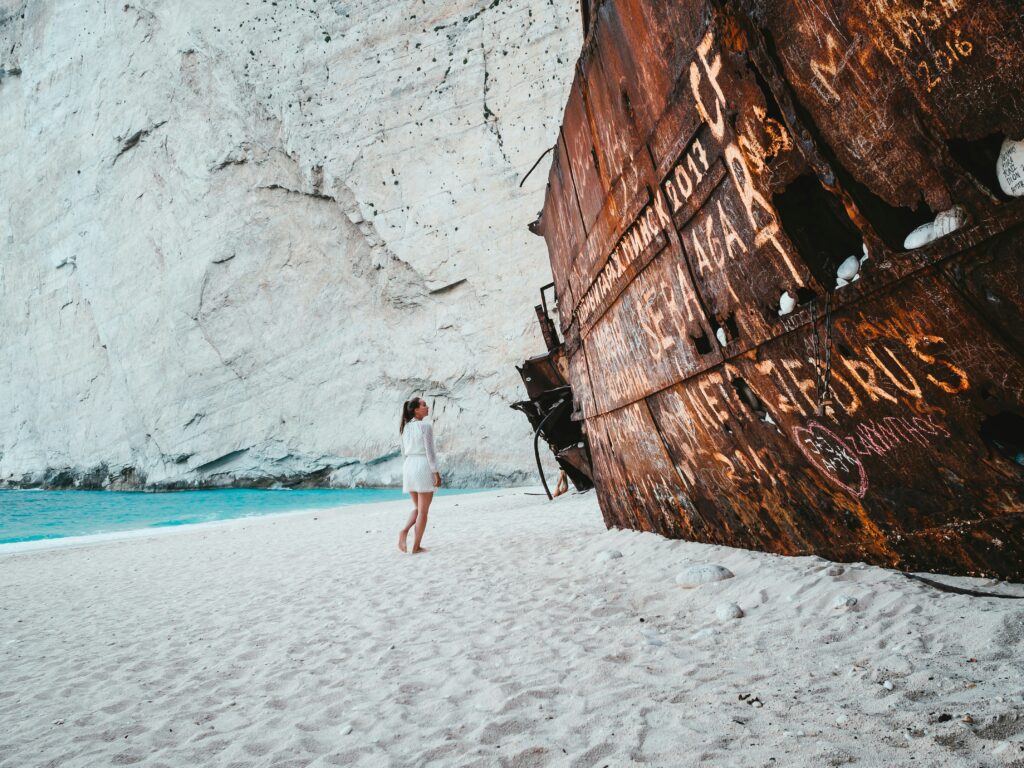
Navagio, or Shipwreck Beach, on the northwest coast of Zakynthos is one of the most photographed beaches in the Mediterranean, and during the day in summer it is busy with tourist boats. But the boats leave. The cliffs close it off completely from land. There is no road and no path to the beach, and after the day-trip traffic has gone, the bay empties out completely.
We anchor in the bay in the evening after the day visitors have left, take the tender in, and have the beach to ourselves. The rusting hull of the MV Panagiotis, a smuggling vessel that ran aground here in 1980, sits at the centre of the cove. White limestone cliffs rise on three sides. The pebble beach is clean, the driftwood accumulates in the corners of the bay, and a fire here, with the wreck as backdrop and the vertical cliffs catching the firelight, is one of those evenings that members describe for years afterward.
Timing is the key to Navagio. We arrive in the late afternoon, anchor off, swim while the last boat traffic clears, and go ashore as the light changes. The morning departure, before the first tour boats arrive, is made in flat calm water with the cliffs catching the early light. We have spent two nights here and found the second morning even quieter than the first.
The Lavezzi Islands, Between Corsica and Sardinia
The Lavezzi Islands are a small archipelago of granite outcrops and white sand beaches sitting in the Strait of Bonifacio, the notoriously turbulent channel between southern Corsica and northern Sardinia. The islands are a protected nature reserve, which limits development completely, but the beaches themselves are accessible and the tradition of anchoring and going ashore here is long established among sailors who know the Strait.
The beaches on the eastern sides of the main islands, sheltered from the prevailing westerly wind, have the character that the Strait is not famous for: calm water, flat granite slabs running into the sea, white sand between the rocks, and a quality of silence that is surprising given the strategic importance of the passage just offshore. We bring our own grill and wood here rather than relying on driftwood, because the islands are too well-managed to leave much on the tideline. But the setting for a fire in the evening, with the granite turning pink in the last light and the anchor lights of other boats visible across the anchorage, is worth the preparation.
Espalmador, Formentera: The Hidden Island Before the Season
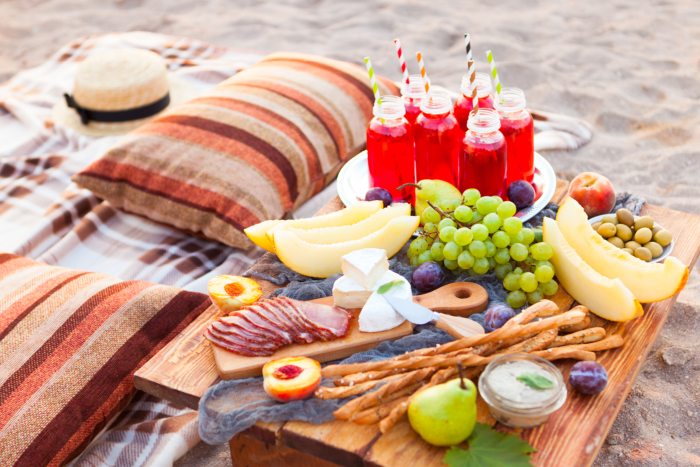
Espalmador is a small uninhabited island between Formentera and Ibiza that serves as one of the Balearics’ best kept secrets. In July and August it fills with boats. In late May, June, and again in September it is quiet enough to feel private. The beaches on the western side have fine white sand, the kind that looks almost luminous in low light, and the tidal action along the western shore accumulates enough driftwood for a decent fire through the quieter months.
We anchor in the bay on the north side and go ashore in the afternoon. The beach barbecue here is one of the Naora season’s reliable pleasures: fresh fish grilled over driftwood, the Balearic evening light lasting until nearly ten, and the particular satisfaction of being on a beach that a hundred thousand tourists drive past on the ferry to Formentera without knowing exists.
The shallow sandbar between Espalmador and Formentera is worth walking at low tide: warm water over white sand, the kind of place that makes you walk further than you intended and arrive back at the tender later than planned.
The Outer Dalmatian Islands, Croatia: Late Season
The Croatian Adriatic has more uninhabited islands and deserted beaches per mile of coastline than anywhere else in the Mediterranean. Most of them are difficult to find on a standard charter itinerary because they require either local knowledge or the willingness to sail past the more obvious stops. We sail past the obvious stops.
The outer islands south of Lastovo, and the smaller, unnamed islets scattered through the southern Dalmatian chain, have beaches that see almost no visitors even in peak season. The Adriatic driftwood situation is excellent: the winter bora wind drives wood onto the east-facing shores and it accumulates there until someone with a boat and a grill comes along to make use of it. We have had fires on beaches in this part of Croatia where the nearest road is fifteen nautical miles away.
Late September in the southern Dalmatian islands is one of the finest times in the entire Mediterranean season. The water is at its warmest, the tourist traffic has dropped sharply, and the evenings have a quality of coolness that makes a fire feel exactly right rather than redundant.
Our Beach Fire Reference by Region
| Location | Best timing | Driftwood situation | Character |
|---|---|---|---|
| Gokova and Hisaronu gulfs, Turkey | May and early June | Excellent, pine-backed shorelines with winter accumulation | Quiet bays, pine hills, no other boats, early season at its best |
| Navagio Beach, Zakynthos | Evening after day-trip boats leave, any time | Moderate, corners of the cove collect wood | Dramatic cliffs, shipwreck backdrop, entirely empty after dark |
| Lavezzi Islands, Corsica-Sardinia | June and September | Limited, bring your own wood | Granite and white sand, Strait of Bonifacio, protected but accessible |
| Espalmador, Formentera | Late May, June, September | Good on west shore in shoulder season | Uninhabited, fine white sand, Balearic evening light |
| Outer Dalmatian islands, Croatia | Late June and September | Very good, bora wind deposits wood on east-facing shores | Most remote beaches in the Mediterranean, zero facilities, total quiet |
How We Do It from the Boat
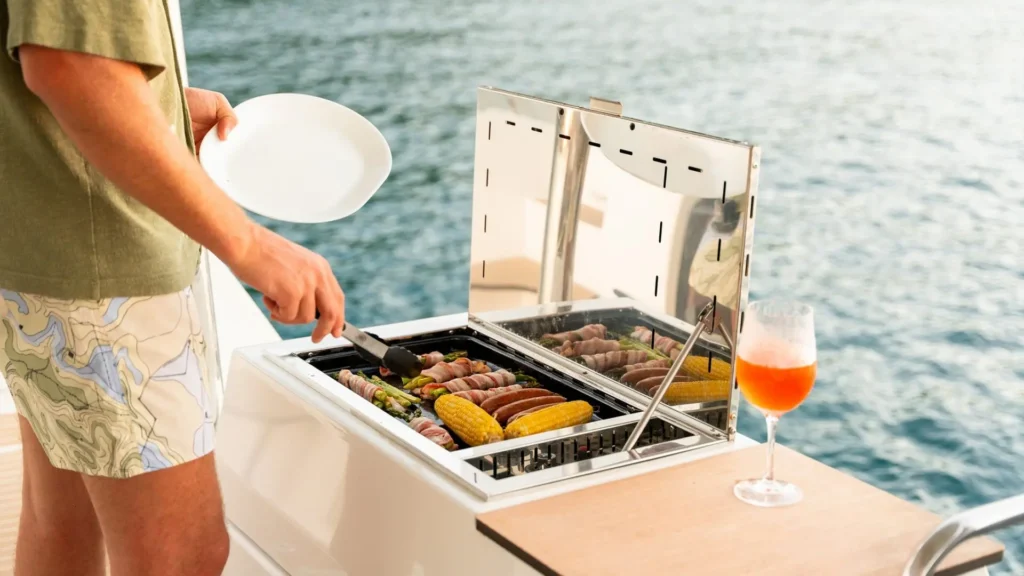
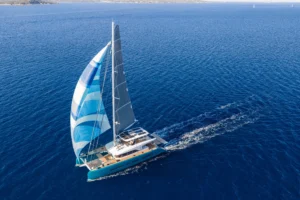
The logistics are simple and it is worth being direct about them. We carry a portable grill on Naora, the kind that sits on its own legs above the sand and leaves nothing behind. We bring hardwood charcoal from the boat as a reliable base for the fire. Driftwood from the shoreline, when it is available and of good quality, gets added on top. We do not use driftwood painted or treated, and we do not collect it from protected areas. Where the beach is in or adjacent to a nature reserve, we use our own wood entirely.
Our chef, who provisions fresh at every major port, plans the beach barbecue meals around what was bought that day or caught that afternoon. Fish from the morning dive. Vegetables from the market in the last port. Occasionally a whole lamb leg that has been marinating since we left. The simplicity of cooking over fire on a beach that took a full day’s sailing to reach makes the food taste different to anything prepared in a restaurant. There is a directness to it that is difficult to manufacture any other way.
We clean up completely before returning to the boat. The fire is fully extinguished, ashes and charcoal packed out in a metal container, grill returned to the tender. The beach looks the same as when we arrived. That is the condition on which we get to come back.
- Portable grill on legs carried in the tender, leaves no trace on the sand
- Own hardwood charcoal as fire base, driftwood added where available and permitted
- No driftwood from protected marine parks or national park areas
- Chef plans beach meals around fresh provisions from the last port and catch from the day
- Full cleanup before returning to boat: ashes packed out, no trace left behind
- We check local fire regulations before going ashore at any new location