There is a passage in the South Pacific that sailors dream about for years before they ever sail it. A westward run of thousands of miles through warm trade winds, past volcanic peaks rising from the sea, into lagoons so clear you can read the coral twenty metres below the hull. It is called the Coconut Milk Run. And for us at Naora, it is not a dream deferred. It is one of the most extraordinary chapters of our five-year journey around the world.
We did not design this route to be efficient. We designed it to be unforgettable. Every stop we make, every anchorage we choose, every community we enter has been chosen because it earns its place. Nothing is on the itinerary because it is famous. Everything is there because it is real.
Where Our Pacific Story Begins: Bodrum to Panama
Our Pacific chapter does not start in Panama. It starts much earlier, in Bodrum, on the turquoise coast of Turkey, where the Naora journey begins each cycle. We spend a full season moving through the Mediterranean: the Greek islands, the Croatian coastline, Montenegro, the Balearics.
The light in these waters is unlike anywhere else on earth. Long golden evenings at anchor, dinner prepared by our onboard chef while the village lights come on across the bay. Members join us and step off along the way, each finding the leg of the journey that fits their life.
From the Mediterranean we cross the Atlantic, spending weeks in the Caribbean before arriving in Panama. And when we finally transit the Canal and the Pacific opens ahead of us, those who are aboard for that moment feel something shift. The world’s largest ocean. The most celebrated sailing route on earth.
The Great Crossing: Panama to the Marquesas
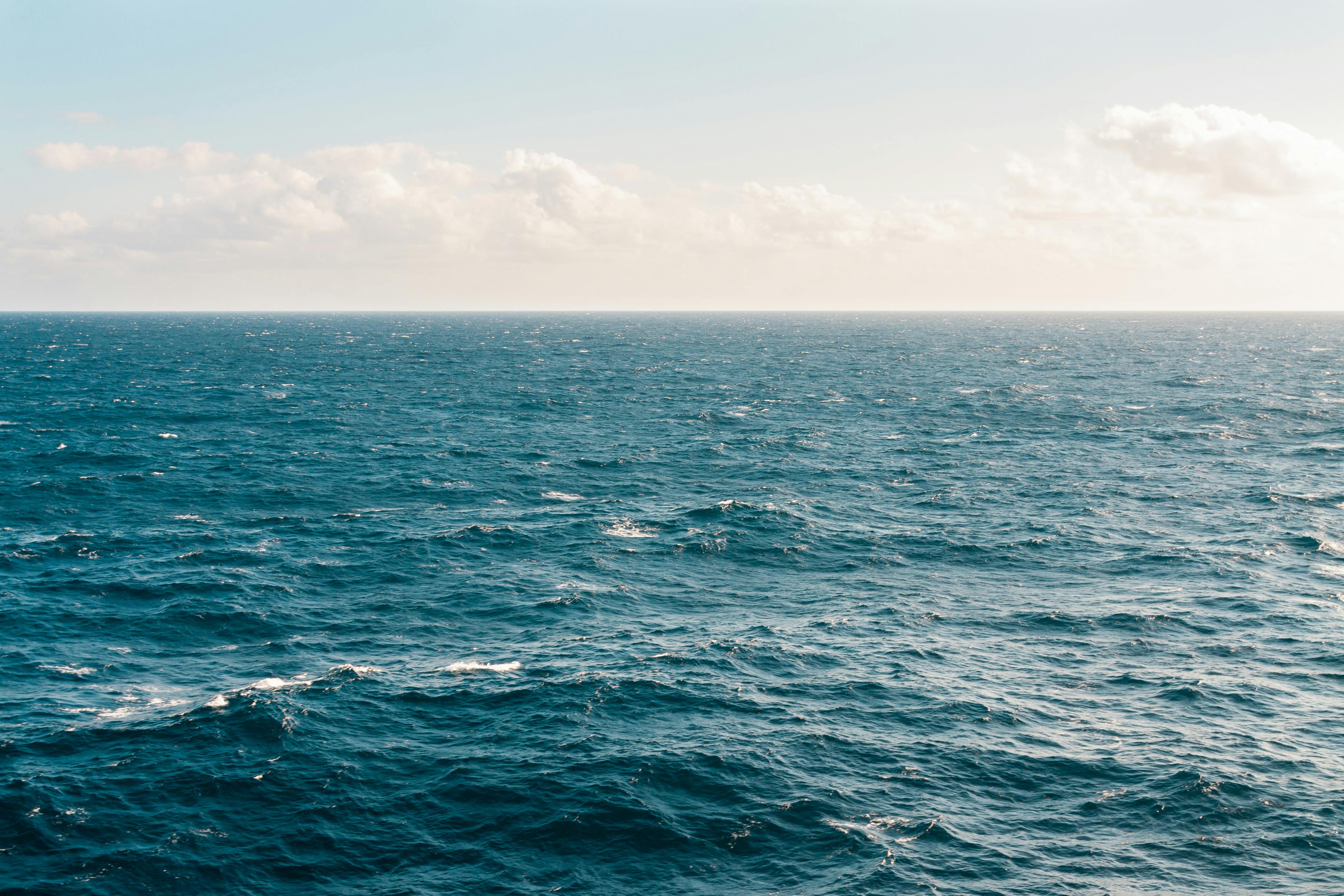
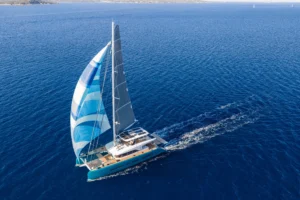
The passage from Panama to the Marquesas Islands in French Polynesia is the longest uninterrupted stretch of open ocean on our entire five-year route. Close to three thousand miles of blue water, with nothing between here and landfall but trade winds, stars, and the steady rhythm of the sea.
We have made this crossing many times. And every time, without exception, it changes people. There is no phone signal worth mentioning. No news cycle. No agenda beyond the horizon ahead. The southeast trade wind pushes us steadily westward.
Watches rotate. Fresh fish come aboard from the stern line. Dinners happen at the cockpit table as the stars come out, and conversations go places they rarely go on land. Members who step aboard in Panama slightly worn by the world they left behind tend to arrive in French Polynesia renewed.
Nuku Hiva rises from the sea like something from a dream: volcanic peaks wrapped in cloud, valleys impossibly green, the air thick with vegetation after weeks of salt. It is one of the most dramatic landfall moments on earth, and we never take it for granted.
What Makes This Crossing Different Aboard Naora
Hundreds of boats attempt the Coconut Milk Run each year. Most are crewed by couples doing everything themselves: navigation, provisioning, maintenance, safety watches, cooking, and worrying in the small hours. It is a magnificent way to sail. It is also relentless.
When we approach a Tuamotu lagoon entrance, our team reads the water carefully from the bow, reviews the most current information available at the navigation station, and makes every call with the deliberate care that has kept Naora safe across hundreds of offshore miles. Our chef provisions fresh at every port. Everything is ready before anyone arrives.
French Polynesia, Tonga, Fiji and Beyond
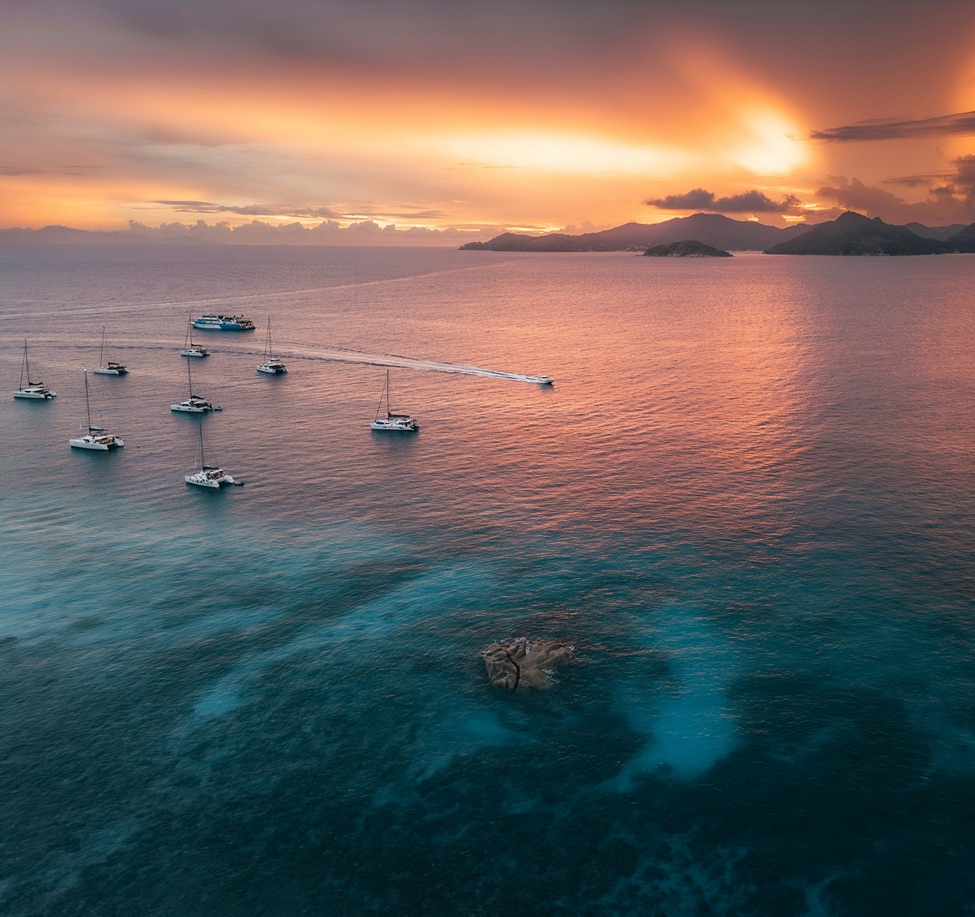
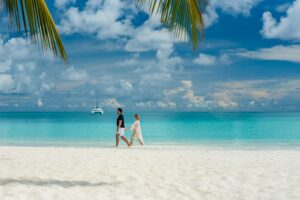
We move through French Polynesia slowly and with intention. The Marquesas are ancient and raw: carved stone tikis in the jungle, horses on the ridgelines, a Polynesian culture that has stayed intact at the very edge of the inhabited world. Then come the Tuamotu atolls, coral rings barely above sea level enclosing lagoons of impossible colour.
Fakarava, Rangiroa, places where the water is so clear you can watch the reef from the deck. The Society Islands round out French Polynesia with Moorea’s silhouette at dawn, the lagoon at Bora Bora catching the afternoon light, and the quieter islands beyond the famous names where our members tend to find their favourite anchorages.
In the Cook Islands, Aitutaki’s lagoon is one of the most beautiful enclosed bodies of water on earth. Tonga’s Vava’u group is where humpback whales come to breed each year, and where swimming alongside a mother and calf in crystal water becomes, for many of our members, the single most powerful moment of the entire journey.
Samoa slows everything down further still. The fa’a Samoa, the traditional Samoan way of life, is among the most generous and intact cultures in the Pacific. We do not observe these communities from a distance. We are welcomed into them.
We spend more time in Fiji than anywhere else on the Pacific route, and for good reason. Fiji from a beach resort and Fiji from the water are entirely different countries. We sail the outer Lau archipelago, accessible only by sea. The Lomaiviti Islands, where the diving is extraordinary and the anchorages empty. The Yasawa and Mamanuca groups for sailing days that make you understand why people change their entire lives to be here.
Minerva Reef, the Solomons, and Indonesia
Most boats leaving Fiji turn south. We turn northwest. Minerva Reef is a submerged atoll in open ocean, about 350 miles from Fiji, where a thin arc of coral encloses a calm lagoon of extraordinary clarity. No buildings. No other boats. No noise but the ocean. We spend a few days here every time, and it is consistently one of the stops our members mention first when they return home.
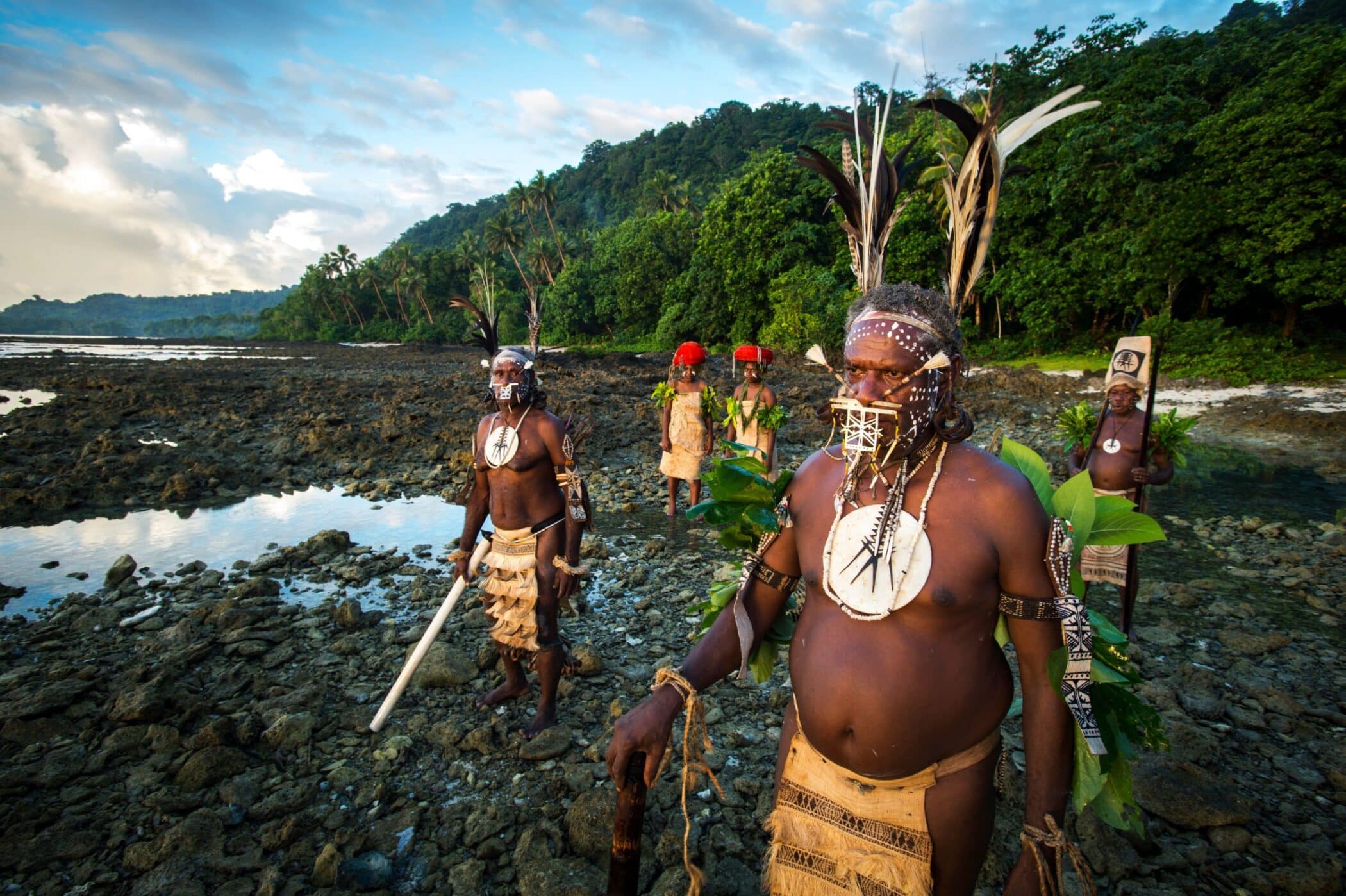
From Minerva we sail to the Solomon Islands, a destination that very few cruising boats ever reach. This is not a polished destination. What it offers is the real Pacific: rainforest dropping into the sea, Second World War wrecks in shallow clear water, and Marovo Lagoon, one of the largest saltwater lagoons on earth. Days pass here without urgency. This is the Pacific the brochures never show.
The Pacific chapter ends in Indonesia, entering through the Banda Sea and the historically extraordinary Banda Islands, then west through Komodo, Lombok, and Bali. The Indian Ocean, and the next great chapter of the Naora journey, begins here.
Naora vs. Other Ways to Sail the Pacific
The Coconut Milk Run can be experienced in several different ways. Each has its own character, its own demands, and its own rewards.
| Option | Flexibility | Service Level | Community | Remote Access |
|---|---|---|---|---|
| Self-crewed passage | Total freedom, very demanding | You do everything yourself | Whatever you build | Depends on your experience |
| Traditional cruise ship | Fixed itinerary only | Full service, mass scale | Hundreds of strangers | Ports only, no anchorages |
| Private yacht charter | One trip per booking | Full service, no continuity | Your party only | Moderate |
| Naora membership | Join and leave at any port | Full crew, chef, stewardess | Curated, invitation-only | Deep, including unreachable places |
The difference between these options is not only about comfort. It is about what kind of experience becomes possible, what kind of places you actually reach, and what kind of people you find yourself at sea with.
Who Sails the Pacific with Us
The people we sail the Pacific with tend to share certain things. Not a profession or a background, but a quality of attention. A preference for depth over spectacle. A willingness to sit with the horizon for a few hours without reaching for their phone.
Some are between things. Others are in the middle of something they needed to think through. Some simply wanted to see what was on the other side of the open ocean, and had the sense to go and look. The Coconut Milk Run has a particular effect on the people who make it. It is not easy to describe before the fact. Afterward, most find they do not need to.
What we have noticed, across many Pacific crossings, is that the people most changed by this journey are rarely those who came looking for an adventure. They are the ones who came because something quieter in them knew it was time.
- People who have been moving fast for a long time, and feel ready to move differently
- People who want to see the world properly, not through a tour itinerary
- People who do their best thinking when they are furthest from everything familiar
- People who value the quality of who is around the table as much as where the table is
- People who are not looking for another experience to add to a list, but for something that actually stays with them
The Pacific is the longest chapter of our five-year circumnavigation. Before it: the Mediterranean, the Atlantic, the Caribbean. After it: Southeast Asia, the Indian Ocean, the Red Sea, the return across the Atlantic. It is a large world. The passages are real. And some of the places we go, you cannot reach any other way.