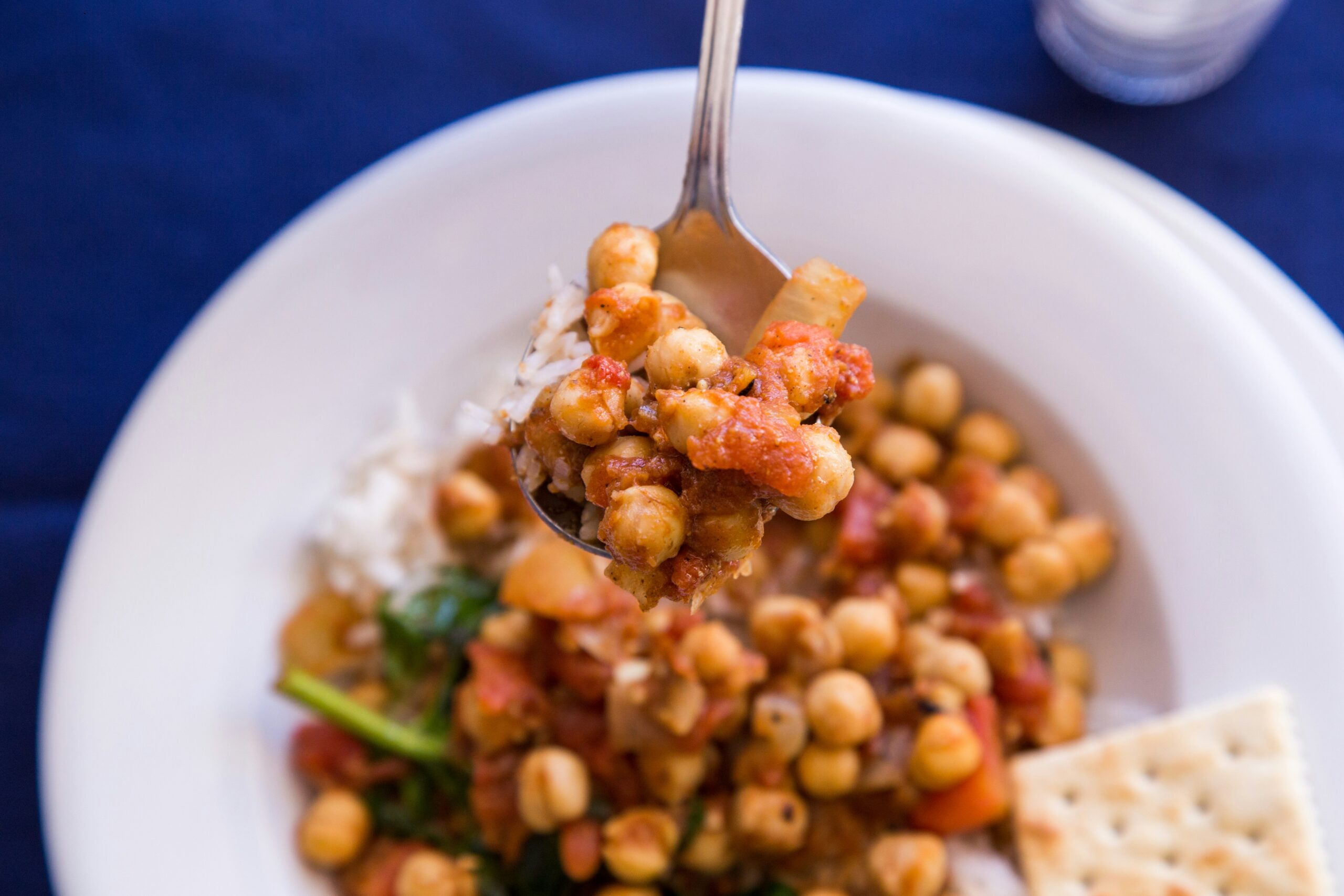
A chickpea can surrender its skin and still resist the spoon. The outside looks soft; the centre breaks into dry grains rather than cream. In Cycladic chickpea stew, that small difference matters more than the colour of the broth or the sweetness rising with the steam. A pot can smell ready while its main ingredient still needs time.
Revithada gives us a useful way of thinking about the galley before we reach the Cyclades on the Naora Global Expedition. It belongs to a regional cooking tradition in which preparation begins well before hunger, and the oven carries much of the work. Aboard Discovery, our Lagoon Eighty2, the same ingredients meet a different set of conditions. Heat has an energy cost, water comes from a managed supply, and a vessel under sail cannot organise its movements around a casserole.
The interesting question is how much of the dish can travel without pretending that its circumstances have travelled too. We can respect the island preparation and still acknowledge that a yacht needs another method. The first obligation is to understand what the long cooking actually achieves.
Cycladic Chickpea Stew And The Island Oven
Revithada belongs to the Cycladic repertoire, though there is no single recipe that speaks for every island kitchen. A familiar slow oven preparation brings soaked chickpeas, onion, olive oil and water together in a covered earthenware pot. In the Sunday tradition associated with the dish, the pot goes into the oven the previous evening and cooks through the night. Some preparations seal the lid with dough to limit the escape of moisture.
The vessel and the oven matter as much as the ingredient list. A heavy earthenware pot moderates changes in temperature. Its lid holds a humid atmosphere around the food, while the surrounding oven heats the pot from more than the base alone. In a retained-heat wood-fired oven, the masonry releases stored heat gradually. That is a different arrangement from keeping a saucepan over a concentrated heat source.
During the long cooking, the chickpeas become tender, the onions lose their separate sharpness, and the liquid takes on body. Depending on the lid, the heat and the amount of water, the upper layer may acquire a deeper colour and flavour than anything beneath it. The dish can remain loose and brothy or become more concentrated. Those differences are worth noticing rather than correcting towards one supposedly definitive consistency.
There is social organisation inside this method too. Preparing the pot ahead allows the meal to develop while the household does something else. But it would be a mistake to translate that directly into an unattended oven aboard a moving yacht. The island method makes sense within its own equipment and habits. Respect begins by recognising the conditions that make it work.
Soaking Chickpeas And Choosing The Water
A useful starting quantity is 500 g of dried chickpeas for roughly six substantial bowls, with onion, broth and bread completing the meal. Appetite and accompaniments change the calculation. The point of weighing the dry ingredient is to avoid discovering, after it has swollen, that dinner has become several dinners and now requires refrigerator space that was intended for something else.
Before soaking, the chickpeas need sorting for small stones or damaged pieces, then a rinse. For that quantity, around 2 litres of potable water gives a sensible starting allowance in a roomy container, provided the chickpeas remain well submerged as they expand. A narrow jar filled to the shoulder is poor preparation. The chickpeas need space as well as water.
An overnight soak of about 8 to 12 hours is a useful starting window, not a guarantee of complete hydration. Variety, age, storage conditions and water temperature all matter. In a warm galley, soaking belongs in the refrigerator, with extra time allowed if necessary. A sunny worktop is no place to leave a bowl through a hot day simply because the recipe says overnight.
Water moves into the dry seed and reduces the work that heat must do later. Soaking therefore changes the cooking schedule, but it cannot restore every old batch to good condition. Chickpeas kept for a long time in warm or humid storage can become stubbornly slow to soften. Dry stores need sound containers, a cool position where possible, and stock rotation. Buying locally does not establish that the crop was grown locally; that is a separate question worth asking.
We would drain the soaking water and cook in fresh water for a cleaner starting flavour. That is a choice, not a claim that the soaking liquid is inherently dangerous. The cooking liquor is another matter: once the chickpeas have simmered, it holds flavour and starch that belong in the finished dish. Discarding it and then trying to rebuild the broth wastes much of what the cooking has made.
Getting The Centre Tender
For a galley adaptation, thinly sliced onions can soften gently in olive oil before the soaked chickpeas and fresh water go in. Browning them deeply is optional and changes the result; sweetness does not require a dark frying stage. The liquid should cover the chickpeas comfortably, with room in the pot for movement and foam. Bring it to the boil, skim if necessary, then reduce the heat to a steady, gentle simmer.
Soaked chickpeas often need roughly 90 minutes to 2 hours at a gentle simmer, sometimes longer. That range is useful for planning but poor evidence of readiness. The check is physical: cool a few chickpeas from different parts of the pot and press or taste them. The centre should yield without a chalky or gritty resistance. One soft specimen does not establish that the whole batch is ready.
Water chemistry can explain a pot that refuses to agree with the clock. Calcium and magnesium in hard water can help the chickpeas retain firmness. Acid also delays softening, which is why adding lemon after tenderness is reached makes an adaptation easier to control. Ordinary quantities of cooking salt are not the same problem. Leaving all seasoning until the end will not rescue chickpeas held firm by old age, hard water or early acid.
Baking soda can accelerate softening by making the cooking water more alkaline, but it is not a harmless answer to every slow pot. Too much can weaken the skins excessively and leave an unwelcome taste. With an unfamiliar batch, allowing time and checking texture is preferable to making repeated corrections without understanding the cause.
The simmer itself needs attention. A violent boil knocks chickpeas against one another and can leave broken skins circulating around centres that are still firm. A lid limits evaporation; an occasional check catches a falling liquid level before the base scorches. More heat is not always more progress.
Adapting Cycladic Chickpea Stew For A Yacht Galley
An oven version aboard is possible when the conditions, equipment and cooking window suit it. It should not become a test of loyalty to the dish. Keeping an oven hot for much of the day adds heat to the galley and draws on the yacht’s energy supply. Without measuring the particular appliances and their use, we should not attach a neat consumption figure or environmental claim to that choice.
A pressure cooker offers another route, if one is carried and used within its instructions. The higher pressure raises the boiling temperature of water and allows the chickpeas to soften more quickly. For soaked chickpeas, roughly 20 to 30 minutes at full cooking pressure can be a starting range, followed by the required release period. The appliance, the chickpeas and the desired texture still decide the result.
Pulses foam and expand, so the cooker’s specific fill limit for them matters, rather than the general maximum marked on the vessel. Pressure must be fully released before opening. A natural release is often useful for pulses, but it also belongs in the time allowance. A method that cooks quickly does not necessarily produce a pot that can be opened quickly.
This produces tender chickpeas efficiently; it does not reproduce an overnight earthenware bake. The onions develop differently, there is little evaporation while the cooker is sealed, and there is no equivalent browned surface. Calling it traditional revithada would conceal the most interesting part of the decision. It is a galley adaptation with a clear debt to the island dish.
Once the chickpeas are tender, the liquid can be adjusted separately. A brief uncovered simmer concentrates a thin broth. Crushing a small spoonful of chickpeas into it gives body without reducing the entire pot too far. That distinction matters: reduction intensifies salt as well as flavour, while crushed chickpeas thicken without requiring much more evaporation. Neither technique supplies the taste of an oven. Both can make a good bowl.
Cooking Around The Sailing Day
For Discovery, the meal has to fit the passage plan Sven makes as captain. In the Cyclades, the summer meltemi can make that more consequential than a glance at the distance between islands suggests. Northerly wind may accelerate through gaps, and shelter from waves behind an island does not necessarily mean shelter from gusts descending off the land. An early departure is not a guarantee of light conditions.
The galley decision begins with the expected motion and the work required on deck. Chopping onions before departure removes a task from the hours when footing may be less comfortable. Cooking the chickpeas through in a suitable window removes a much longer uncertainty. Starting an ambitious pot just before a departure or harbour approach adds attention and hot liquid at precisely the wrong time.
A catamaran’s relatively level stance does not make a saucepan stationary. Short seas can bring abrupt movement, and a full pot has considerable momentum. Appropriate restraints, secured lids and clear working surfaces matter. So does leaving enough space above the liquid that a small movement does not immediately become a spill. The sound of a lid beginning to chatter against its rim is a reason to check the heat and the pot, not background music.
Nor should the person keeping a navigational watch be expected to monitor an unattended cooking process as an incidental extra. Long cooking still requires someone responsible for it. The useful division is between work that can happen ahead, work that needs active attention, and food that is already safely ready when the boat demands everyone’s concentration elsewhere.
There is a credible counterpoint to all this patience. Good canned chickpeas can be the better choice on a demanding sailing day. They carry more packaging and liquid than dried stores, but their tenderness is already established. Rinsed and warmed with properly softened onions, olive oil and a little fresh water, they can make a satisfying meal. It will lack some of the integration of a long-cooked pot. That is an acceptable trade when the alternative is asking the galley to compete with seamanship.
Cooling And Reheating Chickpea Stew
A finished stew gives the day flexibility only if its storage is handled properly. A large pot left on a switched-off hob can remain warm for a long time, cooling slowly through temperatures in which bacteria can multiply. Being fully cooked does not make a pot safe to leave through the afternoon. Plant-based food needs the same seriousness about cooling as other prepared food.
If the stew is not being served promptly, divide it into smaller, shallow containers so that heat can escape, cool it rapidly and refrigerate it promptly. A controlled cold-water bath can help remove heat before storage, provided water cannot enter the food. Leaving the entire deep pot to reach room temperature unaided is the wrong approach, and loading a refrigerator beyond its cooling capacity simply moves the problem.
Reheat only what is needed. A little potable water can loosen broth that has thickened in the cold; gentle stirring prevents the base catching before the centre is hot. A practical reheating check is at least 75°C through the food, measured away from the pan’s hot surface. Bubbling at one edge does not tell us what is happening in the middle.
The next day’s stew may taste more integrated, but that is not a reason to manufacture leftovers. Batch size has to fit appetite, refrigeration and the next meal. Water care works the same way. Saving a measured bowl of rinse water is a modest gain; cooking more than can be safely kept wastes ingredients, water and the energy already spent on them.
Lemon, Olive Oil And The Finished Bowl
Once the chickpeas are tender and the broth has the right body, lemon becomes a finishing decision rather than a complication in the cooking. Add it gradually and taste. It should make the onion and chickpea flavours clearer, not turn the whole bowl sharply sour. Different lemons give different amounts of juice and acidity, so the number of fruits is a poor final instruction.
Olive oil needs similar judgement. Some belongs in the cooking, where it mingles with the onion and broth. A little added at the end retains more of its fresh aroma. If the surface is already heavily pooled, more oil will not make the chickpeas creamier. That texture has to exist inside them.
The final taste should come from a spoonful allowed to cool enough to be read properly. Steam carries the onion’s sweetness first; the mouth then finds the chickpea, the salt and the lemon. Excessive heat obscures those distinctions and makes it tempting to keep adding seasoning. A brief settling period before immediate serving also lets the broth stop boiling and reveal its actual consistency. It should gather around the chickpeas, not leave them stranded in a paste.
At the table, a deep bowl keeps the food contained and gives the spoon room to take chickpeas and broth together. Bread can follow the liquid that remains. There is no carving to organise, no delicate surface that collapses while everyone finds a seat. What took much of the day now asks very little of the people eating it.