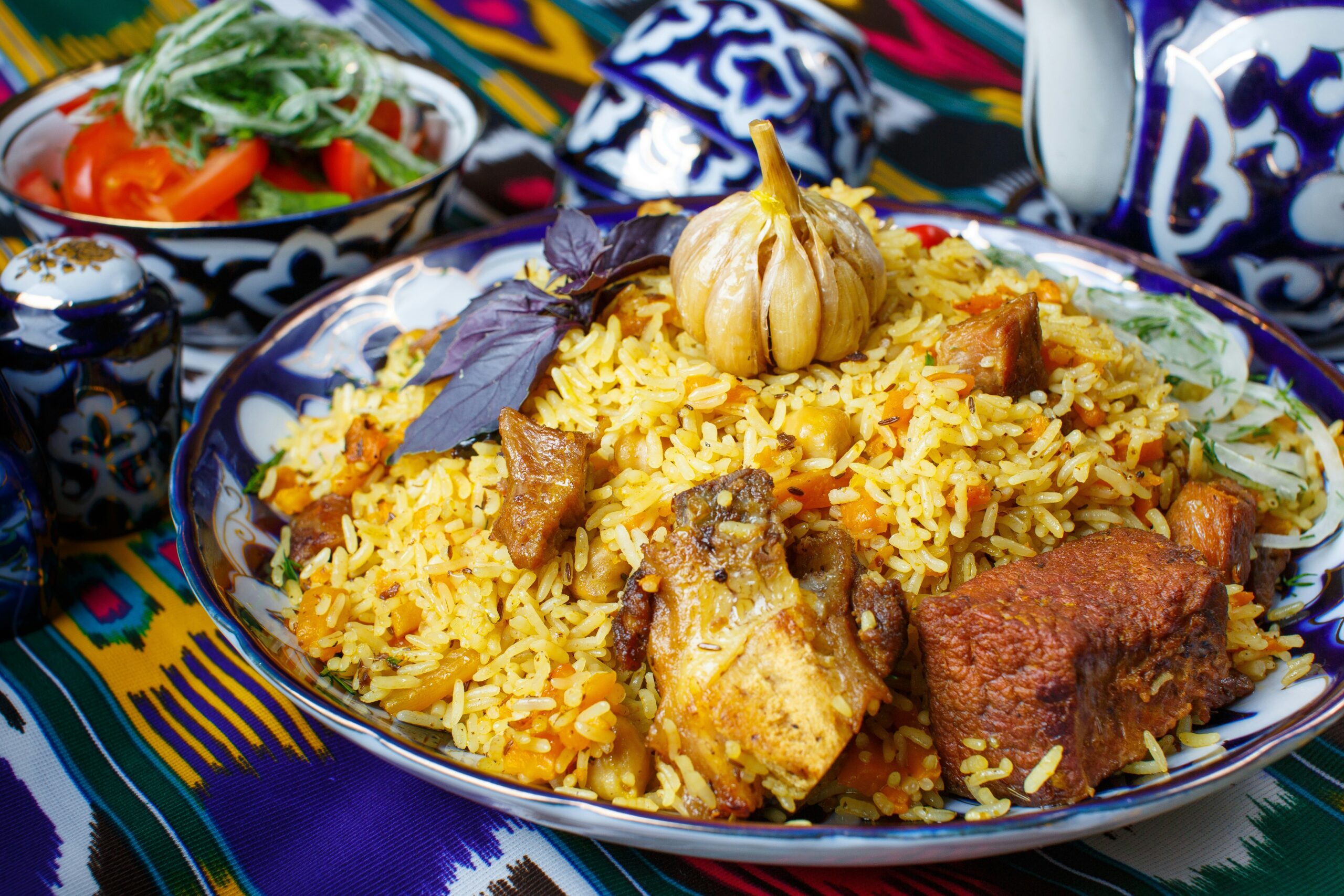
The onions are still too pale when they first smell sweet. Their edges have softened, a spoon leaves a brief track across the bottom of the pan, and there is enough fragrance to suggest that something has been accomplished. There has. But for the browned-onion approach to Swahili pilau considered here, this is the point at which stopping would leave much of the flavour unmade. The onions need to lose more water before they can develop the colour and savoury sweetness that will eventually pass into the rice.
This is the part of the dish we want to think through for Discovery and the East African stretches of the Naora Global Expedition. Before choosing a broth or deciding what belongs beside the rice, there is the treatment of ingredients that look ordinary in a provisioning bag. The work is mostly quiet. It requires attention before the lid goes on, rather than intervention afterwards.
The Many Ways To Cook Swahili Pilau
Swahili pilau does not belong to a single formula. Across households and coastal communities, the choice of rice, the balance of spices, the depth of the onions and the cooking liquid can differ. Meat and its broth shape many versions. Potatoes or tomatoes appear in some preparations and not in others. Even the order in which the ingredients enter the pot is not universal. To describe one method clearly is useful. To make it the test by which every other pot is judged would be a mistake.
The wider history of rice cooked with aromatic seasonings extends across the Indian Ocean and beyond, but a shared history does not make these dishes interchangeable. Swahili cooking has its own accumulated knowledge, preferences and occasions. A visitor can learn something from the way a cook handles an onion without claiming to have understood a household, much less an entire coast. That distinction matters aboard a yacht moving through places whose daily life continues after we leave.
Our starting point is therefore a deliberately bounded one: an onion-led pilau using whole spices and long-grain rice, with a measured liquid added after the aromatic base has developed. It is a method we can explain honestly, rather than a family recipe we have no right to claim. A freshly ground pilau masala can produce an excellent result too. Whole spices are a choice here because they let us examine the contribution of each ingredient, not because grinding them would make the dish less legitimate.
Provisioning For Swahili Pilau On The Coast
Good provisioning begins with questions that can change the cooking. Which rice is being sold, and does it normally need soaking? Is the spice mixture freshly ground or has it been sitting open in humid air? Where were the onions grown? Buying something in a coastal market does not necessarily mean it was produced nearby. Rice and spices travel. We can support local trade while remaining precise about what we know of an ingredient’s origin.
For rice intended to remain distinct, a reasonably even batch with few broken grains is a useful beginning. Broken pieces soften faster and contribute more starch to the liquid, so a bag containing many of them will not behave like one of mostly intact grains. Basmati is a workable choice for this method, though it is not a requirement for every Swahili pilau. An unfamiliar local rice deserves a small test before it becomes dinner for everyone aboard. The trial costs a little rice and saves a much larger uncertainty.
Whole spices deserve the same scrutiny. A cardamom pod opened for inspection should offer a clear fragrance from its seeds. Cumin should smell recognisably of cumin when rubbed, rather than mainly of the sack around it. Whole spices retain their character longer than ground ones, but they are not immune to age, heat or damp. Small quantities that will actually be used are often more sensible than a large purchase justified by the length of the voyage.
Once aboard, dry rice and spices need clean, sealed containers, away from galley steam and persistent heat. The container should be dry before it is filled, and new stock should not disappear anonymously into old stock. Onions require a different arrangement: ventilation, protection from moisture and regular inspection for softening. There is nothing picturesque about removing a deteriorating onion before it affects the others. It is simply how the meal starts well before anyone reaches for a knife.
Giving The Onions Time To Brown
A useful starting batch for four modest servings would be 300 grams of dry rice, about 250 to 300 grams of peeled onions and roughly three tablespoons of neutral oil. These are working quantities, not a coastal standard. The onion proportion gives this version a substantial base; the oil should lubricate the sliced onions without leaving them floating. A broad, heavy-bottomed pot with a close-fitting lid makes both the initial browning and the later absorption cooking easier to control.
Slice the onions evenly. A mixture of thick wedges and fine scraps creates an avoidable choice between undercooking the former and burning the latter. Begin over moderate heat, turning the slices so that they soften and release moisture. At first the sound is wet and busy, closer to a hiss than a fry. As the moisture leaves, the sound becomes finer, the onions collapse, and the spoon begins to encounter a little resistance where they touch the metal. This is when attention needs to increase, not when the cook can wander away.
Allow perhaps 20 to 30 minutes for a batch of this size, while accepting that a crowded pot or particularly juicy onions can take longer. The useful endpoint is an even, deep golden brown, not obedience to the clock. Water leaving the onions allows their surfaces to become hot enough for substantial browning. Turning up the heat too early does not accelerate that process evenly. It gives the exposed edges a head start towards burning while the rest are still shedding moisture.
Scrape and turn more frequently as the colour develops, easing the heat before the darkest pieces become black. A brown film that releases readily from the bottom can contribute flavour. A scorched layer smells acrid and should not be worked into the food in the hope that rice will conceal it. If the base is genuinely burnt, starting again is the better decision. Water can dissolve browned material into the dish. It cannot turn burnt bitterness into depth.
Blooming Whole Spices Without Burning Them
Cumin, cardamom, cinnamon, cloves and black pepper can form the aromatic framework. Their proportions matter more than the length of the list. Clove is particularly capable of taking possession of a pot, while a large piece of cinnamon can pull the fragrance towards sweetness even when no sugar is present. For an unfamiliar batch of spices, restraint gives more information than abundance. It is easier to understand the balance when every ingredient is not competing at full volume.
In this method, lower the heat once the onions are ready, and draw them aside to expose a little oil. A heavy pot continues delivering heat after the control has been turned down, so moving it briefly off the heat may be necessary before adding the spices. Lightly opening the cardamom pods allows the oil better access to the seeds. The cumin should become fragrant without turning black. Warm fat dissolves and distributes many of the spices’ aromatic compounds, but prolonged, fierce heat drives fragrance away and leaves harshness behind.
The physical cue is close and immediate. Lean near enough to smell, without putting your face over the pot, and the cardamom becomes clearer above the darker smell of onion. The cumin may give a slight crackle. There should be no smoke. Once the fragrance opens, finely crushed ginger and garlic can follow, stirred through until their raw edge softens. They must not be left against the hot bottom while the cook goes looking for the rice.
There is a credible alternative sequence: bloom the whole spices first, then add the onions. Many cooks do precisely that, and the moisture released by the onions moderates the heat. Our sequence separates the long browning stage from the more delicate handling of spices, making each easier to judge in an unfamiliar galley setup. It is a practical choice, not a correction of anyone else’s cooking. Ground spices require still closer attention because their greater exposed surface makes scorching easier.
Rinsing And Coating The Rice
The rice should already be prepared before the spices reach their fragrant point. Rinse it gently in potable water, changing the water until it is substantially less cloudy. The purpose is to remove loose surface starch, not to scrub the grains. Perfectly clear rinse water is not a necessary target, and aggressive rubbing can create the broken pieces we were trying to avoid when buying it.
Soaking is a separate decision. Some rice benefits from it, and a supplier’s advice or the packet instructions can provide a starting point. A soaked grain has already absorbed water, so it cannot be treated as though it were dry when the cooking liquid is measured. For a first, repeatable trial, unsoaked rice can simplify the calculation. The important thing is to record which preparation was used rather than changing the soak, the pot and the water quantity at the same time and then guessing which change mattered.
Drain the rinsed rice thoroughly. A sieve carrying a hidden pool of water into the pot changes both the temperature of the fat and the eventual liquid balance. Add the drained grains to the onions and spices, turning them gently until the fat and aromatics are distributed. This is a brief coating stage, not an attempt to fry the rice hard or make it brown. The onions should remain browned onions, not become casualties of waiting for the grains to change colour.
Oil does not waterproof rice. The grains will still absorb liquid and release starch as they cook. Coating them helps distribute flavour and can reduce immediate sticking, but distinct grains depend on their condition, the amount of liquid and the restraint shown afterwards. Vigorous stirring during absorption cooking breaks softened grains and encourages a starchier result. By the time water enters, much of the stirring should already be finished.
Measuring Water And Leaving The Lid Alone
Water is not the enemy of flavour. It extracts, distributes and carries it into the rice. What it largely ends is the opportunity to brown the base, because the wet mixture is now governed by the temperature of a simmer. This is why the earlier stages matter. Once the pot is full of liquid, pale onions cannot be persuaded to become deeply browned onions without first putting the rice through something it was never meant to endure.
For unsoaked, well-drained basmati in a close-fitting pot, about one and a half to one and three-quarter volumes of liquid for each volume of dry rice is a reasonable starting range. Measure the dry rice before rinsing if using this approach. It is not a universal ratio: the variety, age of the rice, width of the pot and loss of steam all affect the result. A reliable instruction for the particular rice, followed by a small trial in the actual pot, is worth more than a confident rule applied to every bag.
That range also assumes there are no substantial additional wet ingredients. Tomatoes, a loose meat gravy or vegetables releasing moisture all change the calculation. If making a meat version, the meat should be cooked through and tender before the rice begins its much shorter cooking stage. Taste the broth for salt before adding it. A strongly seasoned stock may need dilution, while plain water will need seasoning. Hot liquid brings the pot back towards a simmer promptly, but it must be poured carefully into hot fat and rice, with hands and face clear of the steam.
Ease any browned residue from the bottom, distribute the contents, then cover and reduce the heat to a gentle simmer. Repeatedly opening the lid releases the steam needed by the upper grains; leaving the heat high risks scorching the bottom before the centre is ready. Check near the expected cooking time rather than hovering over the lid. If the rice remains chalky after the liquid has gone, a small addition of hot water and more covered cooking may rescue it. Once tender, let it rest off the heat, covered, for about ten minutes before loosening it gently. The pause lets moisture settle through the pot and makes the grains less vulnerable to breaking.
Serving Pilau Aboard Discovery
Discovery is a Lagoon Eighty2 sailing catamaran, but a stable platform is not a motionless kitchen. The onion stage asks for sustained attention beside hot oil, so the conditions belong in the menu decision. The pot must be appropriately secured, handles kept clear of passing bodies, and ingredients prepared before the heat goes on. If motion makes controlled cooking difficult, this is a meal to postpone rather than force. A simpler supper is preferable to a cook trying to catch a shifting pan.
The finished rice also needs a plan. Cook close to the meal rather than leaving a warm pot waiting through an uncertain afternoon. Rice can contain bacterial spores that survive cooking; prolonged warm storage allows growth, and reheating does not reliably remove every toxin that may result. Cool any remainder quickly in shallow containers and refrigerate within an hour. A deep pot placed aside to cool slowly is not a useful shortcut, especially in a warm galley.
At the table, remove the larger, easily found whole spices and make their presence known rather than leaving someone to discover a clove between their teeth. An acidic accompaniment gives the browned onions and oil a welcome contrast. A freshly prepared tomato and onion kachumbari can do that work, provided the produce has been safely washed and handled. It need not be elaborate. The rice already contains the part of dinner that required patience.
When Discovery reaches the East African coast, the useful question will be how the ingredients actually available change this starting method. A different rice may ask for less liquid. Fresh spices may need a lighter hand. Paying attention to those differences is how a galley supper can remain connected to the place outside, rather than merely carry its name. There is a particular pleasure in a dish whose most careful work is no longer visible. The onions have almost disappeared. Their sweetness has not.